
Partial orthodontics:
first, can only the front teeth be treated?
A gap between the front teeth or slightly overlapping front teeth can sometimes be fixed with partial orthodontics. But if there's also a back-teeth bite problem or a protruding mouth, full orthodontics may be the right fit — so we check that first.
- Treated personally by Dr. Juhee Baek, orthodontic specialist (22 years)
- Partial vs. full criteria explained first
- Less visible with inside appliances
If you just want to
tidy up your front teeth
Many people are bothered by one or two front teeth every time they take a photo, but find years of full orthodontics too much. Partial orthodontics moves only some teeth, for people like this. But the decision that "only the front teeth need work" can't be made by looking at the front teeth alone. We also need to see how the back teeth bite together and whether the mouth looks pushed forward.
It is also called front-teeth orthodontics, partial front-teeth braces or limited orthodontics.
- There's a visible gap between my front teeth
- My front teeth overlap slightly, or one sticks out
- One or two teeth are twisted at an angle
- I had braces before, but my front teeth have shifted a little
- Because of work, I'm worried about visible braces
- I'm torn between veneers and orthodontics
Appliances used in partial orthodontics
Front-teeth partial orthodontics is often done with an inside (lingual) appliance, and can also be done with outer-surface MTA or clear aligners. The appliance is chosen after diagnosis.
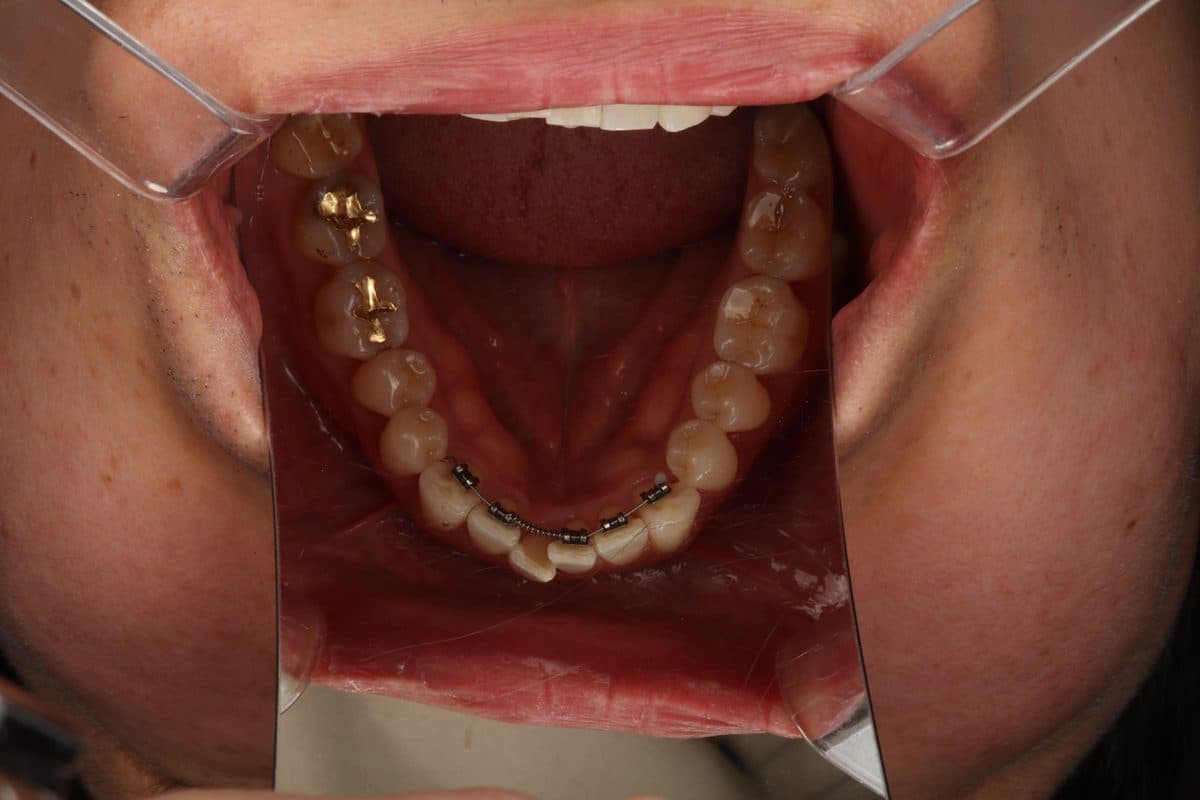
Inside (lingual) 2D appliance 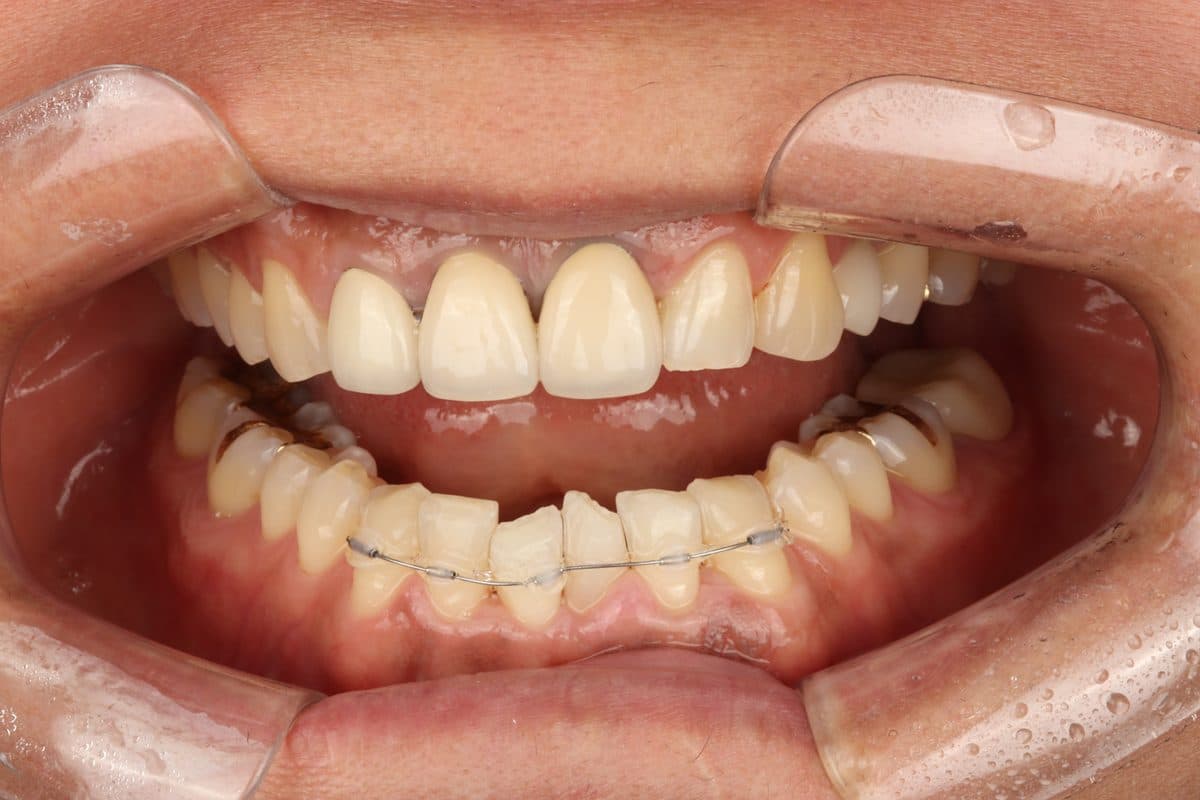
Outer-surface MTA appliance 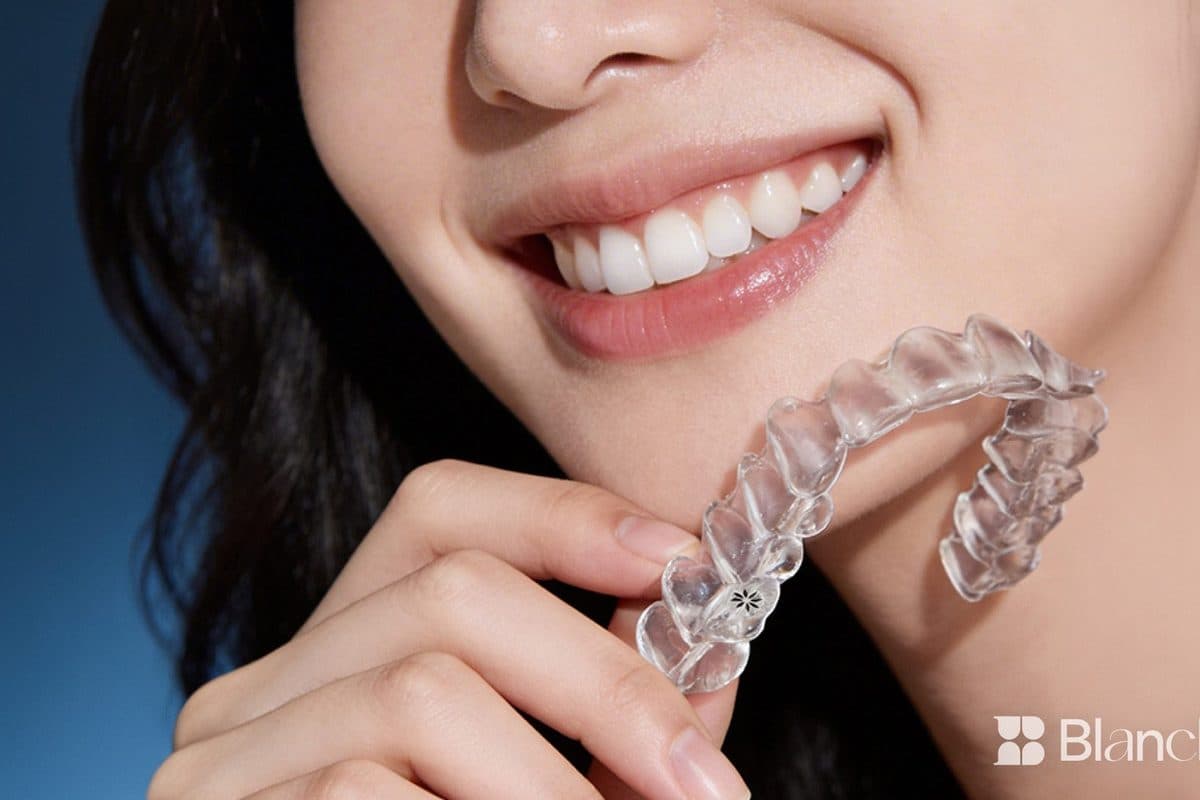
Clear aligners (Invisalign Express) · sample image
Includes real Blanche Dental photos (published with consent) and sample images. The appliance depends on your tooth condition and plan.
In partial orthodontics, deciding the scope
is half the work
The hardest part of partial orthodontics isn't placing the appliance — it's judging how far teeth can move without upsetting the bite. That's why at Blanche, an orthodontic specialist sees you personally from the start.
- 01
Orthodontic specialist training
Completed an orthodontics residency at Kyung Hee University Dental Hospital and is a specialist and certified member of the Korean Association of Orthodontists.
- 02
About 5% of dentists in Korea
Orthodontic specialists make up about 5% of dentists in Korea.
- 03
22 years of orthodontics
Dr. Juhee Baek has practiced orthodontics for 22 years.
- 04
10,000+ cases
She has treated more than 10,000 orthodontic cases over 22 years — and so has seen many cases where "partial works" and where "it doesn't".
When partial orthodontics is possible,
and when full orthodontics is needed
Even with the same "crooked front teeth", the scope of treatment differs depending on whether the cause is limited to the front teeth or extends to the jaw and back teeth.
When partial orthodontics may be considered
- There's a small gap between the front teeth
- The front teeth overlap slightly, and only a little space is lacking
- Only one or two teeth are rotated or tilted
- The back teeth bite together well, with no trouble chewing
- Seen from the side, the mouth doesn't look pushed forward
When full orthodontics may fit better
- The upper and lower back teeth bite out of line
- You're concerned about a protruding mouth
- The lower jaw sticks out, or the front teeth bite in reverse
- The upper and lower front teeth don't touch, or overlap too deeply
- Teeth overlap a lot, so a lot of space has to be made
If you start partial orthodontics looking only at the front teeth and end up switching to full orthodontics because the bite doesn't fit, you spend time and money twice. That's why the first exam checks the back-teeth bite and your profile too. Protrusion and bite problems are covered in more detail on the Adult Orthodontics page, and underbite or facial asymmetry on the Non-Surgical Underbite & Asymmetry page.
Partial orthodontic appliances:
what can you choose?
Once partial orthodontics is judged possible, the appliance is chosen to suit your teeth and lifestyle. Below are general features; which appliance actually fits is decided together after the exam.
At Blanche, front-teeth partial orthodontics is often done with the appliance bonded to the inside (lingual side) of the teeth so it's less visible, and it can also be done with clear aligners. Dr. Juhee Baek decides between MTA and 2D (lingual) after diagnosis. Choosing based on the direction and amount of movement needed, rather than picking the appliance you want first, works better for the result.
For front-teeth concerns, how do partial
orthodontics and veneers differ?
Both make the front teeth look even, but one moves the teeth and the other covers the tooth surface. Which fits becomes clear when you look separately at the teeth's position, shape and color.
When orthodontics comes first
If teeth overlap or are twisted a lot, covering them with veneers may require trimming more tooth. In that case, we recommend arranging the teeth with partial orthodontics first.
Finishing with veneers after orthodontics
Small gaps that remain after orthodontics, naturally small teeth and black triangles can be finished with Blanche no-prep veneers. See front-teeth veneers for veneers on the front teeth.
Benefits and trade-offs of partial orthodontics
What you can expect
- Fewer teeth move, so it usually takes 3–6 months — shorter than full orthodontics at 1 to 2.5 years (varies by person)
- The appliance covers a smaller area, so it may be less of a burden in daily life
- Your own teeth are repositioned without trimming
- Choosing an inside appliance or clear aligners makes it less visible
Burdens and limits to accept
- It can't fix problems beyond the front teeth, such as the bite or a protruding mouth
- For a few days after placement, teeth may feel sore and uncomfortable
- With insufficient care, gum inflammation or cavities may develop
- Rarely, tooth roots may shorten, and teeth may shift again if you don't wear a retainer
The partial orthodontics process
Dr. Juhee Baek personally handles the consultation, appliance placement and final check.
- 01
Consultation
We ask which teeth bother you most and the look you want, and a dentist spends an hour or more explaining.
- 02
Detailed exam
Photos, X-rays and an intraoral scan check your bite and profile to judge whether partial orthodontics is possible.
- 03
Plan · appliance choice
We decide which teeth move and in which direction, and choose a suitable appliance together.
- 04
Appliance placement
The dentist places the appliance personally and explains care for the first week.
- 05
Regular adjustments
You visit at set intervals so movement can be checked and adjusted.
- 06
Finishing · retention
After the dentist checks the finish, the appliance is removed and a retainer is fitted.
Partial orthodontics usually takes 3–6 months; full orthodontics takes 1 to 2.5 years. It varies with the number of teeth and how far they move, so we give you an estimated duration after the detailed exam. We go over every explanation at least four times, and you're welcome to decide at home.
After partial orthodontics,
keeping teeth from shifting again
Even after being moved, teeth tend to drift back to where they were. Front teeth in particular move easily — and shift back easily. So it's best to think of the day the appliance comes off not as the end, but as the day you start wearing a retainer. We plan retention with your smile 20 years from now in mind.
- 01
Fixed retainer
A thin wire is bonded to the inside of the front teeth. It's invisible from outside, but you need to learn how to floss with it.
- 02
Removable retainer
A clear tray, mainly worn while sleeping. If you put off wearing it, it can soon stop fitting.
- 03
If it comes off or breaks
Contact us right away rather than waiting. Teeth can move in the meantime.
- 04
Regular check-ups
Even after the appliance is removed, we regularly check your retainer and gums.
Partial orthodontics cost
MTA and 2D (lingual) partial orthodontics are priced on the same basis. We start only after a detailed exam confirms partial orthodontics is possible.
- With clear aligners, it's Invisalign Express at KRW 1,000,000.
- When comparing quotes, check first whether the exam, appliance and adjustment fees are all included, rather than just the amount.
- Approximate USD: KRW 200,000 ≈ USD 145, KRW 1,000,000 ≈ USD 735, KRW 1,800,000 ≈ USD 1,325, KRW 50,000 ≈ USD 35 (based on USD 1 = KRW 1,359).
- Prices for all treatments are on our full price list.
Real Blanche front-teeth orthodontic cases
Drag the photo left and right to compare before & after orthodontics.
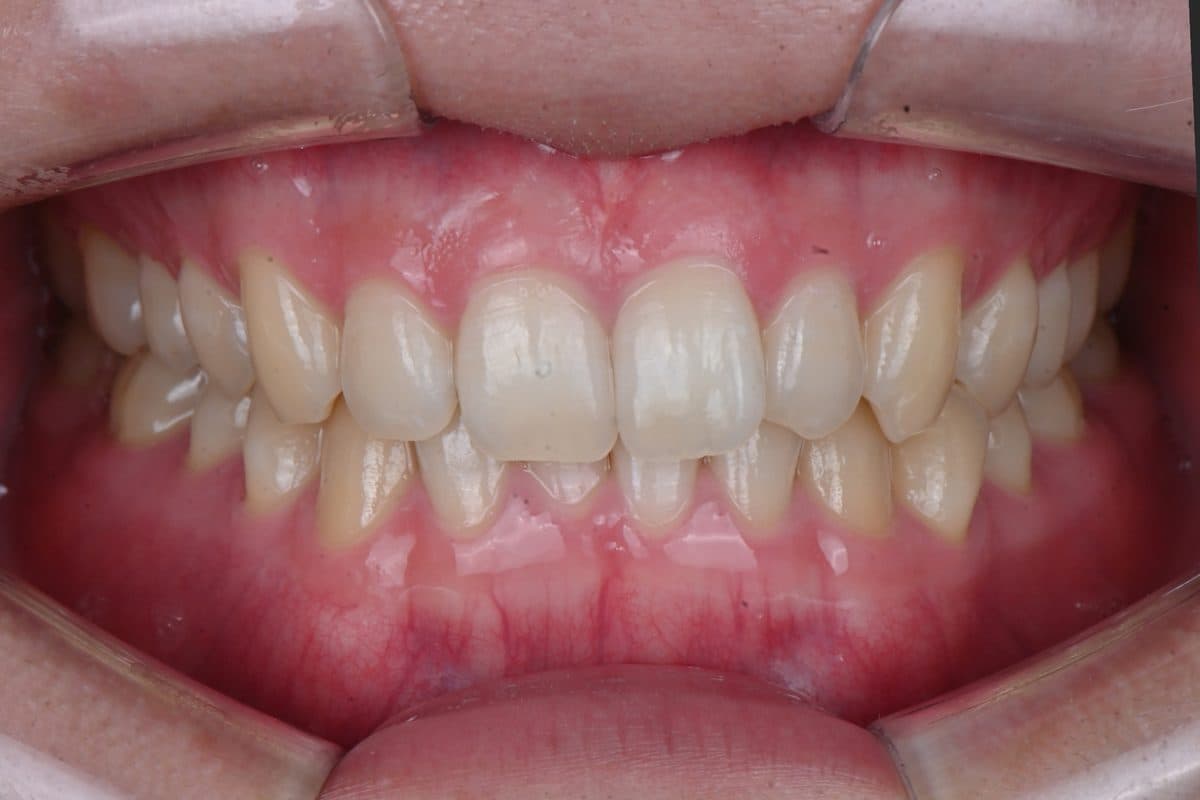
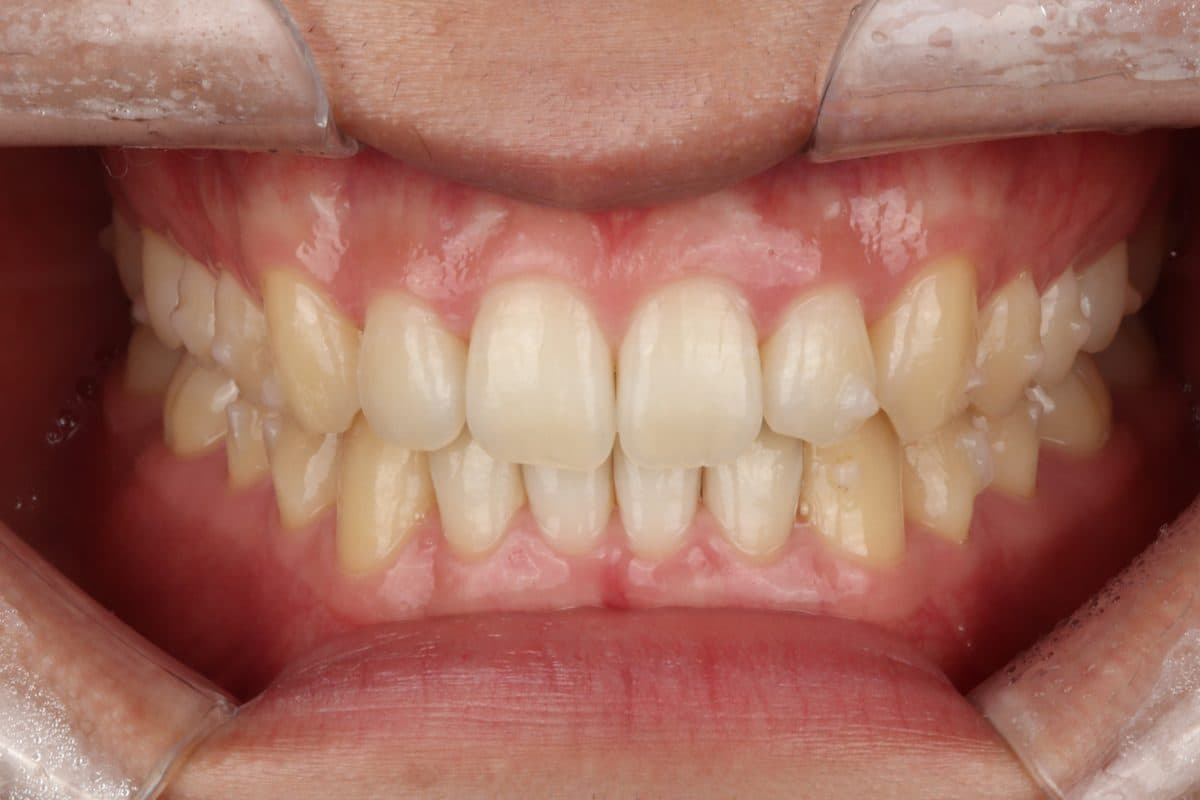
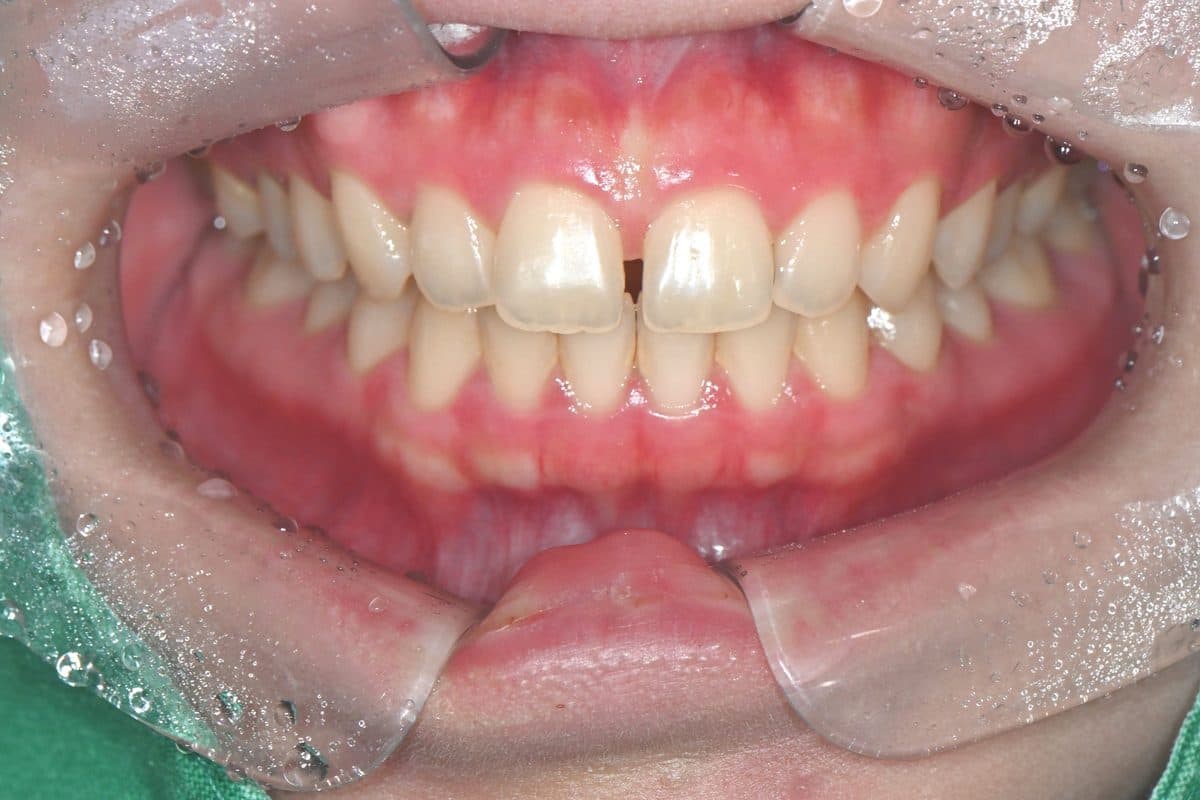
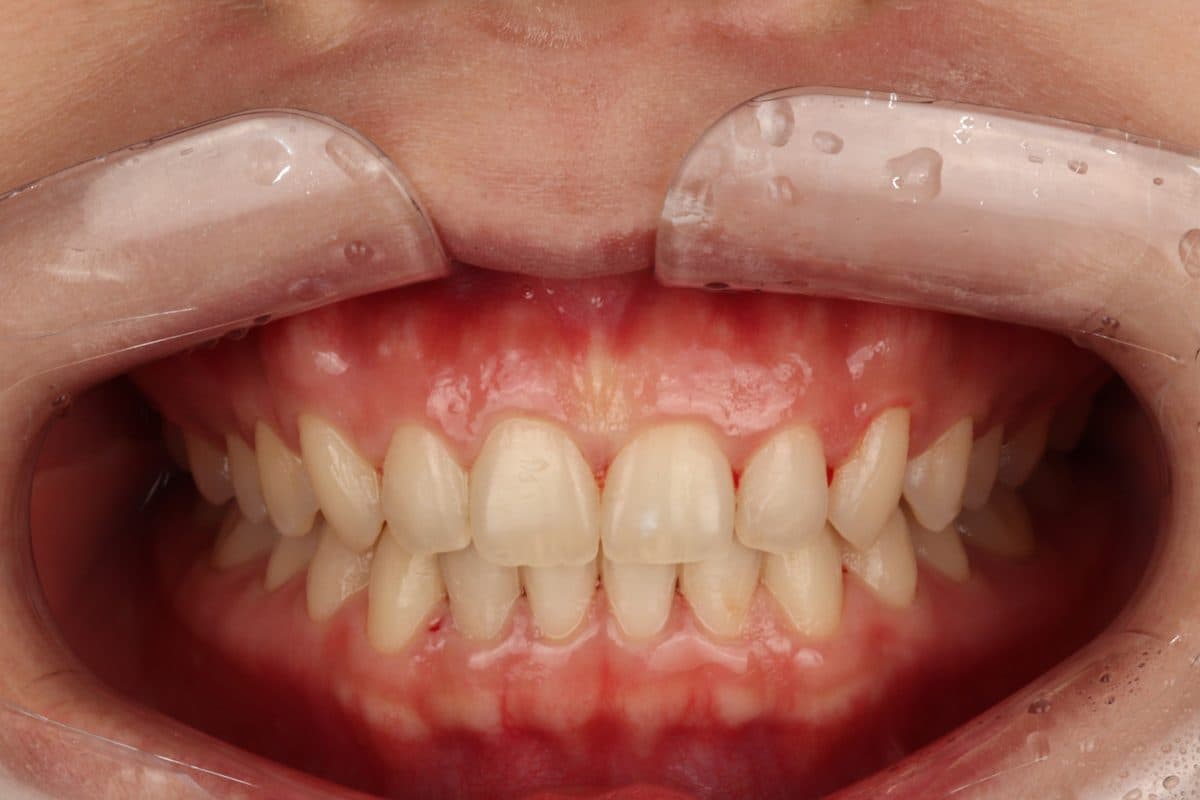
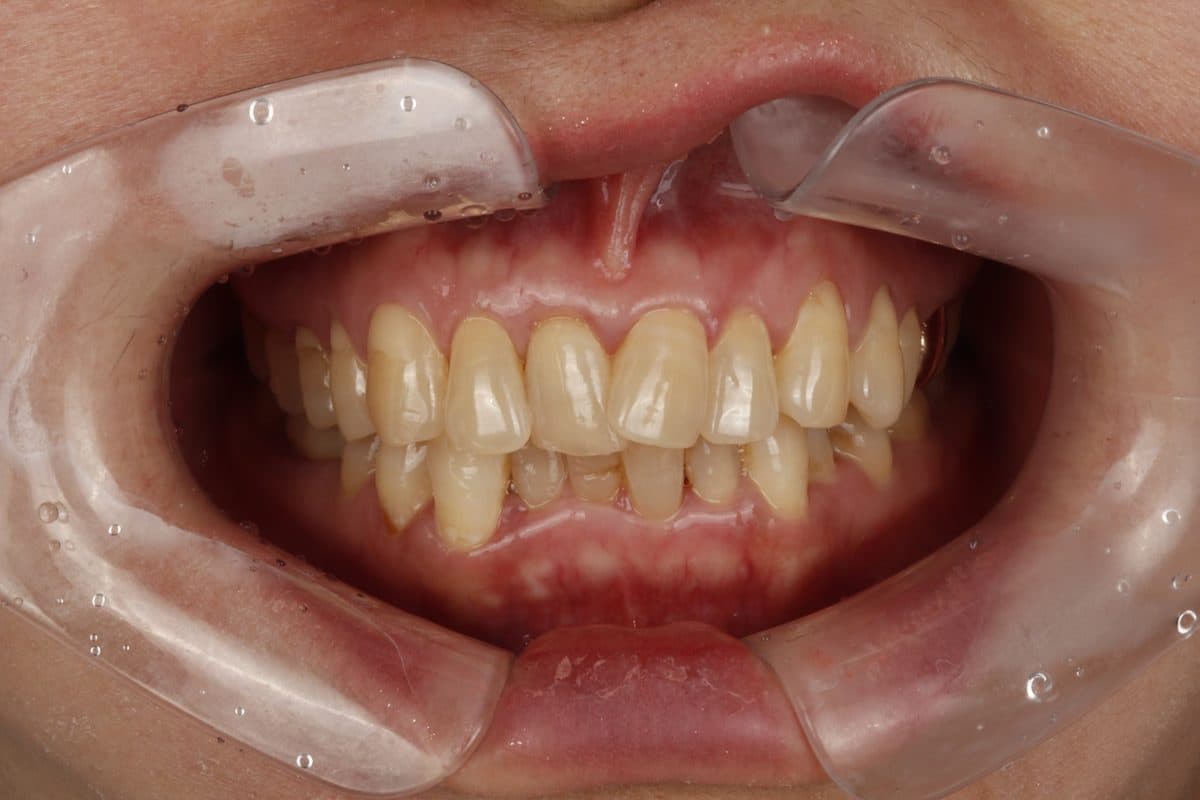
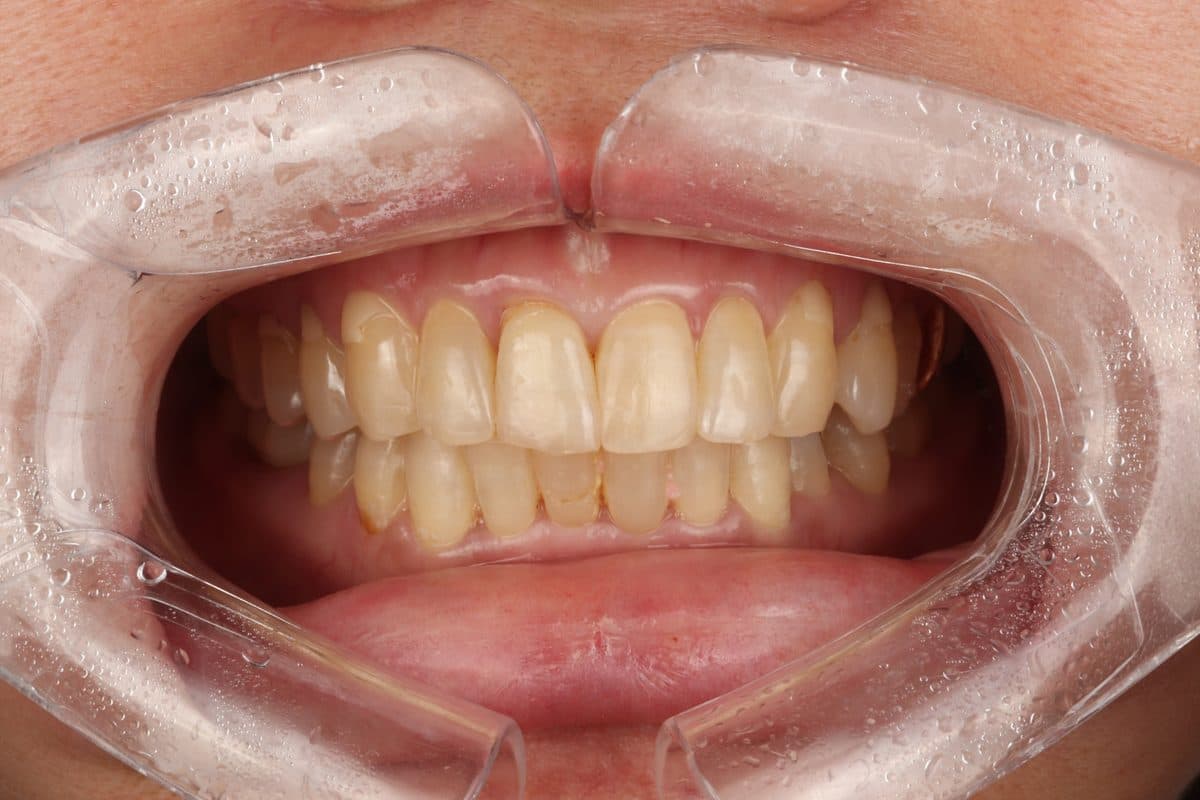
Real Blanche Dental cases, published with the patients' consent. Treatment method, duration and results vary with tooth condition. During orthodontics, pain or discomfort, gum inflammation or cavities with insufficient care, and rarely root resorption may occur, and relapse may happen if a retainer isn't worn.

From start to finish,
Dr. Juhee Baek treats you personally
At Blanche, orthodontic specialist Dr. Juhee Baek, who has practiced only orthodontics for 22 years, personally consults, places your appliance and checks the finish. Orthodontic specialists are only about 5% of dentists in Korea.
"With know-how built up over countless orthodontic cases, I will treat you with care and comfort."
- Valedictorian, Kyung Hee University College of Dentistry
- Orthodontics residency, Kyung Hee University Dental Hospital
- Master of Dental Science in Orthodontics, Kyung Hee University Graduate School of Dentistry
- Specialist and certified member, Korean Association of Orthodontists
- 10,000+ orthodontic cases treated over 22 years
- Presented an outstanding non-extraction orthodontic case at Osaka Dental University, Japan

Integrated Dentistry specialist
Dr. Kyungri Park
Drawing on her experience as an orthodontic clinic director, she treats orthodontic patients together with Dr. Juhee Baek. Cavity and gum care during orthodontics and finishing work such as veneers afterward are all continued within one clinic.
- Graduate of Stanford University
- Graduate of Seoul National University College of Dentistry
- Master's, Seoul National University Graduate School of Dentistry
- Clinical training at UCLA and Columbia University dental hospitals (USA)
- Former orthodontics director · former chief director of an orthodontic clinic
Partial orthodontics: common questions
When is partial orthodontics possible?
Are front-teeth orthodontics and partial orthodontics the same thing?
How can I tell if partial orthodontics will work for me?
Can a protruding mouth be pulled back with partial orthodontics?
How long does partial orthodontics take?
How much does partial orthodontics cost?
Are partial orthodontic appliances visible?
Which is best: MTA, 2D or clear aligners?
Should I get partial orthodontics or veneers?
What about gaps left after orthodontics?
Are teeth trimmed in partial orthodontics?
Does partial orthodontics hurt?
I had braces before, but my teeth shifted again. Will partial orthodontics work?
Do I need to keep wearing a retainer after partial orthodontics?
Can partial orthodontics be done on just the lower front teeth?
Will treatment get in the way of work or school?
I live abroad. Can I get a consultation?
Reviewed by Dr. Juhee Baek (orthodontic specialist, 22 years; Master's in Orthodontics, Kyung Hee University Graduate School of Dentistry) · Last updated
Blanche Dental Clinic, Nonhyeon Station, Gangnam
A 30-second walk from Exit 4 of Nonhyeon Station, on Gangnam-daero.
Subway
Address
Phone
Hours
Can only your front teeth be treated?
Ask with photos first
Two photos — one front-facing and one smiling — are all we need. A dentist will review them personally and tell you whether partial orthodontics may work or full orthodontics is needed.
Send us a front photo and a smiling photo — a dentist will review them and reply.
Chat on WhatsAppCall +82-1877-2882