

Adult orthodontics:
your gums and bone matter more than your age
Teeth can still move in your 30s and 40s. But adult orthodontics has to consider your gums, bone and any treatment you've already had. An orthodontic specialist checks these first, then helps you choose an appliance that fits your work life.
- Treated personally by Dr. Juhee Baek, orthodontic specialist (22 years)
- Gums and bone checked first
- Order of crowns and implants planned in
- Open until 9 p.m. on Tue · Wed
Braces in your 30s or 40s —
is it okay to start now?
Many people who put off braces as students reconsider them once they're working. In adult orthodontics, what makes people hesitate is usually not age but gums, work and treatment time. If even one of these applies to you, start by checking your current condition.
It is also called adult braces or orthodontics for working adults.
- I couldn't get braces as a student — I wonder if it's okay to start at my age
- Gaps between my front teeth have widened and my lower teeth look more crowded than before
- I've been told my gums are weak, so I'm worried about braces
- I have many meetings and presentations, so visible braces feel like a burden
- I have crowns or implants and don't know if braces are possible
- I had braces before, but my teeth shifted back because I didn't wear my retainer
- I've hesitated for years, worried it will take too long
Appliances used in adult orthodontics
After diagnosis, the dentist chooses among clear aligners, tooth-colored brackets and lingual (inside) appliances to suit your lifestyle and tooth condition.
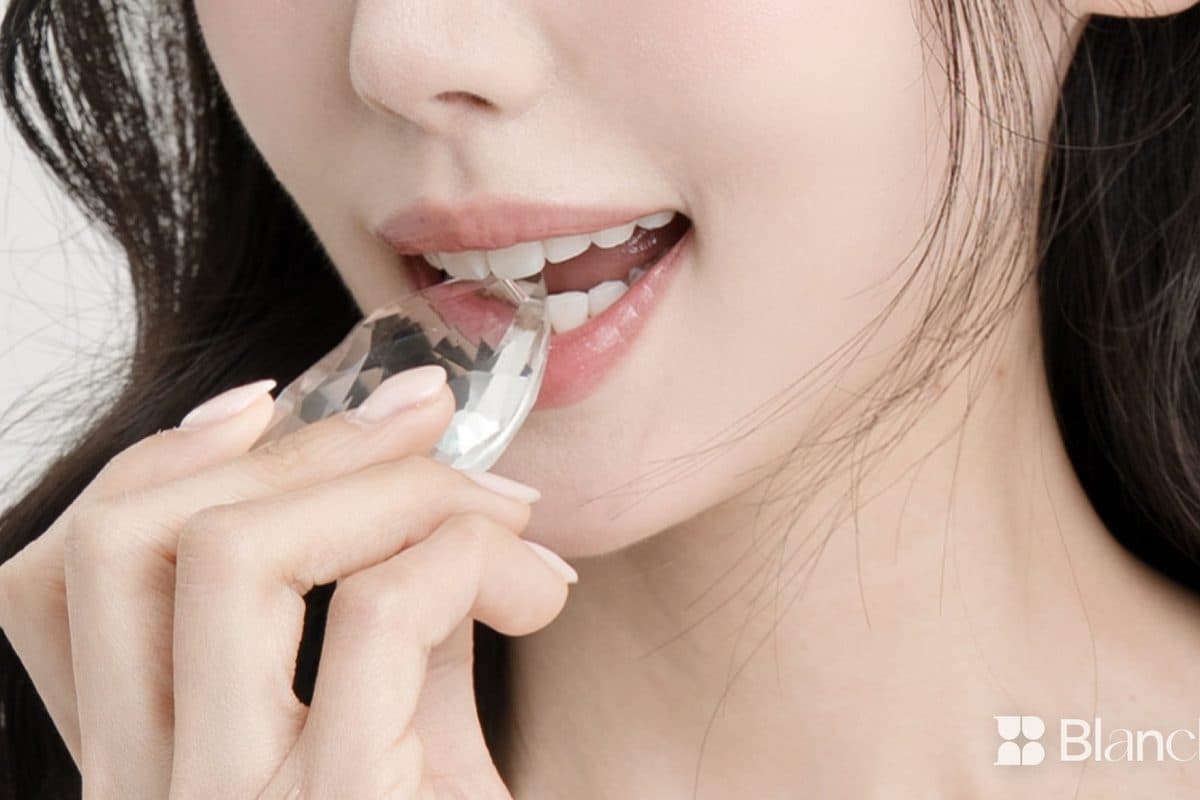
Clear aligners (Invisalign · Angel Aligner) · sample image 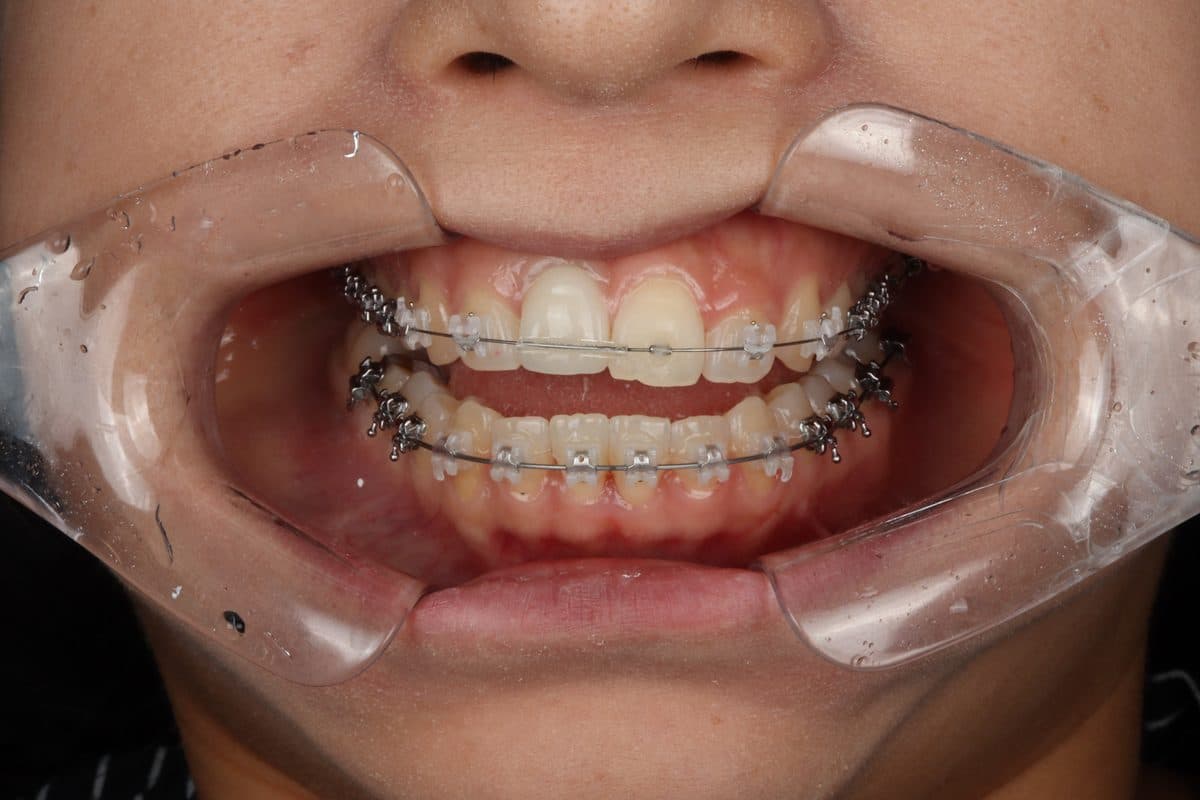
Tooth-colored brackets (Clippy-C) 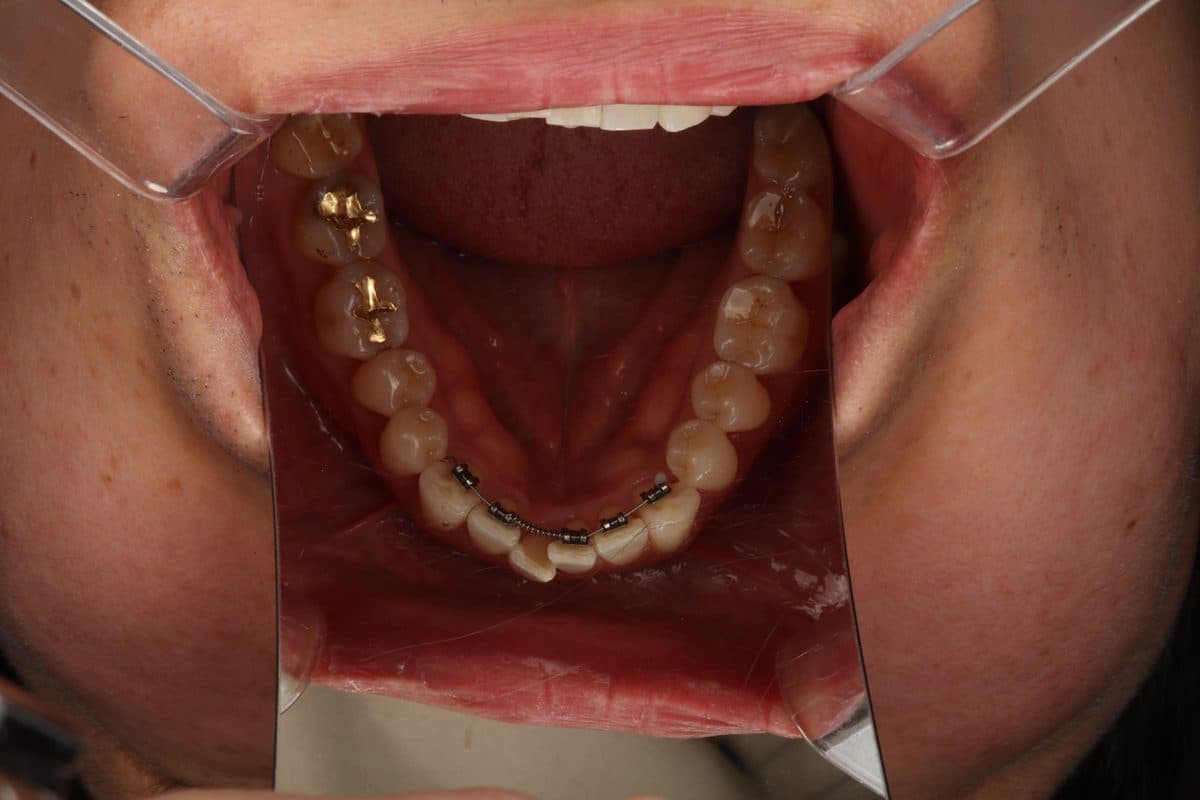
Lingual appliance (2D)
Includes real Blanche Dental photos (published with consent) and sample images.
How is adult orthodontics
different from teen orthodontics?
The way teeth move is the same at any age. What differs are the conditions around the teeth.
- 01
Growth has finished
Appliances that use jaw growth are hard to use. We first separate whether the problem can be solved by tooth position or comes from the jawbone itself.
- 02
Gums and bone vary widely
Some people have gum inflammation or thinning gum bone. We adjust how far and how fast teeth move to suit your condition.
- 03
You may have had treatment already
If you have crowns, bridges, implants or root-canal-treated teeth, the order of orthodontics and these treatments has to be planned together.
What adult orthodontics can offer
- Once crowded teeth are straightened, brushing is easier and less food gets stuck
- An even bite helps reduce force concentrating on certain teeth
- Tooth positions can be arranged before crowns or implants
- The alignment of the front teeth that show when you smile can change
What adults need to accept
- If gum or cavity treatment is needed first, the start may be delayed
- Depending on gum bone, there may be limits to how far teeth can move
- If the gums between teeth had already receded, black triangles may appear as the teeth straighten
- Discomfort while adjusting to the appliance, root resorption and relapse are possible for adults too
What to check first in adult orthodontics
In adult orthodontics, there are often things to sort out before the appliance goes on. Below is the general order; the actual order is set after seeing your exam results.
At Blanche, gum inflammation is treated before orthodontics, and if an implant is needed, its timing and position are set within the orthodontic plan. Planning orthodontics, gum treatment, implants and veneers at one clinic lets the order be set from the start. When each treatment is done at a different clinic, an implant already placed or a crown already made can sometimes narrow what orthodontics can do.
Braces while working:
how to choose an appliance
Your tooth condition decides which appliances can be used, and within those you choose what fits your life. Dr. Juhee Baek makes the final decision on which appliance you need after diagnosis and consultation.
- Clear · removable
Invisalign clear aligners
Being clear, they're usually noticeable only up close, and you can take them out to eat. We scan with the iTero digital scanner and preview the result with a 3D simulation.
Learn more → - Clear · removable
Angel Aligner
Another clear aligner; Angel Aligner is also scanned with the iTero digital scanner. We've laid out how it differs from Invisalign and how to choose.
Learn more → - Tooth-colored · fixed
Clippy-C braces
A tooth-colored ceramic appliance with a sliding-door self-ligating design. Because it's bonded in place, you don't have to keep track of wear time, and it's also used for extraction cases. We recommend it for people who find clear aligners difficult.
Learn more → - Inside · fixed
2D braces (lingual)
A thin appliance bonded to the inside of the teeth, so it's barely visible from outside. Mainly considered for partial orthodontics of the front teeth.
Learn more → - Only some teeth
Partial orthodontics
If only a few front teeth bother you, we first check whether just those teeth can be moved. Front-teeth partial orthodontics is often done on the inside (lingual) and can also be done with clear aligners; it usually takes 3–6 months.
Learn more → - Partial appliance
MTA braces
A partial orthodontic method considered for refining the alignment of some teeth.
Learn more →
The table shows general tendencies. Clear aligners may not move teeth as planned if daily wear time isn't kept, and lingual appliances may take some getting used to at first for speech and the feeling of something in the mouth.
The adult orthodontics process
A dentist spends an hour or more on the orthodontic consultation. If gum treatment or a sequence with crowns is needed, we explain that schedule too.
- 01
Consultation · detailed exam
Digital scans, X-rays and photos are used to check teeth, gums, bone and existing crowns.
- 02
Treatment first
If there's gum inflammation or cavities, they are treated before orthodontics.
- 03
Plan
We set out how far teeth will move, whether extraction is needed, the order of implants and crowns, and appliance options.
- 04
Appliance placement
The dentist places the appliance personally and explains how to brush and eat.
- 05
Regular adjustments
Movement is checked and adjusted while also watching the condition of your gums.
- 06
Finishing · retainer
The bite is checked, the appliance is removed, and a retainer holds the teeth in place.
Dr. Juhee Baek personally handles the consultation, appliance placement and final check. Full orthodontics typically takes 1 to 2.5 years and partial orthodontics 3–6 months, varying with how far teeth move and the condition of the gums and bone; we give you an estimate after the detailed exam.
Adult orthodontics: duration, care and retainers
Adult orthodontics doesn't necessarily take longer than for teens. What determines the duration is not age but how far teeth move, the condition of the gums and bone, and care.
Duration varies from person to person, and if gum or cavity treatment is needed before orthodontics, the start may be delayed accordingly.
- 01
Gum care
Tartar builds up easily around appliances. Use an orthodontic toothbrush and interdental brushes; we also check your gums throughout treatment.
- 02
Wear time
Clear aligners move teeth as planned only if you keep to the set wear time. Brush after meals and put them straight back in.
- 03
Visits
You'll visit for every adjustment, so an easy-to-reach clinic matters. We're a 30-second walk from Nonhyeon Station Exit 4 and open until 9 p.m. on Tuesdays and Wednesdays.
- 04
Retainers
Even after orthodontics, teeth tend to drift back. Wearing a retainer consistently and having regular check-ups is how you keep the result.
If you had braces before and your teeth shifted back because you didn't wear a retainer, adult orthodontics can correct them again. If the movement needed is smaller than the first time, partial orthodontics may be enough, so we set the scope after the exam.
Small gaps left after braces?
No-prep veneers
Adults often have receded gums between teeth, so as crowded teeth straighten, small gaps or dark triangles (black triangles) may show. The same goes when teeth are small or unevenly shaped. In such cases, refining the shape with Blanche no-prep veneers can be considered.
If you're thinking about veneers when planning orthodontics, let us know from the start. We can decide in advance how much to move with orthodontics and where to refine with veneers.
- Small gaps remain between my front teeth after braces
- My teeth are aligned, but they look small
- I see dark triangles near the gums between my teeth
- After braces, I'd like to refine the color and edge shape of my teeth too
Real Blanche orthodontic cases
Drag the photo left and right to compare before & after orthodontics.
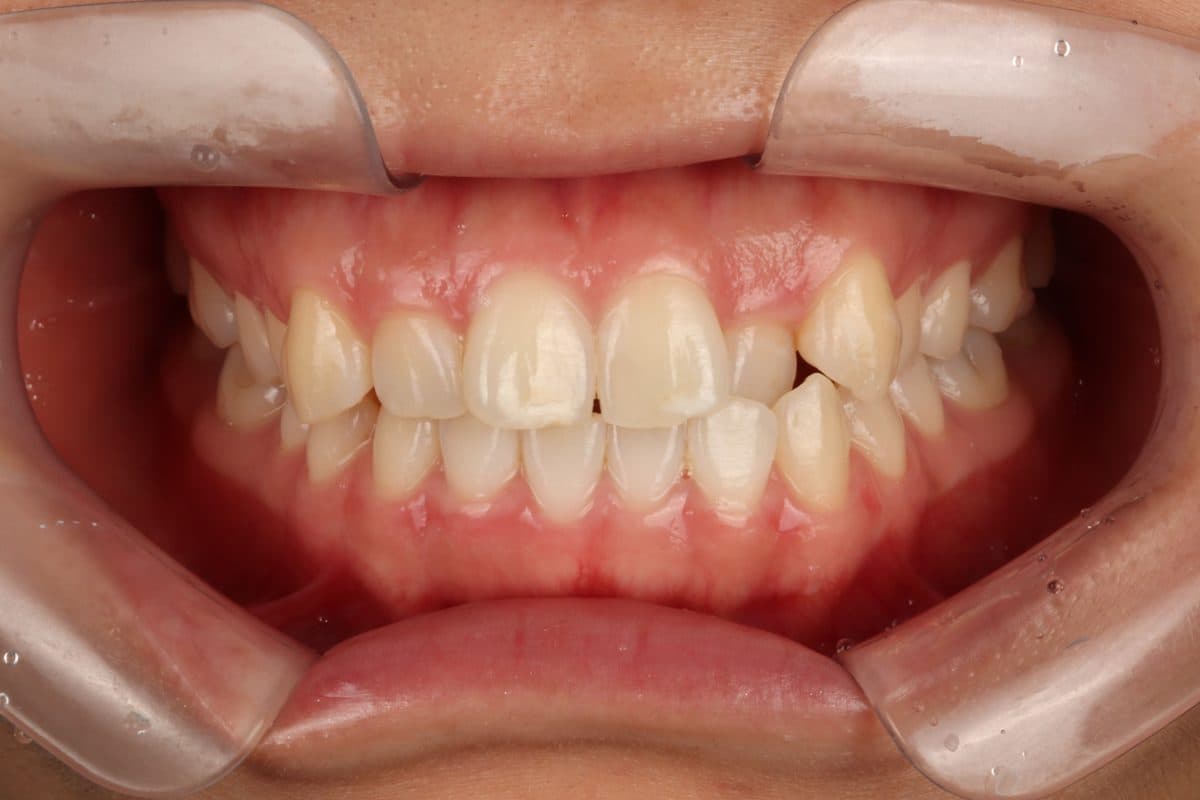
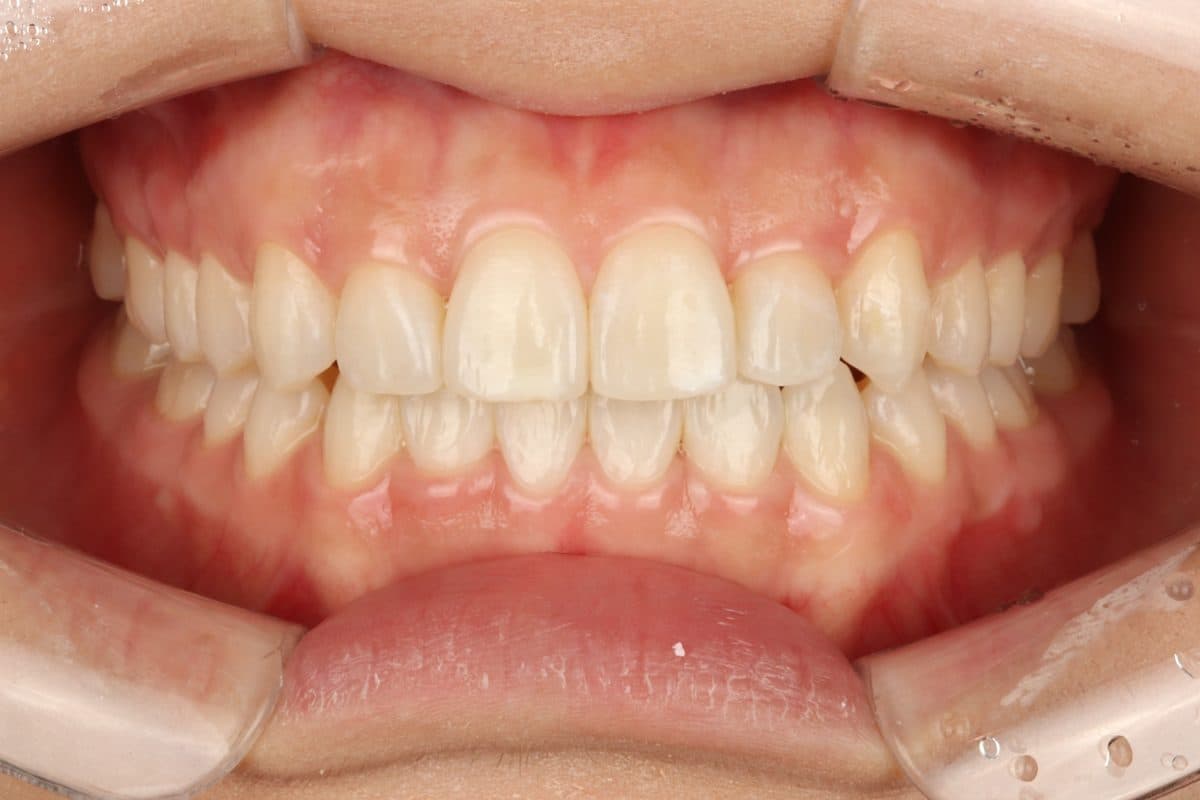
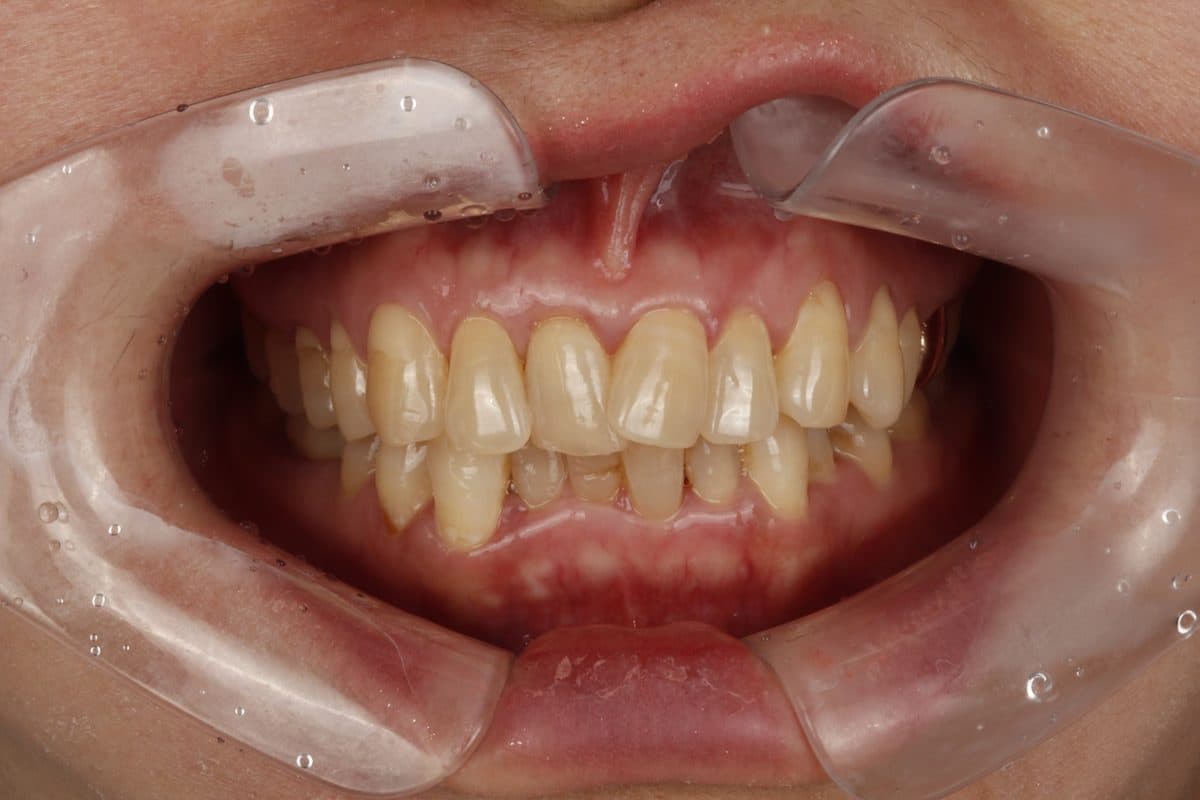
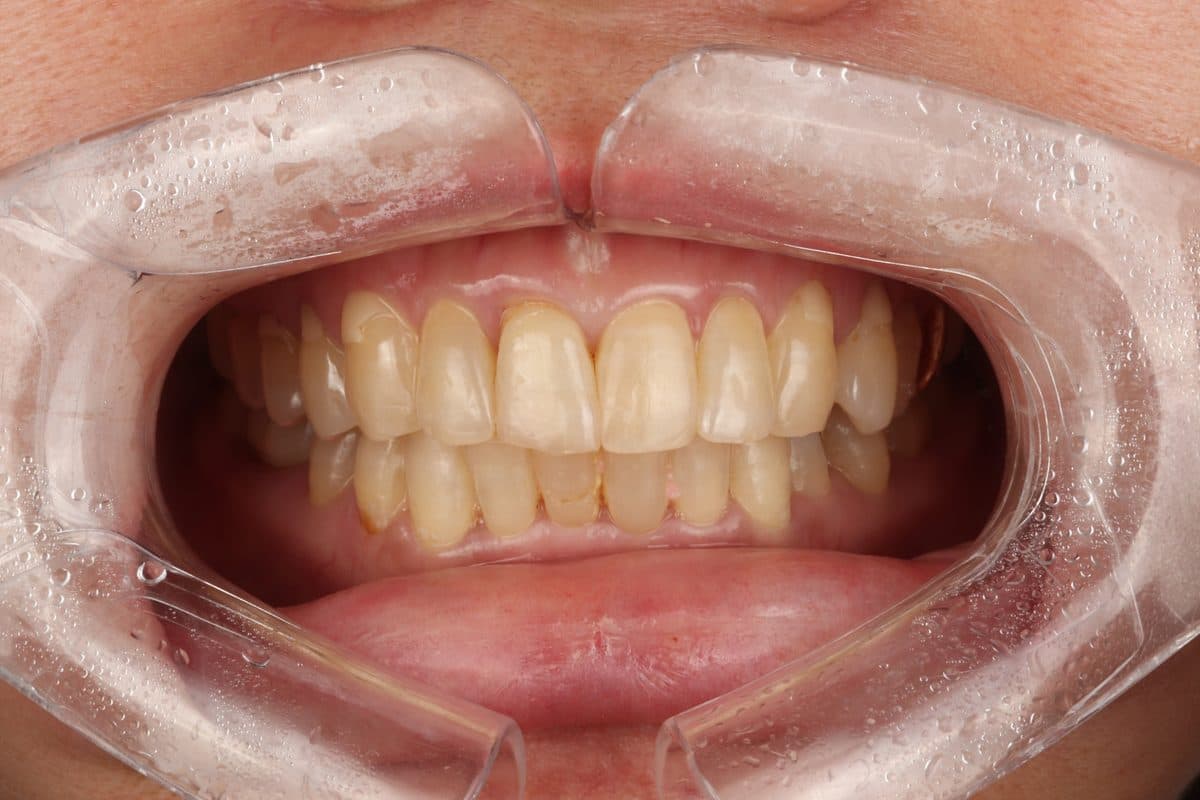
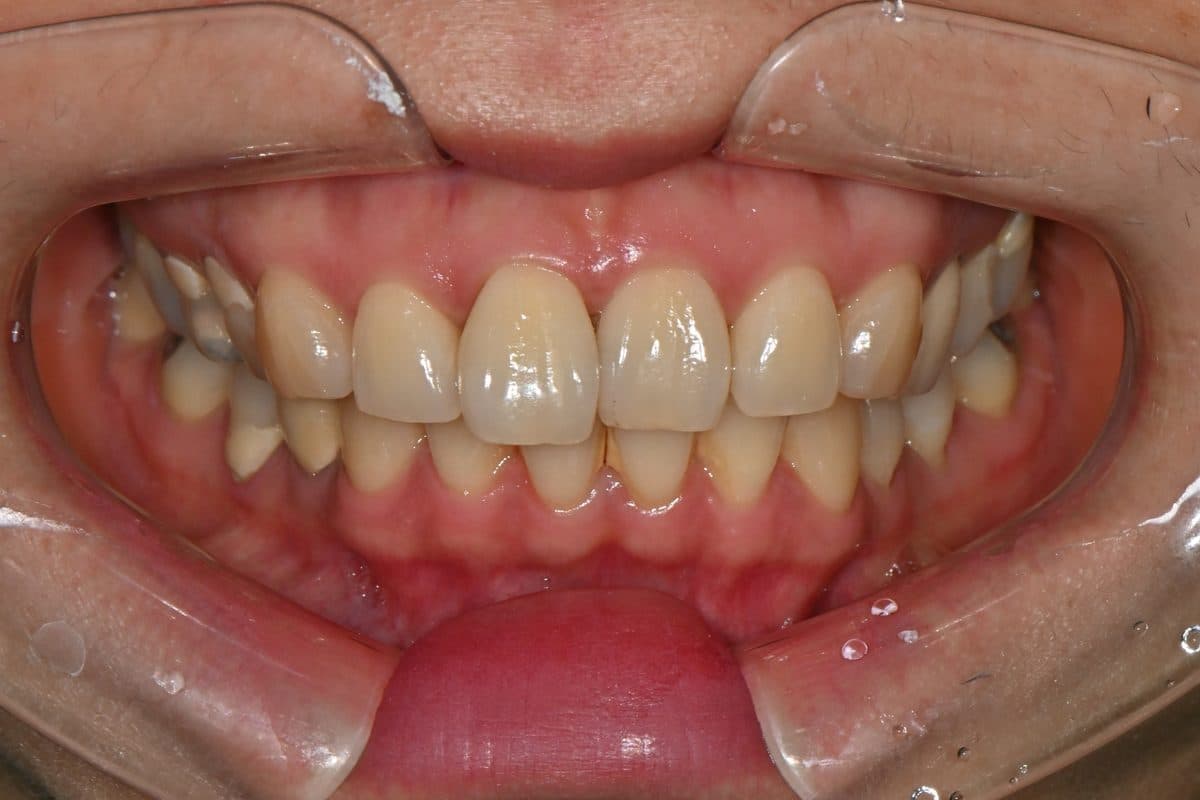
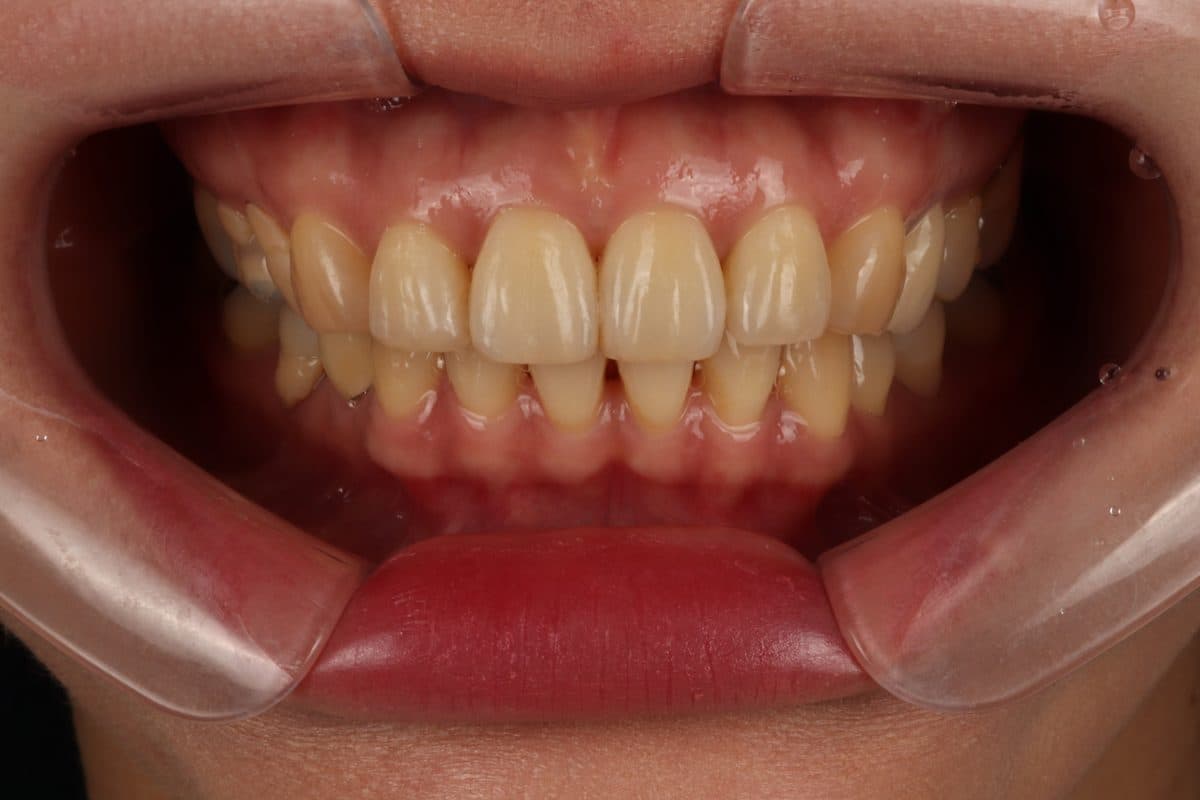
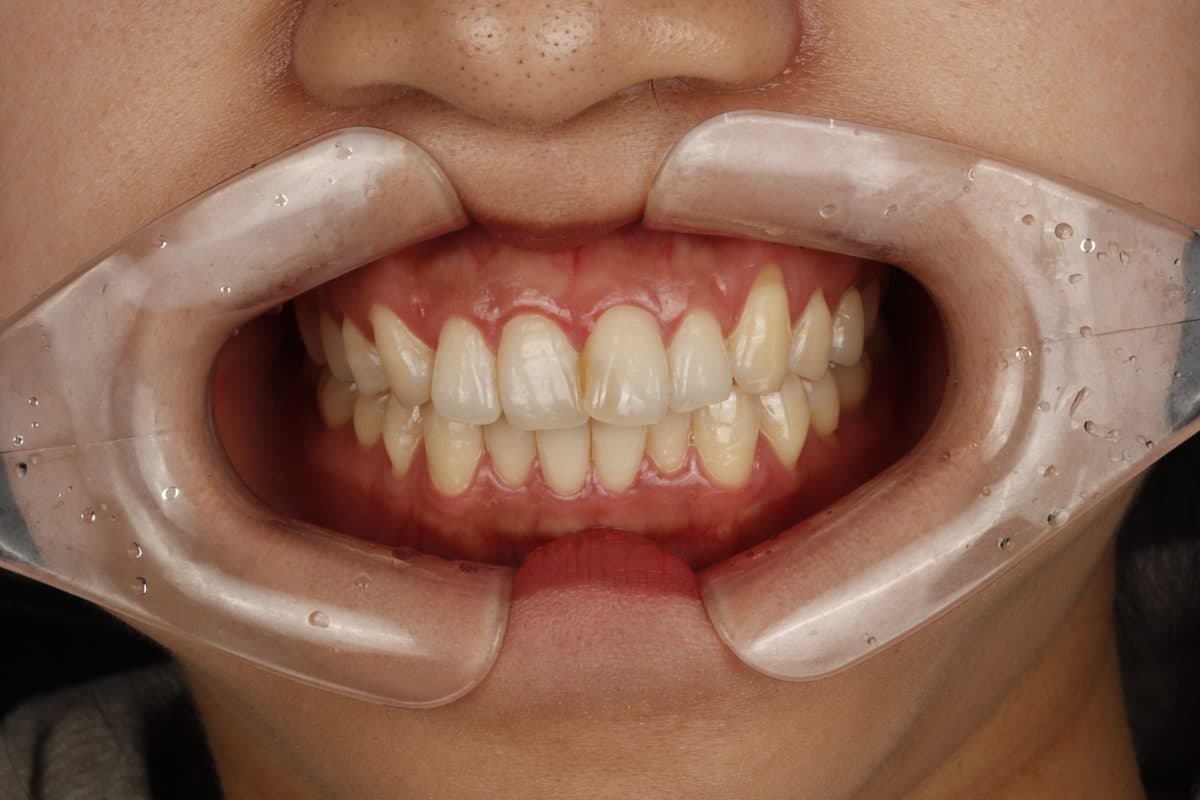
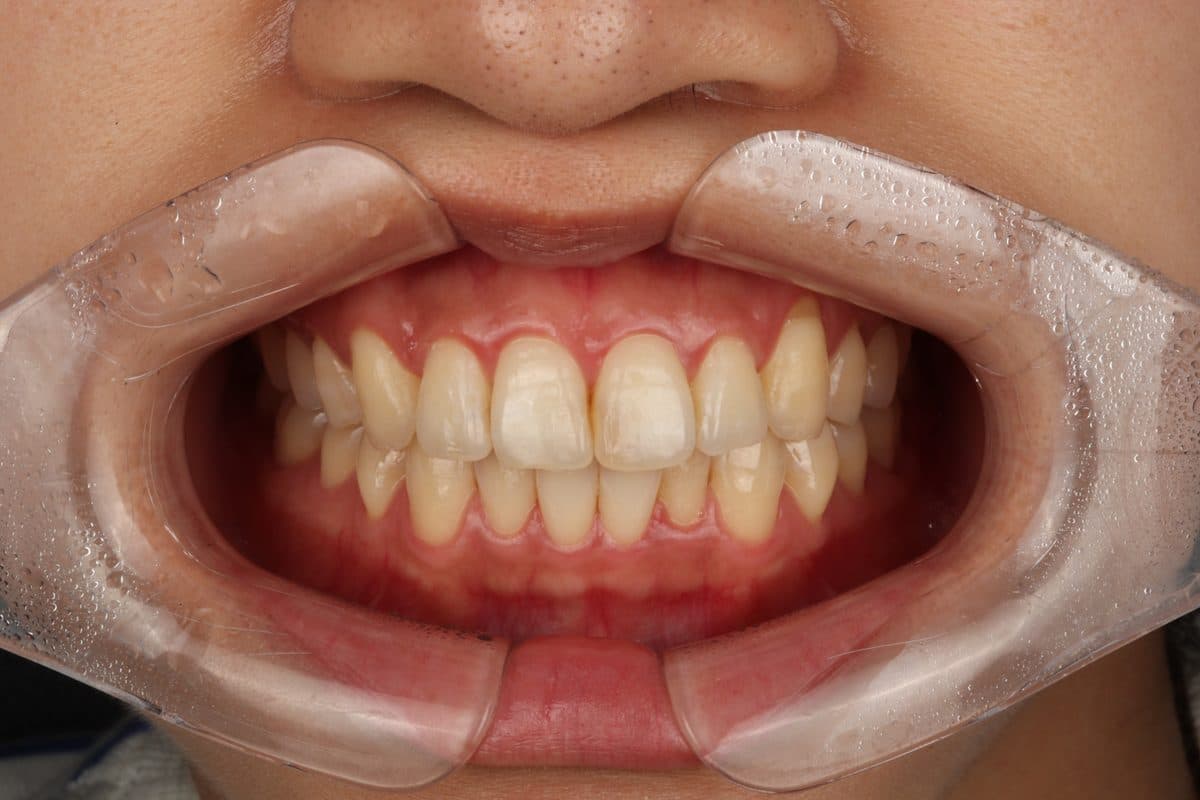
Real Blanche Dental orthodontic cases, published with the patients' consent. The appliance used and treatment time differ by case, and results vary from person to person. During orthodontics, pain or discomfort while adjusting to the appliance, gum inflammation or cavities with insufficient care, root resorption, and relapse after treatment may occur.
Adult orthodontics cost
Base prices are below; the final amount depends on the appliance type, treatment scope and any treatment needed before orthodontics, and is given item by item after the detailed exam. Orthodontic fees are not subject to VAT.
- 01
Broken down by item
We separate the detailed exam, appliance, adjustments and retainer, and tell you what's included.
- 02
Prior treatment shown separately
If gum or cavity treatment is needed, we list those items separately.
- 03
Feel free to decide at home
We go over every explanation at least four times. Take your time to think it over before deciding.
- Prices for all treatments are on our full price list.
- Approximate USD: KRW 200,000 ≈ USD 145, KRW 1,000,000 ≈ USD 735, KRW 1,800,000 ≈ USD 1,325, KRW 50,000 ≈ USD 35 (based on USD 1 = KRW 1,359).

From start to finish,
Dr. Juhee Baek treats you personally
At Blanche, orthodontic specialist Dr. Juhee Baek, who has practiced only orthodontics for 22 years, personally consults, places your appliance and checks the finish. Orthodontic specialists are only about 5% of dentists in Korea.
"With know-how built up over countless orthodontic cases, I will treat you with care and comfort."
- Valedictorian, Kyung Hee University College of Dentistry
- Orthodontics residency, Kyung Hee University Dental Hospital
- Master of Dental Science in Orthodontics, Kyung Hee University Graduate School of Dentistry
- Specialist and certified member, Korean Association of Orthodontists
- 10,000+ orthodontic cases treated over 22 years
- Presented an outstanding non-extraction orthodontic case at Osaka Dental University, Japan

Integrated Dentistry specialist
Dr. Kyungri Park
Drawing on her experience as an orthodontic clinic director, she treats orthodontic patients together with Dr. Juhee Baek. Cavity and gum care during orthodontics and finishing work such as veneers afterward are all continued within one clinic.
- Graduate of Stanford University
- Graduate of Seoul National University College of Dentistry
- Master's, Seoul National University Graduate School of Dentistry
- Clinical training at UCLA and Columbia University dental hospitals (USA)
- Former orthodontics director · former chief director of an orthodontic clinic
Adult orthodontics: common questions
Is it too late to start orthodontics in my 30s or 40s?
Does adult orthodontics take longer than for teens?
My gums are weak. Can I still get braces?
I heard braces make your gums recede. Is that true?
Can I get braces if I have implants or crowns?
I have a missing tooth. Should I get the implant first?
Can I keep my braces unnoticeable at work?
Won't they be inconvenient at work dinners or when eating out?
Only my front teeth are uneven. Will partial orthodontics work?
Do adults always need extractions for braces?
Do braces hurt more for adults?
Can I come after work?
How long do I need to wear a retainer?
I had braces before, but my teeth shifted again. Can I redo them?
What if gaps remain after orthodontics?
How much does adult orthodontics cost?
I live abroad. Can I get a consultation?
Reviewed by Dr. Juhee Baek (orthodontic specialist, 22 years; Master's in Orthodontics, Kyung Hee University Graduate School of Dentistry) · Last updated
Blanche Dental Clinic, Nonhyeon Station, Gangnam
A 30-second walk from Exit 4 of Nonhyeon Station, on Gangnam-daero.
Subway
Address
Phone
Hours
Is now the right time to start?
Check your gums and bone first
Send us two photos — one front-facing and one smiling. A dentist will review them personally and tell you what to check before orthodontics.
Send us a front photo and a smiling photo — a dentist will review them and reply.
Chat on WhatsAppCall +82-1877-2882