

2D lingual braces:
hidden behind your teeth
2D lingual braces are partial lingual orthodontics: thin brackets are bonded to the inner side of the teeth, so the front teeth are straightened with the appliance almost invisible from the front. We explain the discomfort of the initial adjustment period and the limits up front.
- Treated personally by Dr. Juhee Baek, orthodontic specialist (22 years)
- Thin appliance bonded behind the teeth
- Adjustment period explained in advance
If you don't want anyone
to know you're in braces
Many people meet others often for work, or have events like a wedding or job interview coming up, and worry most about braces being visible. 2D lingual braces reduce that worry by placing the appliance on the inner side of the teeth. In exchange, your tongue needs time to get used to touching the appliance, and it doesn't suit every set of front teeth.
It is also called 2D lingual orthodontics, partial lingual braces or inside braces.
- Visible braces are my biggest concern
- Gaps or slightly twisted front teeth bother me
- I think I'd forget to wear a removable appliance
- My work involves a lot of talking, like presentations or consultations
- Front teeth I had straightened before have shifted a little
- I've heard inside braces are uncomfortable, so I'm hesitant
How 2D lingual braces are placed
A thin 2D appliance is bonded to the inner surface of the teeth, so it's almost invisible from the front.
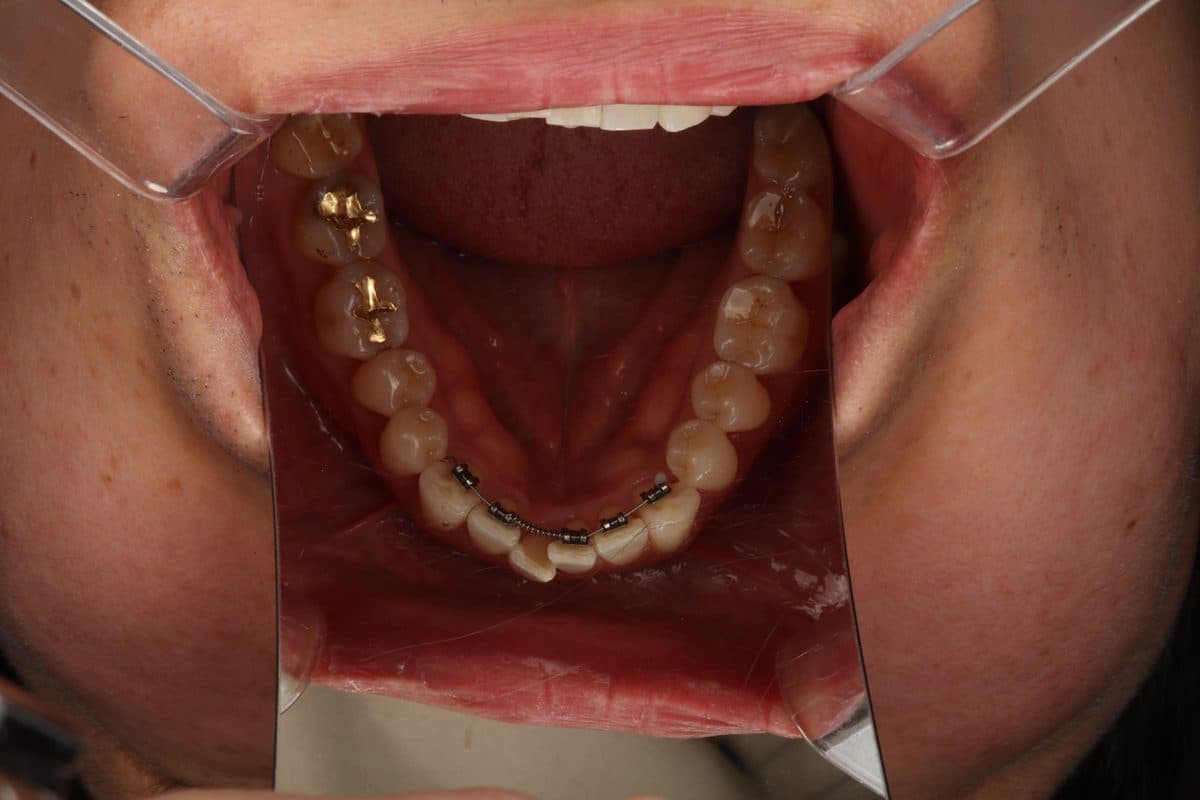
2D appliance on the inner side of the lower front teeth · Mirror view 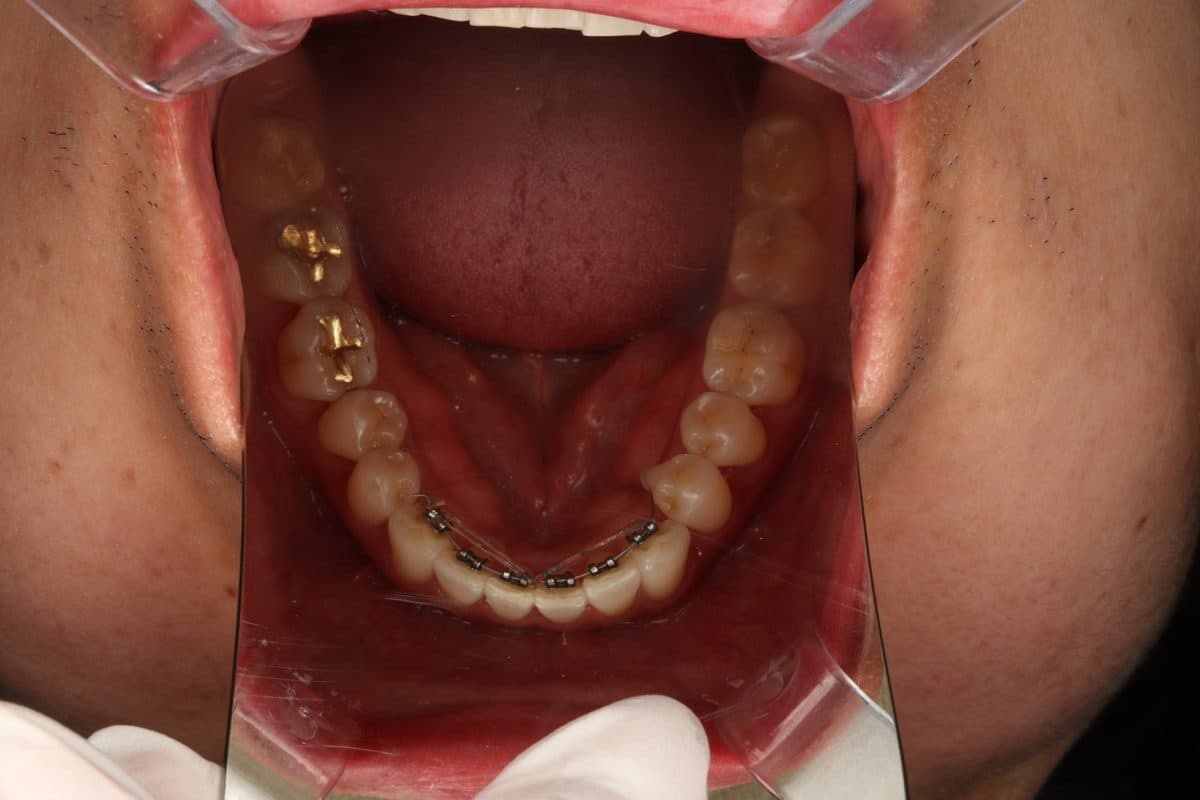
A thin wire connected to the appliance moves the front teeth
These are real Blanche Dental photos, published with the patients' consent. The shape and position of the appliance depend on the teeth and the treatment plan.
What kind of appliance are
2D lingual braces?
"Lingual" means the tongue side, that is, the inner surface of the teeth. 2D lingual brackets are a thin, simple type among the brackets bonded to the inner surface. Below are their generally known features.
- 01
Bonded behind the teeth
The appliance sits on the tongue side, so it's almost invisible when you smile or talk from the front.
- 02
Thin, simple brackets
A simple design with a flat base and just a small hook to hold the wire. Thin even among inside appliances, it is designed to reduce irritation to the tongue.
- 03
Direct bonding
Rather than having custom appliances made separately, the brackets are bonded directly to the teeth, which is known to allow a relatively quick start.
Because the design is simple, 2D lingual braces are mainly used for partial orthodontics to correct mild twisting and gaps in the front teeth. Other appliances suit treatment that moves roots significantly or changes the whole bite.
Because inside appliances are hidden,
experience matters even more
The inner surface differs in shape from tooth to tooth and is hard to reach, so the exact position of each bracket affects both the result and your comfort. That's why at Blanche an orthodontic specialist bonds and checks the appliance personally.
- 01
Specialist training
She completed an orthodontic residency at Kyung Hee University Dental Hospital and is a specialist and certified member of the Korean Association of Orthodontists.
- 02
About 5% of dentists in Korea
Orthodontic specialists make up about 5% of dentists in Korea.
- 03
22 years in orthodontics
Dr. Juhee Baek has practiced orthodontics for 22 years.
- 04
10,000+ cases
Over 22 years and more than 10,000 orthodontic cases, she has learned which cases suit each appliance.
For the first few days, speech and
your tongue may feel uncomfortable
Inside appliances sit where your tongue always touches. So, generally, right after placement your speech may lisp a little, or the tip of your tongue may feel rubbed. Even thin brackets can feel unfamiliar at first, and how quickly people adjust varies. If you have a schedule that involves a lot of talking, we'll set the placement date so it doesn't overlap.
- 01
Speech
Sounds made with the tip of the tongue, such as s, z and j, may lisp slightly at first. Practicing reading aloud helps you adjust.
- 02
Tongue irritation
The tip of your tongue may rub against the appliance and feel sore. We'll give you protective wax to cover the appliance.
- 03
Eating
Soft foods are easier at first. It's best not to bite into hard foods with your front teeth.
- 04
If discomfort continues
If the edge of the appliance keeps poking you or a sore doesn't heal, don't put up with it; contact us. We'll check and smooth it.
2D lingual braces: the benefits and the trade-offs
What you can expect
- The appliance is almost invisible from the front
- Nothing touches the outer surface of the teeth, so it stays as it is
- It stays bonded, so you don't need to track wear time
- Because only the front teeth are treated, it usually takes 3–6 months, shorter than the 1 to 2.5 years of full treatment (varies by person)
Burdens and limits to accept
- There may be speech and tongue discomfort during the initial adjustment period
- The inner side is hard to see, so brushing is trickier, and with poor care, gum inflammation or cavities can develop
- With a deep bite, the lower front teeth may touch the upper appliance, so this must be checked in advance
- It's not suited to treatment that moves roots significantly or changes the bite
When 2D lingual braces fit,
and when another option is better
2D lingual braces may be considered
- Keeping the appliance hidden matters most
- Gaps or mild twisting or crowding of the front teeth
- The back teeth meet well
- The front teeth don't bite too deeply
Another appliance may be better
- You're especially worried about adjusting your speech → Invisalign
- A small appliance on the outer surface is fine → MTA Braces
- More movement is needed → Clippy-C
Full treatment should be considered first
- The back teeth don't meet properly
- The whole mouth looks pushed forward
- The front teeth bite in reverse or don't meet
- Teeth are severely crowded and a lot of space must be made
How we decide whether partial orthodontics suits you at all, and which of several appliances is better, is explained on our Partial Orthodontics page. This page covers just one appliance, 2D lingual braces. Even for the same partial treatment of front teeth, Dr. Juhee Baek decides between 2D (lingual) and MTA braces after diagnosis. If an underbite or facial asymmetry concerns you, please also see our Non-Surgical Underbite & Asymmetry page.
2D lingual braces vs. clear aligners:
what's different?
Both are hard to see from the outside, but they feel clearly different in daily life. Below are the general differences.
The 2D lingual braces process
Dr. Juhee Baek personally handles the consultation, placing the appliance and the final check.
- 01
Consultation
We ask which front teeth bother you most and about your schedule, and a dentist spends over an hour explaining.
- 02
Full exam
Photos, X-rays and an intraoral scan are used to check bite depth and even the shape of the inner side of the front teeth.
- 03
Planning
We decide which teeth to move and in what direction, and set the placement date around your schedule.
- 04
Placing the appliance
The doctor personally bonds the brackets to the inner side of the teeth and gives you tips for adjusting.
- 05
Regular adjustments
You visit at set intervals so we can check progress and the condition of your tongue and gums.
- 06
Finishing & retention
After the doctor checks the final result, the appliance is removed and a retainer is made.
Partial orthodontics such as 2D lingual braces usually takes 3–6 months. It varies with the number of teeth and how far they move, so we'll give you an estimate after the full exam. Every explanation is repeated at least four times, and you're welcome to make your decision at home.
2D lingual braces cost
2D lingual braces are a partial orthodontic appliance and are priced as partial orthodontics. We first confirm with a full exam that 2D lingual braces suit you before starting.
- When comparing quotes, first check whether the exam, appliance and adjustment fees are all included.
- USD amounts are approximate, based on 1 USD = 1,359 KRW.
- You can see all fees in our full price list.
Real front-teeth cases at Blanche
Drag the photo left and right to compare before and after.
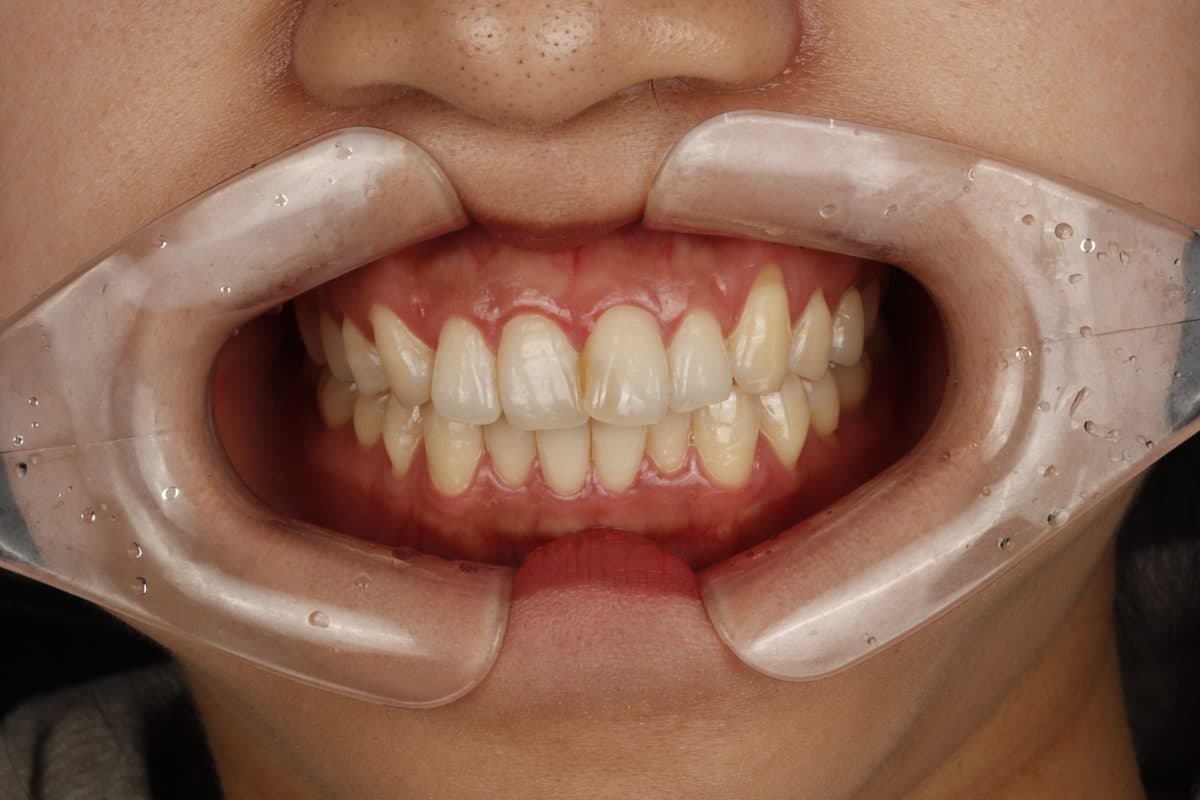
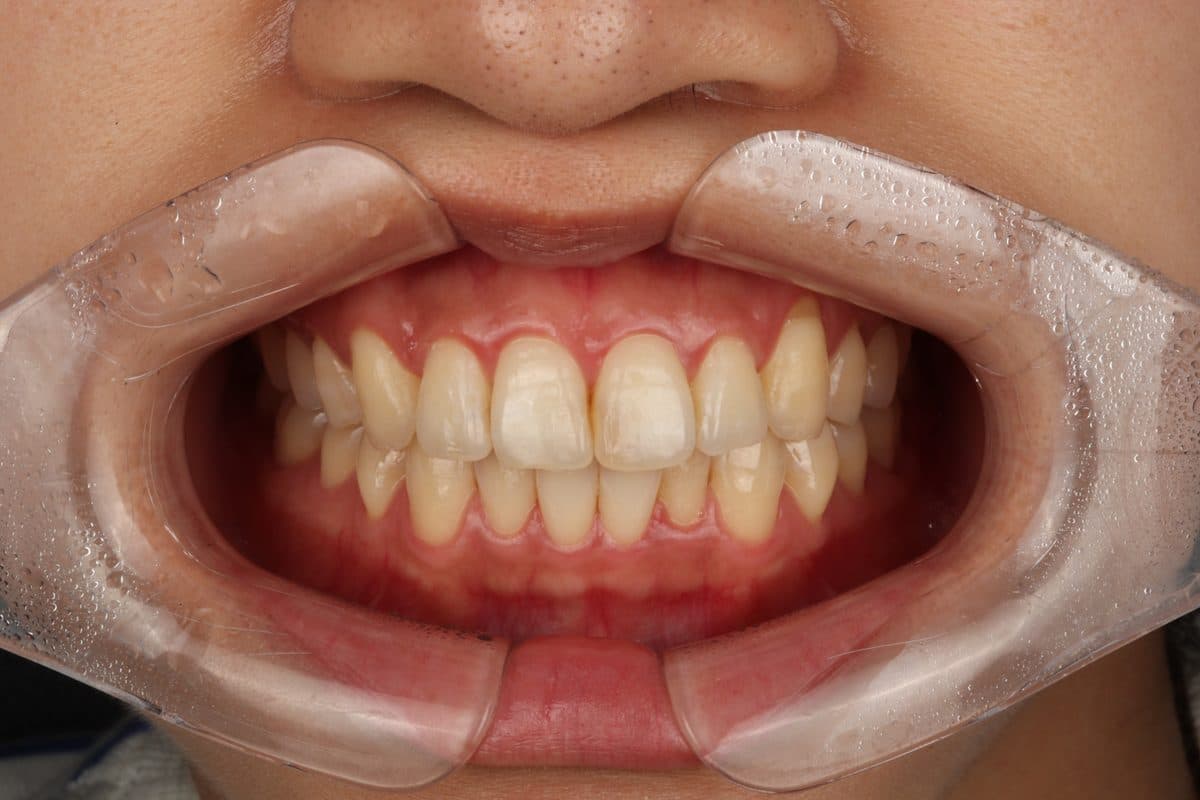
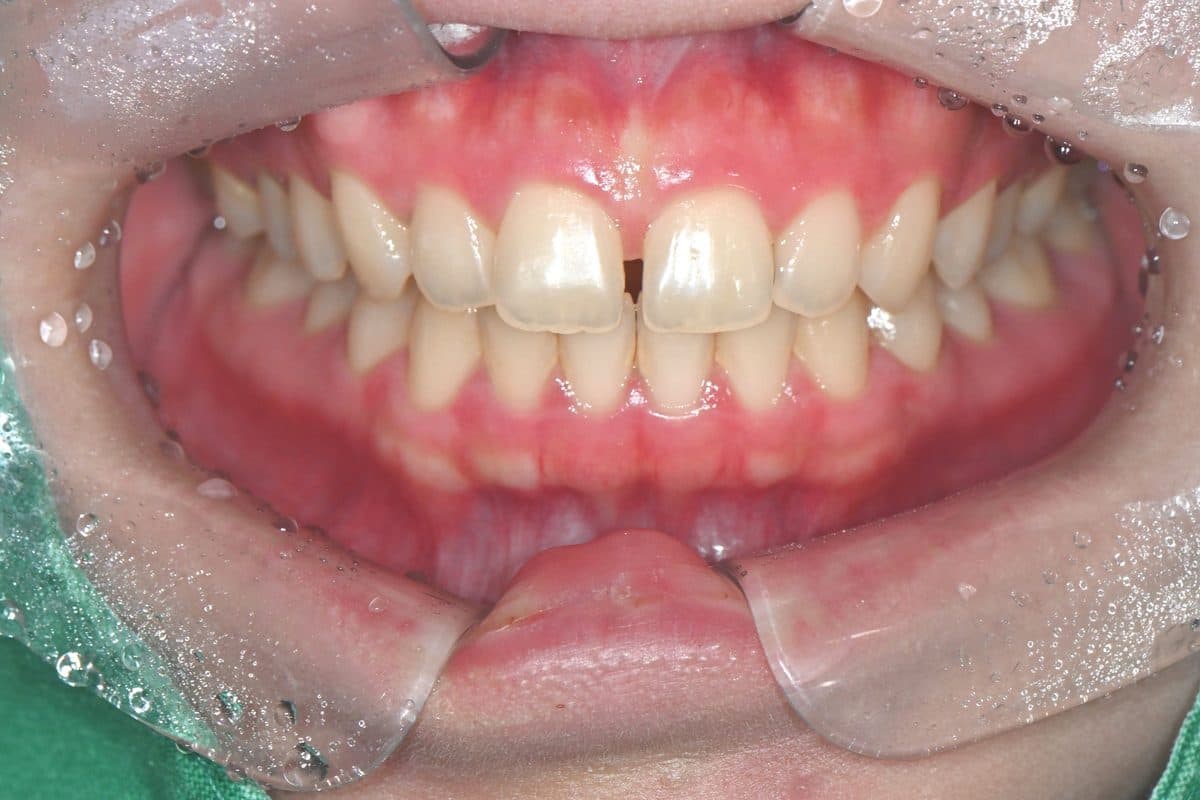
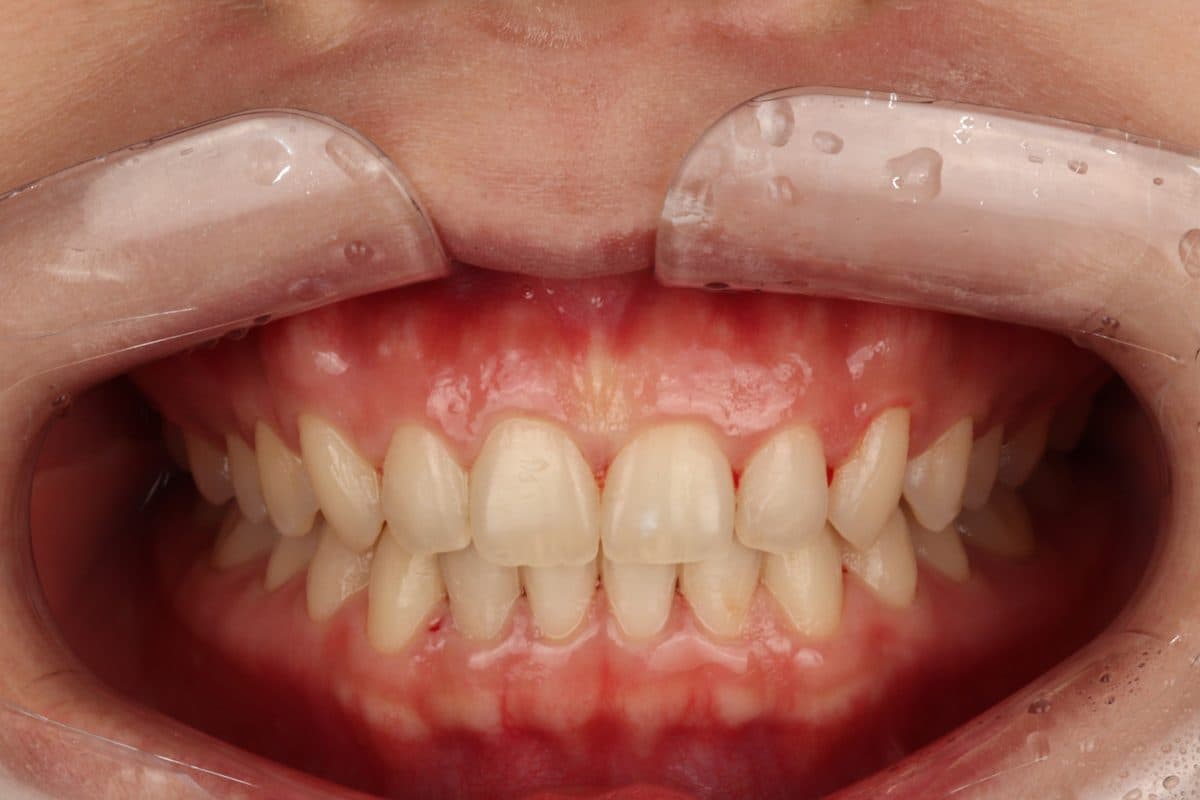
These are real Blanche Dental cases, published with the patients' consent. Treatment method, duration and results vary with each person's teeth. During treatment there may be pain or discomfort, gum inflammation or cavities with insufficient care, and rarely root resorption; relapse can occur if retainers are not worn.

From start to finish,
Dr. Juhee Baek sees you herself
At Blanche, Dr. Juhee Baek, an orthodontic specialist who has practiced only orthodontics for 22 years, personally handles the consultation, places the appliance and checks the final result. Orthodontic specialists make up only about 5% of dentists in Korea.
"With know-how built up over countless orthodontic cases, I will treat you with care and keep you comfortable."
- Graduated top of class, Kyung Hee University College of Dentistry
- Orthodontic residency, Kyung Hee University Dental Hospital
- Master's in Orthodontics, Kyung Hee University Graduate School of Dentistry
- Specialist and certified member, Korean Association of Orthodontists
- 10,000+ orthodontic cases over 22 years
- Presented an outstanding non-extraction case at Osaka Dental University, Japan

Integrated Dentistry specialist
Dr. Kyungri Park
Drawing on her experience as an orthodontics director, she treats orthodontic patients together with Dr. Juhee Baek. Cavity and gum care during treatment, and finishing work such as veneers afterward, are all carried out within one clinic.
- Graduate of Stanford University
- Graduate of Seoul National University School of Dentistry
- Master's, Seoul National University School of Dentistry
- Clinical training at UCLA and Columbia University dental hospitals (USA)
- Former orthodontics director and chief orthodontics director
Your questions about 2D lingual braces
What are 2D lingual braces?
Are 2D lingual braces really invisible from the outside?
Who is partial lingual orthodontics suitable for?
Will I lisp a lot with 2D lingual braces?
Will my tongue hurt?
How long do 2D lingual braces take?
How much do 2D lingual braces cost?
How are 2D lingual braces different from regular lingual braces?
Which is better, 2D lingual braces or clear aligners?
How are 2D lingual braces and MTA braces different?
My front teeth bite deeply. Are 2D lingual braces possible?
Isn't brushing difficult with inside braces?
Are there foods I shouldn't eat during 2D lingual treatment?
What if the appliance comes off?
Do I need a retainer after 2D lingual braces?
What about remaining gaps or small teeth after treatment?
Can I get a consultation from abroad or outside Seoul?
Reviewed by Dr. Juhee Baek (orthodontic specialist, 22 years; Master's in Orthodontics, Kyung Hee University Graduate School of Dentistry) · Last updated
Blanche Dental Clinic, Nonhyeon Station, Gangnam
A 30-second walk from Exit 4 of Nonhyeon Station, on Gangnam-daero.
Subway
Address
Phone
Hours
Can your braces stay hidden?
Ask us with photos first
Send us two photos, one of your face from the front and one smiling, and a dentist will look personally and tell you whether your case is within what an inside appliance can correct.
Send us a front photo and a smiling photo — a dentist will review them and reply.
Chat on WhatsAppCall +82-1877-2882