
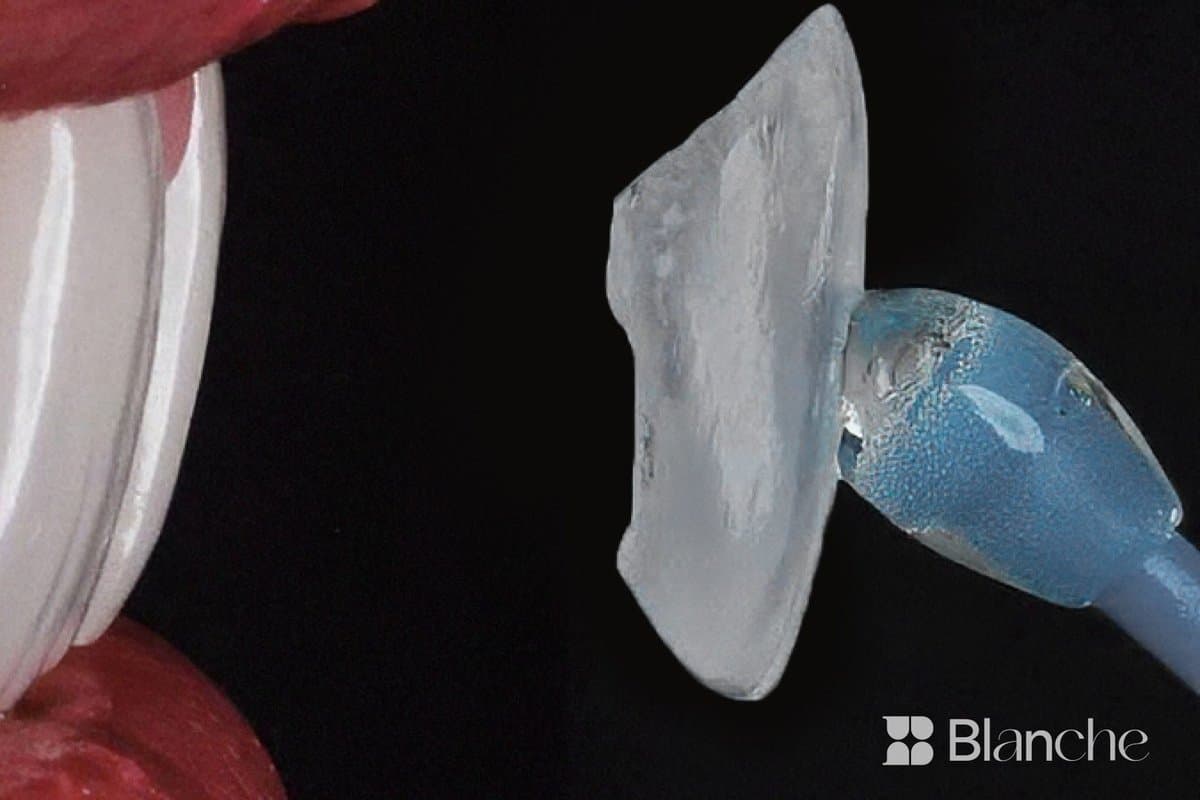
Veneers for tetracycline stains:
covering discoloration whitening can't remove
Gray or brown discoloration caused by antibiotics taken in childhood sits inside the tooth, so whitening alone often has its limits. Veneers cover that color with thin ceramic and can give you a bright, natural shade.
- No-prep · minimal-prep under 0.1 mm
- Same price for both
- In-house Blanche Lab
- One-day, same-day completion
Tetracycline-stained teeth:
does this sound familiar?
Tetracycline discoloration doesn't hurt like a cavity, so many people put up with it for years. But many end up covering their mouth every time they smile, or feel worn out after several rounds of whitening that changed nothing. Veneers for tetracycline stains cover this discoloration from the outside of the tooth and set a new color.
It is also called antibiotic tooth staining, gray teeth or banded tooth discoloration.
- My front teeth look gray or brown overall
- I can see dark horizontal stripes (bands) on my teeth
- My upper and lower teeth are similarly dark, stained symmetrically on both sides
- I had whitening, but my teeth barely got lighter or the bands are still there
- I've been told I took antibiotics for a long time as a child
- My teeth are healthy, but the color makes me hesitate to smile widely
Why and when does
tetracycline staining happen?
If tetracycline-type antibiotics are taken while teeth are forming beneath the gums, the drug can build up inside the developing teeth and leave color behind. It can come from taking them yourself as a child, or from your mother taking them during pregnancy.
Mild staining
The whole tooth is evenly tinted a pale yellow or gray. Bands are barely visible.
Moderate staining
Brown or gray-brown becomes deeper, and the area near the gums may look especially dark.
Dark banded staining
Dark gray, blue-gray or brown bands are clearly visible across the teeth. This is the hardest stage to treat with whitening.
- 01
When it happens
It can occur when the drug is taken from pregnancy (by the mother) through early childhood while permanent teeth are forming (roughly until the early primary school years). Fully grown adult teeth usually don't develop new bands like this.
- 02
What it looks like
Several teeth are often stained a similar color, symmetrically on both sides. The period the drug was taken can be recorded at a certain height of the tooth, showing up as a horizontal band.
- 03
Over time
It may start out yellowish, then look darker gray or brown with exposure to light. That's why front teeth can seem darker than back teeth.
The stages above are a general guide to help you understand. The actual degree of staining can differ from tooth to tooth even in the same person, so we judge it from natural-light photos together with an in-clinic examination.
Why tetracycline stains
don't respond well to whitening
Stains from coffee, tea or smoking sit on the tooth surface, so whitening lightens them easily. Tetracycline staining is color built into the inner layer (dentin) as the tooth formed, so whitening agents are often limited in how much they can remove. Long-term whitening may lighten the teeth overall somewhat, but dark bands commonly remain.
For mild staining, trying teeth whitening first is a good option. Looking at your photos, we'll tell you honestly whether whitening is enough or veneers would be better. We don't recommend veneers to everyone.
Veneers for tetracycline stains:
how we cover dark color
Ceramic naturally lets some light through. So the darker the tooth underneath, the more a thin veneer can let a grayish tint show through. With tetracycline staining, the ceramic type, thickness and even the bonding cement shade all need to be matched to get a natural color.
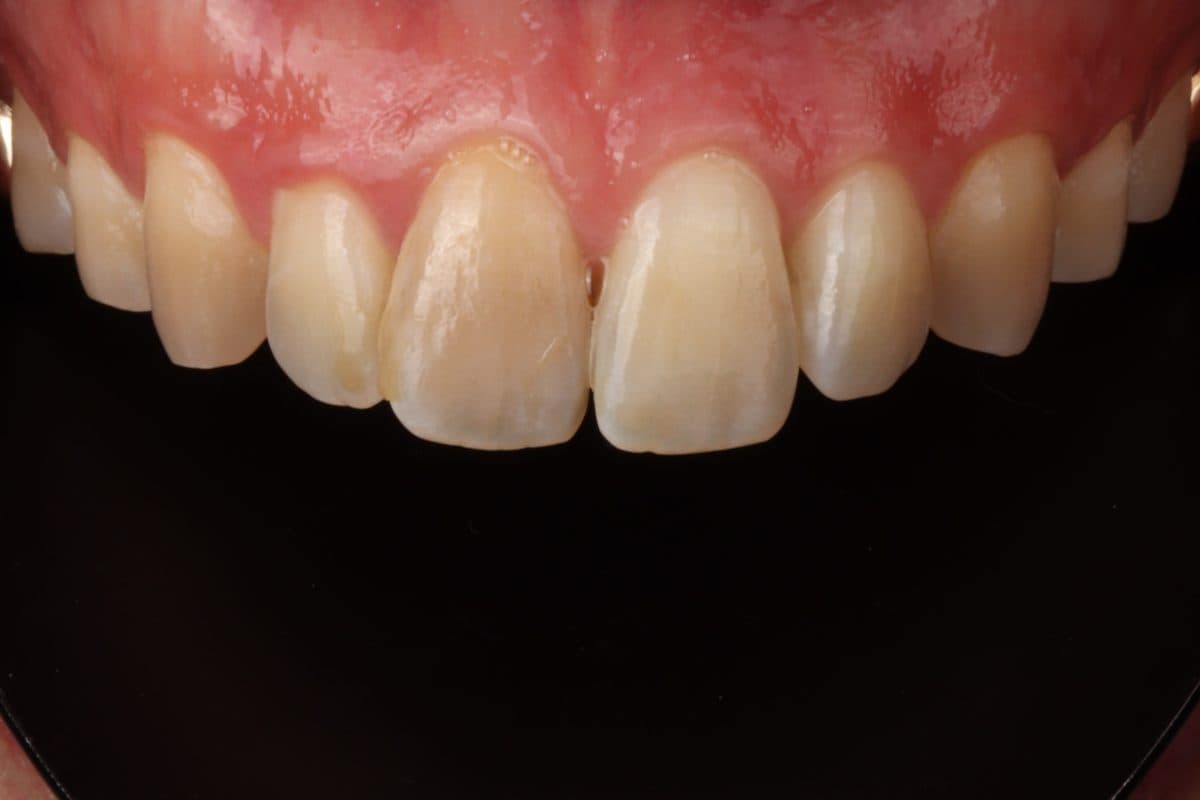
① Assess the staining
We check the color and band intensity of each tooth, and decide whether no-prep is enough or minimal-prep under 0.1 mm is needed.
- Example image
② e.max LT ceramic
For tetracycline staining, we recommend Ivoclar e.max LT (Low Translucency) ceramic, which lets less light through. At Blanche Lab, the color is adjusted so the dark shade shows through less and a natural brightness comes out.
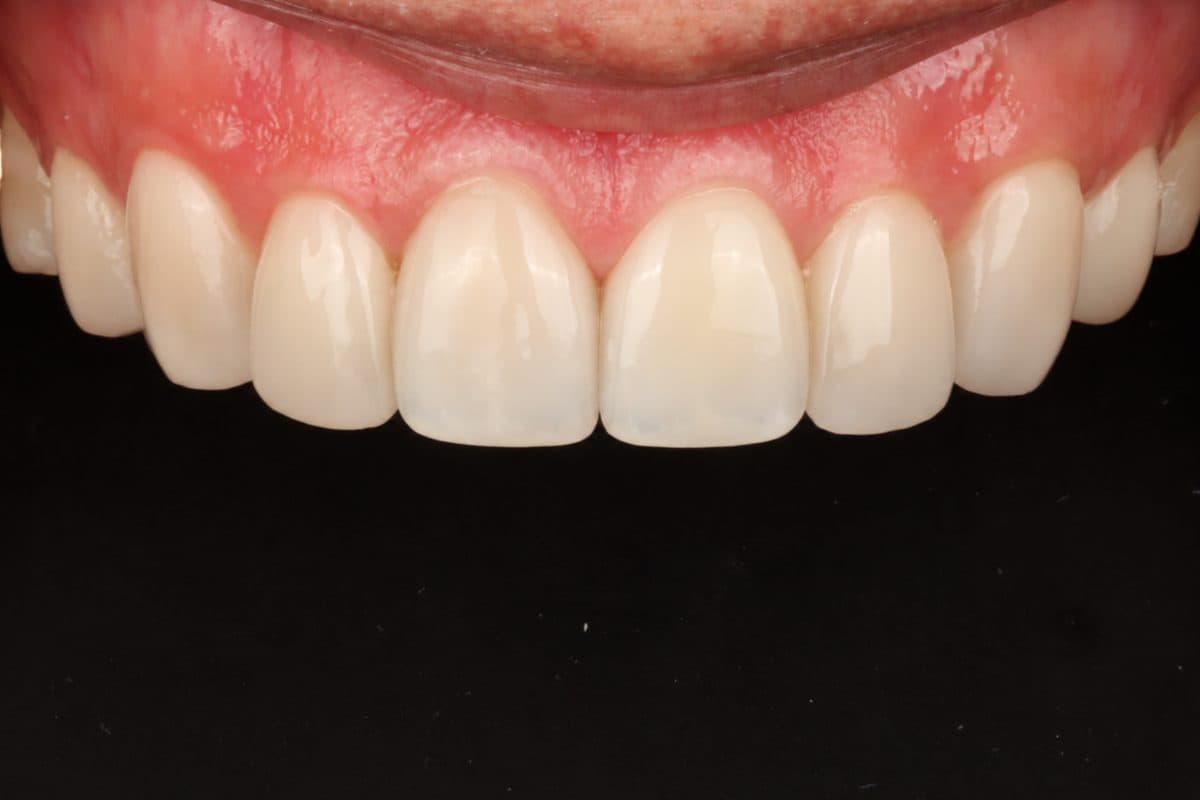
③ Try the cement shade
Before bonding, we try cement shades in your mouth, confirm the natural color, then bond with the Ivoclar adhesive system.
What veneers can do
- Cover color that whitening couldn't remove, for a bright, natural shade
- Address size, shape and small gaps along with color, all at once
- Ceramic is less prone to discoloration than resin
- Unlike crowns, there's no reshaping all around the tooth, which helps preserve it
Good to know in advance
- With very dark staining, no-prep veneers may let color show through or look bulky, so minimal-prep under 0.1 mm is often recommended
- Teeth without veneers keep their original color
- Biting hard things with your front teeth can chip or dislodge veneers
- Temporary sensitivity or gum swelling may occur after treatment, and results and longevity vary from person to person
- No-prep
Covering without drilling
When staining is mild to moderate, and making the teeth slightly larger still looks natural
- Minimal-prep
Reshaping under 0.1 mm
Dark gray or banded staining, or teeth that are already large or protruding
- Treat first
When other treatment comes first
Gum inflammation, cavities or severe grinding, or teeth so weakened that a crown is more suitable
Tetracycline-stained teeth:
how many veneers look natural?
Tetracycline staining usually affects many teeth together. Since upper and lower teeth are often stained alike, Blanche starts consultations from a typical 20 veneers, covering the upper and lower teeth that show when you smile. The visible range and degree of staining differ from person to person, though, so the actual number is decided together after looking at your smile.
Teeth that aren't treated keep their original color, so we also look at how they'll blend with the veneers. Whitening the untreated teeth isn't required, but we can guide you if you'd like. How we decide the number of front teeth →
How it works in one day
With our in-house Blanche Lab, everything from consultation to bonding can be finished in one day. There is no case where one-day treatment isn't possible.
- 01
Consultation & exam
We check the degree of staining, gums, cavities and bite, and decide between no-prep and minimal-prep.
- 02
Color & smile design
Considering your face, skin tone and untreated teeth, we decide the target brightness and shape together.
- 03
3D scan
Teeth are measured with a 3D intraoral scanner. No need to bite on impression material for long.
- 04
Made at Blanche Lab
A ceramist trained in France and Switzerland adjusts the color and layers of the ceramic to match the degree of staining.
- 05
Shade check & bonding
Before bonding, we try cement shades in your mouth, then bond with the Ivoclar adhesive system.
- 06
Check-up
We check your bite and the gum margins, then follow up with regular check-ups.
One-day treatment usually takes 4–5 hours, or 5–6 hours for more teeth; even the 20 veneers common for tetracycline staining are finished within 6 hours. It is usually done without anesthesia or temporary teeth, with anesthesia only when needed. If gum treatment is needed first, the schedule can be split.
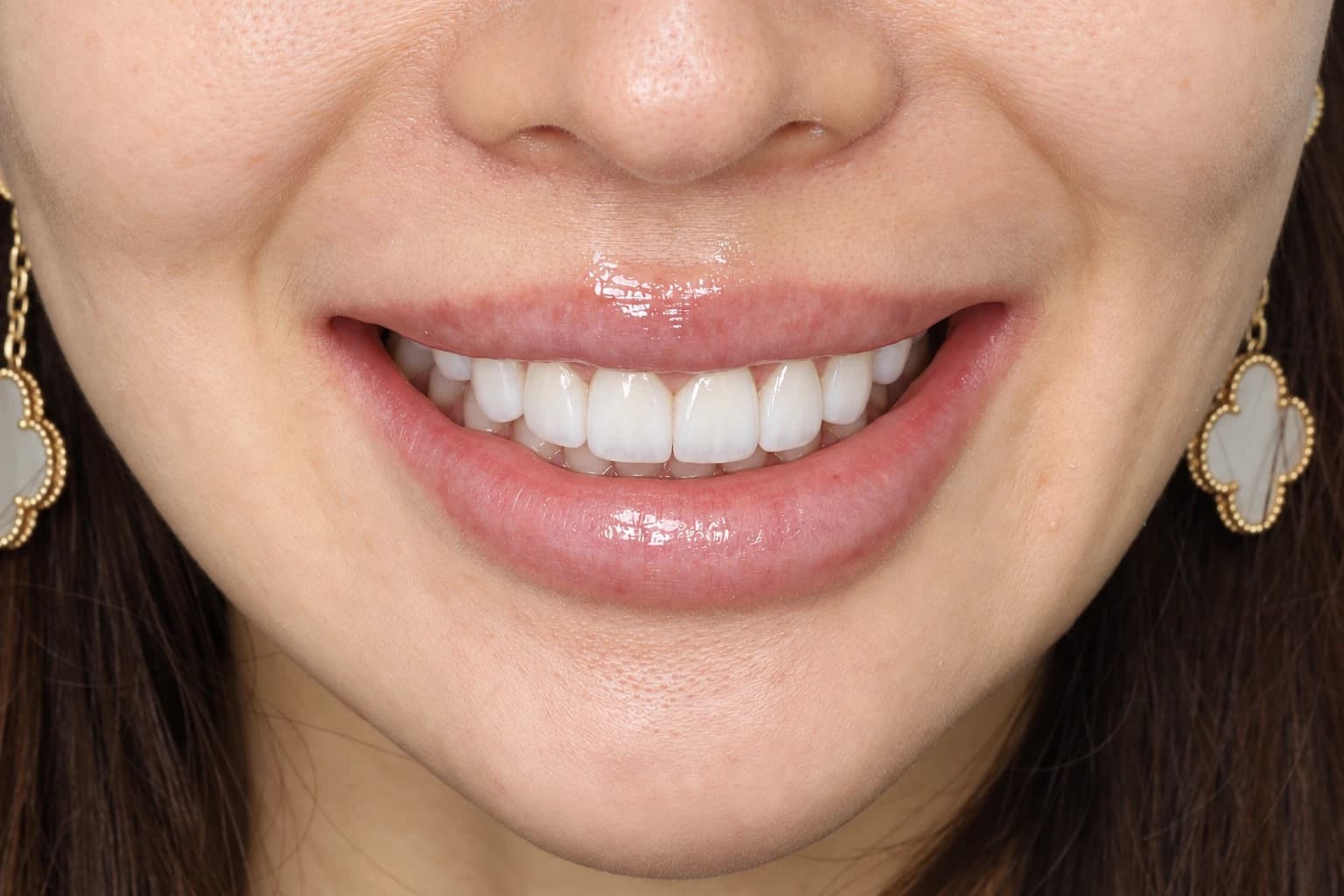
What we always explain at the consultation
- Whether whitening is enough for your staining, or veneers are needed
- Whether no-prep works or minimal-prep under 0.1 mm is better, and why
- How many veneers will blend in naturally
- The differences between plans and the total cost
We go over everything at least four times. We don't rely on one person's judgment, and you're welcome to decide at home.
Veneer care and lifespan
You can eat and go about your day as usual from the day they're bonded. A few habits help them last longer and stay comfortable.
- 01
Avoid biting hard things with front teeth
Cut ice, hard candy and food with bones into small pieces and chew with your back teeth.
- 02
Brushing and flossing
Just as usual. It's important to keep tartar from building up at the margins.
- 03
Regular check-ups
We regularly check the margins, gums and bite to catch small changes early.
- 04
Check for grinding
If you grind or clench, we'll discuss a protective guard.
Ceramic resists discoloration over time, but how long veneers last varies with care habits and bite. Warranties are 1 year for BASIC, 5 years for PLATINUM and 10 years for Signature PLATINUM. If they ever need replacing, they can be removed with a laser and remade. Veneer replacement →
Cost of veneers for tetracycline stains
Tetracycline staining doesn't raise the price. We follow Blanche's standard veneer prices.
- Prices are per tooth, VAT excluded. Approximate USD: BASIC ≈ USD 480, PLATINUM ≈ USD 625, Signature PLATINUM ≈ USD 1,105, one-day +≈ USD 145 (USD 1 = KRW 1,359).
- No-prep and minimal-prep under 0.1 mm cost the same. Cost never changes the approach.
- For tetracycline staining, we recommend Ivoclar e.max LT ceramic, which lets less light through. e.max LT is a more expensive material than our standard ceramic, so its cost is explained separately at the consultation.
- For a typical 20 veneers, the per-tooth price × 20 comes to KRW 13,000,000 (≈ USD 9,565) for BASIC, KRW 17,000,000 (≈ USD 12,510) for PLATINUM and KRW 30,000,000 (≈ USD 22,075) for Signature PLATINUM (VAT excluded; one-day adds KRW 200,000 per tooth). This is based on standard ceramic; e.max LT adds to the cost. The actual number and cost are set after consultation.
- Total costs by number of teeth are on Veneer prices & costs, and all our fees are in the full price list.
Real Blanche veneer cases for tetracycline and other discoloration
Cases of tetracycline-stained and darkly discolored teeth treated with veneers. Drag the photo left and right to compare.
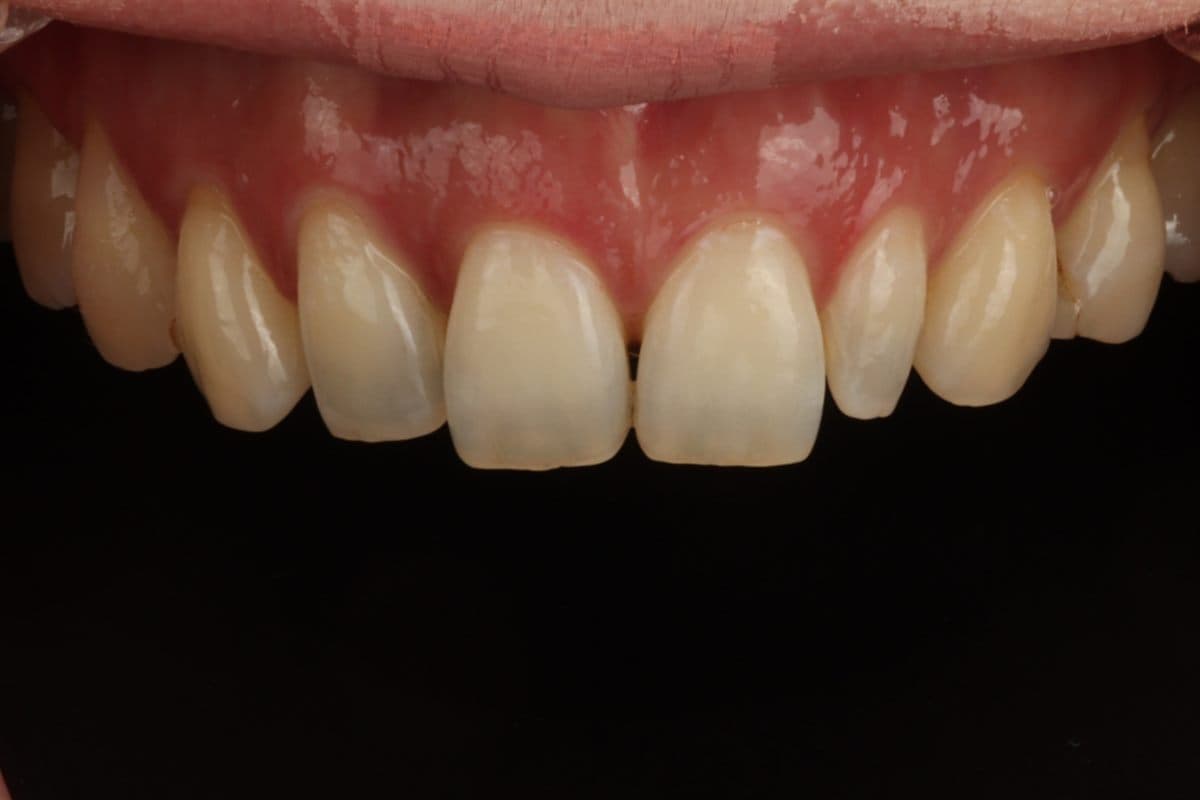
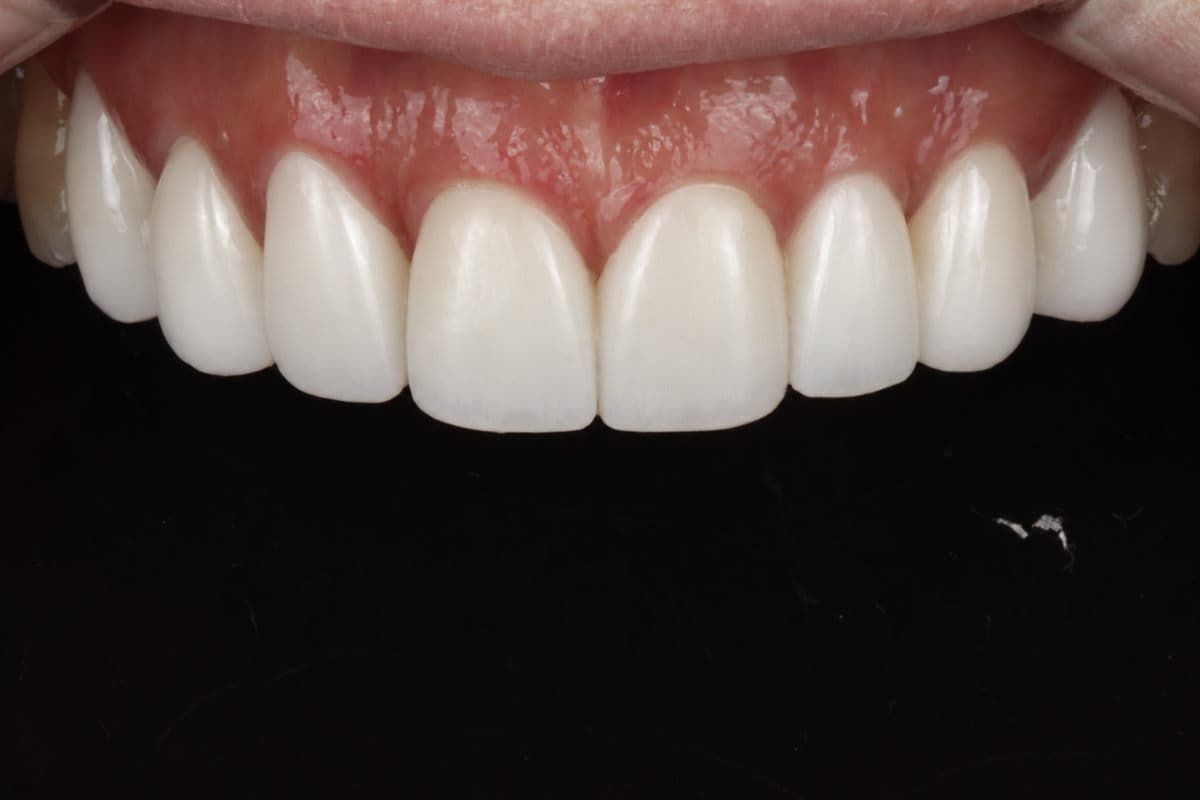
These are real Blanche Dental discoloration cases: case 1 is tetracycline staining, and case 2 is discoloration of unspecified cause. Results vary with the degree of staining and the condition of the teeth, and temporary sensitivity or gum swelling may occur after treatment. See more in our before & after cases.

Minimal-prep veneer seminar speaker,
Dr. Taehyung Kim, Chief Dentist
He has held five minimal-prep veneer seminars in Korea and abroad and still teaches dentists today. Blanche's design and treatment standards were set by Dr. Taehyung Kim, who personally handles Signature PLATINUM.
- Seoul National University School of Dentistry
- Seoul National University Graduate School of Dentistry
- M.S.D., Seoul National University
- Clinical Instructor, Ginza Shirayuri Dental Clinic (銀座しらゆり歯科), Japan
- Clinical training at Columbia and UCLA dental hospitals, USA
Veneers for tetracycline stains: common questions
Can veneers improve tetracycline-stained teeth?
Can tetracycline stains be treated with no-prep veneers?
How can I tell if it's from medication I took as a child?
Should I try whitening first?
Why doesn't whitening work well on tetracycline stains?
Can antibiotics stain adult teeth too?
Can gray teeth be made white?
Won't the original color show through the veneers?
How many veneers do I need?
How much do veneers for tetracycline stains cost?
Can it be done in one day?
Do I need anesthesia or temporary teeth?
Won't there be a color difference with untreated teeth?
How is it different from covering with resin?
I was told I need crowns.
Can my teeth be sensitive or sore afterward?
How long do veneers last?
I live abroad. Can I get a consultation?
Reviewed by Dr. Taehyung Kim, Chief Dentist (Seoul National University Graduate School of Dentistry, M.S.D.) · Last updated
Blanche Dental Clinic, Nonhyeon Station, Gangnam
A 30-second walk from Exit 4 of Nonhyeon Station, on Gangnam-daero.
Subway
Address
Phone
Hours
Staining that whitening didn't fix?
Find out first whether veneers can help
Send a front-facing smile photo taken in natural light. A dentist will personally review the degree of staining, how many veneers you'd need, and whether no-prep or minimal-prep suits you.
Send us a front photo and a smiling photo — a dentist will review them and reply.
Chat on WhatsAppCall +82-1877-2882