
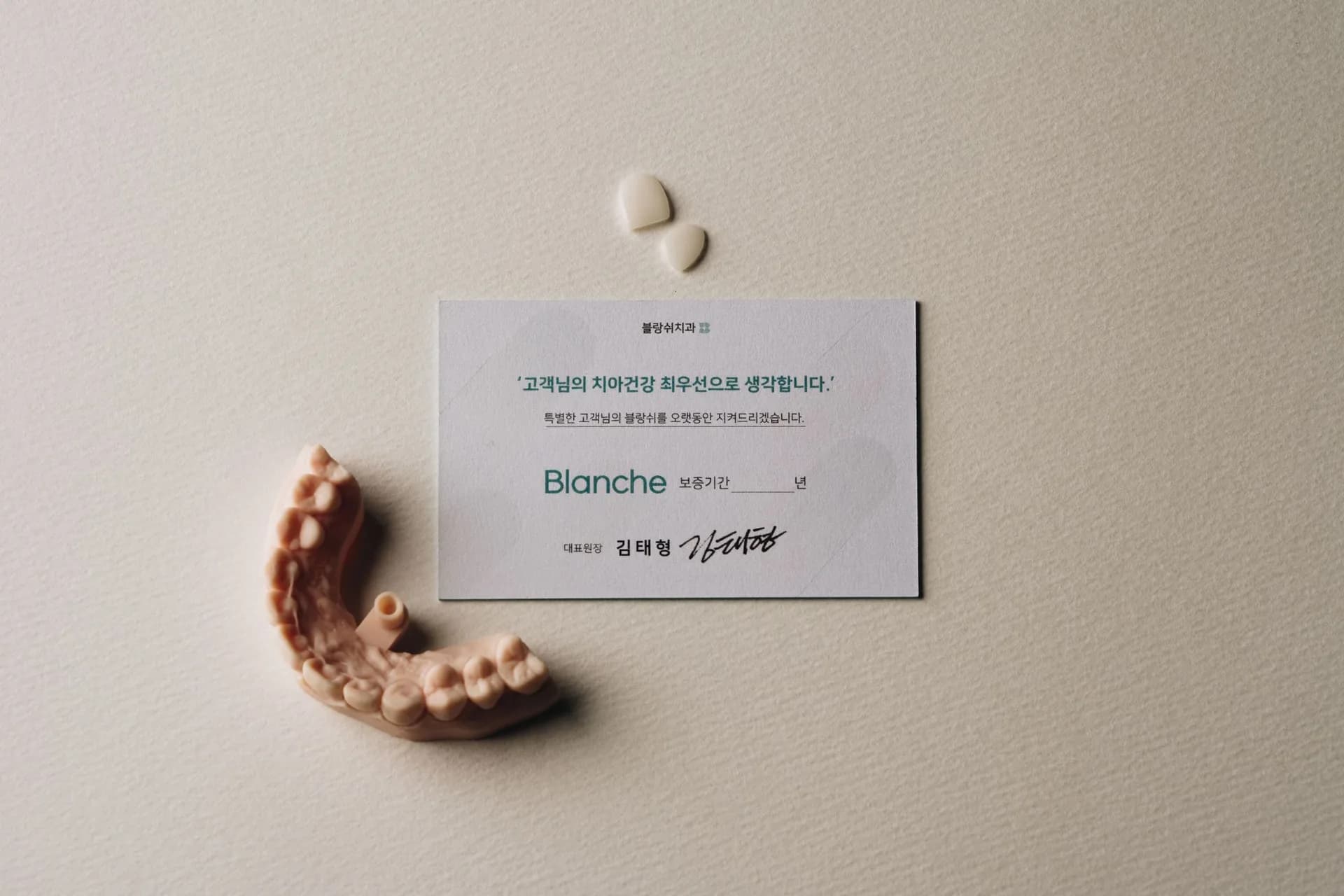
How Long Do Veneers Last?
Care Matters More Than Years
Veneers aren’t something you have to replace after a set number of years. Made well and cared for well, they can last more than 10 years, and even longer.
- 1-, 5- or 10-year warranty
- Regular check-ups
- Laser replacement, no extra drilling
Veneer lifespan:
how long do they last?
With proper care and regular check-ups, veneers can last more than 10 years, and many people keep theirs much longer depending on how well they look after them. With good care, some last 20–30 years or more. When to replace them isn’t decided by a set number of years, but by the condition of the bond, the gum margins and your bite.
On the other hand, if a lot of tooth was removed at the start, or the bonding wasn’t precise, veneers may not last as long.
In short, lifespan isn’t decided by the material alone. Half depends on how precisely the veneers were made and bonded in the first place; the other half on your daily habits and regular check-ups afterwards. This page walks you through both.
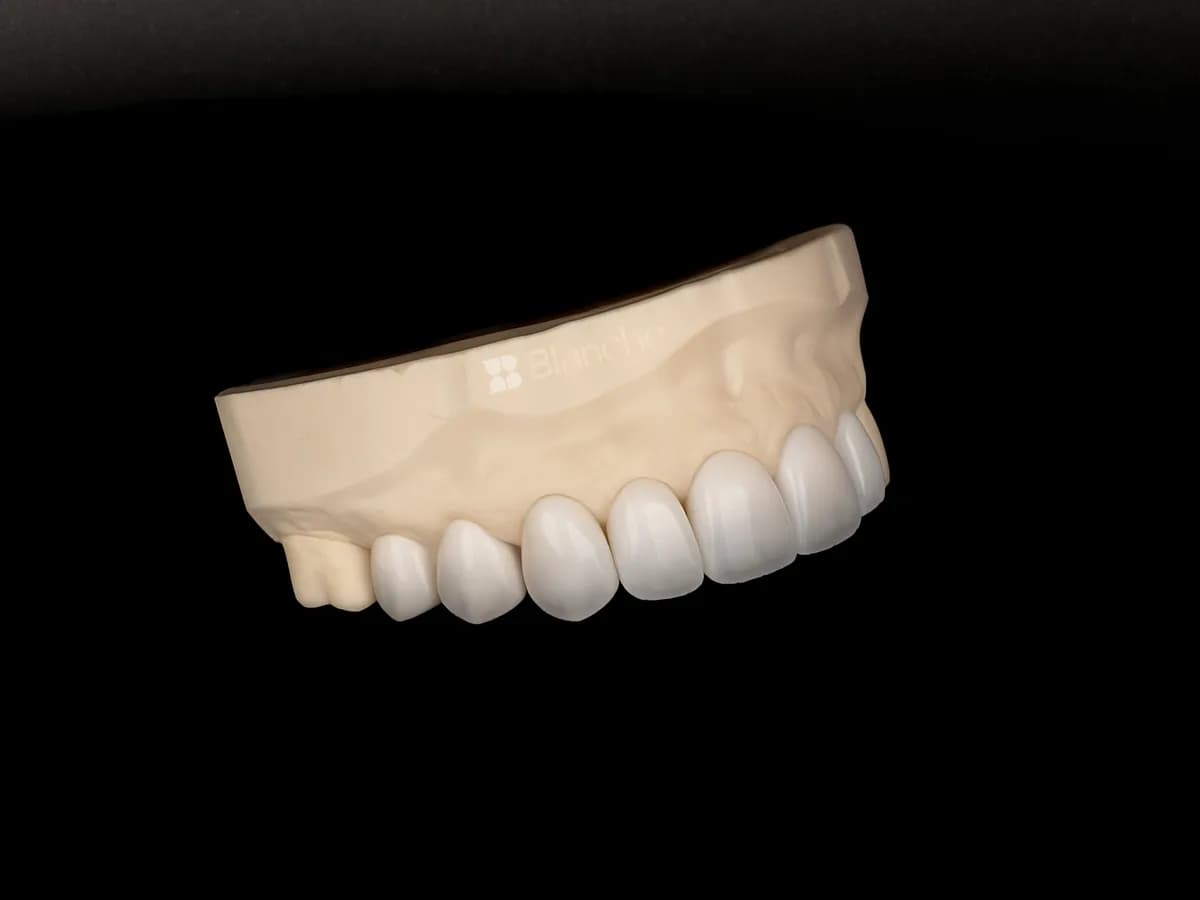
4 things that decide how long veneers last
The first three are decided during treatment; the last one by your daily life afterwards.
Bonding quality
Veneers are bonded onto your teeth, so the bond largely decides how long they last. Blanche uses the Ivoclar bonding system, known for its biocompatibility and color stability, and bonds the tooth and ceramic chemically.
Remaining enamel
The undrilled outer surface of the tooth (enamel) bonds well. Because Blanche does only no-prep or minimal-prep under 0.1 mm, veneers are bonded with the enamel kept intact, which helps them stay firmly in place for longer.
A design that accounts for bite force
When the force from your lower teeth concentrates in one spot, veneers chip more easily. We look at your bite when we first design them, and check it again after bonding.
Daily habits
Biting hard things with your front teeth or grinding your teeth shortens the life of even the same veneer. Once we know your habits, we can prepare in advance with a protective guard or the design itself.
Veneer lifespan:
myths and facts
You’ll hear both “they fall off quickly” and “they last forever.” Each is only half true.
How we make veneers
to last from day one
Half of a veneer’s lifespan is decided before bonding day. Here is what Blanche looks at in the design stage, and how we choose materials.
Design elements that extend lifespan
- Biting surface: We look at where your lower teeth meet them and in which direction the force runs, and shape the veneers so that force doesn’t concentrate in one spot
- Margin position: The edge of the veneer has to meet the gum precisely, so less food gets trapped and your gums stay comfortable
- Enamel preservation: We protect the bonding surface with no-prep or minimal-prep under 0.1 mm
- Your habits: If you grind or clench, we plan the shape and a protective guard together
- Check after bonding: After bonding, we check your bite and gum margins again and refine them if needed
How materials differ
Blanche veneers are made from Swiss ceramic.
Not sure which veneers to choose? How to choose veneers →
A veneer care routine
that helps them last
No special tools needed. It’s the same habits that protect natural teeth, and consistency is what matters.
Please do
- Brush 2–3 times a day as usual, and clean the margins with floss or an interdental brush
- Keep the gum margins healthy with regular check-ups and professional cleaning (scaling)
- If you grind your teeth, ask us about a protective guard
- Rinse with water after drinks that stain
- If you notice lifting or chipping, get it checked right away
Please avoid
- Biting into ice, hard candy or food with bones with your front teeth
- Opening bottle caps or packaging with your teeth
- Biting your nails or pens
- Using a highly abrasive toothpaste every day
- Leaving a problem alone for a long time
- 01
Brush gently
Use a soft-bristled brush and sweep along the margin where the gum and veneer meet. Scrubbing hard can make your gums recede.
- 02
Slide floss out sideways
Rather than pulling floss up hard from between your teeth, slide it out sideways to put less strain on the edges.
- 03
Clean gaps with interdental brushes
Where gaps are wide or gums have receded, use an interdental brush that fits. The right size is one you don’t have to force in.
- 04
Regular toothpaste is fine
Highly abrasive toothpaste can dull the surface gloss of ceramic. For everyday use, regular toothpaste is enough.
- 05
Electric toothbrushes are fine too
You can use an electric toothbrush. Choose soft bristles and avoid pressing hard on the margins for long.
If you grind or clench your teeth,
here’s how we prepare
Grinding your teeth in your sleep or clenching without realizing it during the day puts repeated force on ceramic. Many people don’t know they do it and only find out from signs of wear at a check-up.
Grinding during sleep
Force repeated night after night can chip the edges of veneers. If you grind, ask us about a custom protective guard (night guard) as well. It protects both the ceramic and your natural teeth.
Clenching during the day
Clenching hard when you concentrate puts the same kind of force on your teeth. Try to keep in mind that the relaxed position is with your upper and lower teeth slightly apart.
Sports and injury
If you play sports with flying balls or physical contact, we recommend a custom mouthguard. It’s recommended for natural teeth too, but it matters even more for teeth with veneers.
Grinding your teeth doesn’t rule out veneers. Let us know at your consultation, and we’ll design the shape with your bite force in mind and plan a protective guard as well. After using the guard, rinse it in cold water and let it dry before storing it; avoid hot water, which can warp it.
Coffee, scaling, whitening:
are they OK with veneers?
Food, drinks and staining
Ceramic resists staining, so coffee, tea and wine rarely change its own color. The margins and surrounding natural teeth, however, can pick up stains. Rinse with water after drinking, and we recommend cutting back on smoking, which is bad for both your gums and staining at the margins.
Scaling (professional cleaning)
Teeth with veneers still need scaling. When tartar builds up, gums swell and the margins become exposed more easily. If you have it done at another clinic, let them know beforehand that you have veneers.
Whitening
Whitening agents change the color of natural teeth only, not ceramic. So if you plan to whiten, it’s best to do it before veneers and choose the veneer shade to match. If your veneers are already on, talk to us first about the color difference with the surrounding teeth.
As time goes on,
what we check changes
What we look at in regular check-ups changes a little over time. We’ll advise how often to come in at your consultation, based on your gum health.
- 01
Right after bonding
We check how your bite feels and the gum margins. You may feel brief sensitivity or strangeness at first; if it continues, let us know right away.
- 02
The first year
As you eat and talk, your bite settles in. If anything feels uncomfortable, we fine-tune the bite.
- 03
Regular check-ups after that
We look for traces left by grinding or eating habits, staining at the margins, and gum health. If you use a protective guard, we check it too.
- 04
Long-worn veneers
We focus on changes in the gum line and whether the margins are starting to show. Teeth without problems keep their veneers; we consider replacement only where it’s needed.
If you notice any of these,
get them checked
Most problems are simpler to solve the sooner you come in.
Signs it may be time to replace
- The same tooth keeps lifting or coming off
- The chip is too large to fix by smoothing
- Receding gums leave the margin clearly visible
- A stain line forms at the margin and keeps coming back
- The color difference from nearby natural teeth has grown
- Gum inflammation around the margin won’t go away
Without these signs, there’s no need to replace veneers just because they’re old.
If a veneer comes off
- Don’t throw it away. Put it in a clean container and bring it with you
- Don’t glue it back yourself with store-bought adhesive. If the surface gets contaminated, rebonding becomes difficult
- Don’t chew hard food with the exposed tooth
- Contact us as soon as possible. If it isn’t broken, we’ll consider rebonding it
Even if replacement is needed, don’t worry. Blanche removes existing veneers with a laser and remakes them without drilling your teeth further. Veneer replacement →
When replacement is needed,
here’s how it works
We replace only the teeth that need it. Because we remove veneers with a laser, your teeth aren’t drilled further, and there’s no separate removal fee.
- 01
Check the condition
We check your existing veneers, the bond and your gums with photos and an exam.
- 02
Find the cause
For a chip we look at bite force, for a margin problem at the gums, and build that into the new design.
- 03
Laser removal
We remove the existing veneers with a laser, so your teeth aren’t drilled further.
- 04
New veneers
We make new veneers from Swiss ceramic. This can also be done in one day.
- 05
Bonding and check
After bonding, we check your bite and margins, then continue with regular check-ups.
Veneers done at other clinics can be replaced too.Veneer replacement in detail →One-day veneers →
Warranty by plan
If a problem occurs within the warranty period, we check the condition and explain how it will be handled. The warranty period isn’t a replacement date; it’s the period during which Blanche takes responsibility.
VAT excluded · One-day option adds KRW 200,000 per tooth · See price details
How long do veneers last? Your questions answered
How long do veneers last?
Do veneers need to be replaced every 10 years?
Can veneers last a lifetime?
Don’t no-prep veneers have a shorter lifespan?
What happens if a veneer chips?
If one veneer breaks, do they all have to be redone?
My veneer came off. What should I do?
Are there foods I shouldn’t eat with veneers?
Will coffee or wine stain my veneers?
Can teeth with veneers still get cavities?
Can I have scaling (a professional cleaning) with veneers?
Can I use an electric toothbrush or interdental brushes?
Can I whiten my teeth after getting veneers?
Can veneers last if I grind my teeth?
Why are the gums around my veneers swollen?
How do I know when to replace my veneers?
How often should I have check-ups?
What do you check at a regular check-up?
Will my teeth be drilled again if I replace old veneers?
Can you replace veneers done at another clinic?
Medically reviewed by Dr. Taehyung Kim, Chief Director (Graduated from SNU School of Dentistry, Master of Dental Science; minimal-prep veneer seminar speaker) · Last updated

Minimal-prep veneer seminar speaker,
Dr. Taehyung Kim
He has held minimal-prep veneer seminars five times in Korea and abroad and still teaches dentists today. Blanche’s design and treatment standards were set by Dr. Taehyung Kim and Blanche Signature PLATINUM is treated by him personally.
- Seoul National University College of Dentistry
- Graduated from SNU School of Dentistry
- Master of Dental Science, Seoul National University
- Clinical Instructor, Ginza Shirayuri Dental Clinic (銀座しらゆり歯科), Japan
- Trained at US Columbia & UCLA Dental Hospitals

Blanche Dental Clinic, Nonhyeon Station, Gangnam
A 30-second walk from Exit 4 of Nonhyeon Station, on Gangnam-daero.
Subway
Address
Phone
Hours
Your veneers today:
find out if they need a check
If chipping, lifting, discoloration or your gum margins concern you, send us photos and we’ll take a look first.
Send us a front photo and a smiling photo — a dentist will review them and reply.
Chat on WhatsAppCall +82-1877-2882