
Do Veneers Ruin Your Teeth? What Actually Happens to Your Enamel

A note from Dr. Kim — Many people who land on this page share one quiet worry: what if I damage healthy teeth for nothing? It is the first question I ask myself with every patient.
Blanche began with that question: why harm a natural tooth worth more than any restoration? That is why our signature Blanche no-prep veneers follow one rule — minimal intervention, maximum beauty.
Do Veneers Ruin Your Teeth? What the Question Really Means
Do veneers ruin your teeth? It is usually the last question people ask out loud, and the first one they think about at night.
The honest answer has two parts. Veneers themselves do not destroy teeth. But the preparation behind them can be done well or badly, and that difference is permanent.
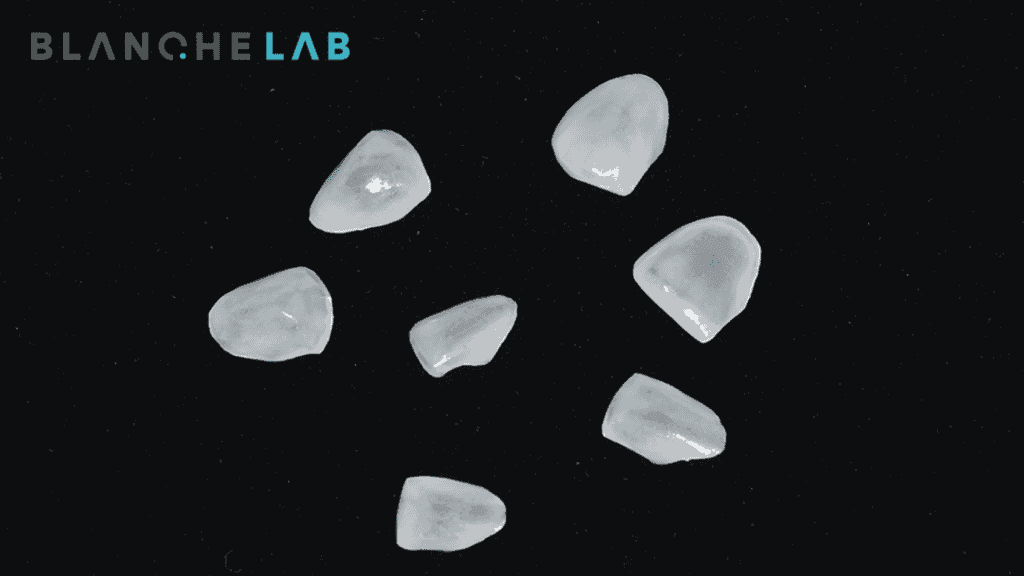
This article walks through what happens to enamel, where real damage comes from, and which parts you can still control.
Most people are not asking about the ceramic. They are asking about what sits underneath it.
A veneer is a thin shell bonded to the front of a tooth. To make room for it, a small amount of the outer surface may be shaped first.
Enamel does not grow back. That single fact is why this question deserves a careful answer rather than a reassuring one.
So the real question is not whether veneers are safe. It is how much tooth structure a plan asks you to give up, and whether that amount is justified.
What Happens to Enamel: Three Levels of Preparation
Preparation is not one thing. It sits on a spectrum, and the spectrum is where the answer lives.
| Approach | What happens to the tooth | What it means later |
|---|---|---|
| No-prep | Little to no reshaping of the surface | Often reversible in principle; suits a narrower range of cases |
| Minimal prep | A thin layer of enamel is shaped | Enamel is mostly preserved; replacement stays straightforward |
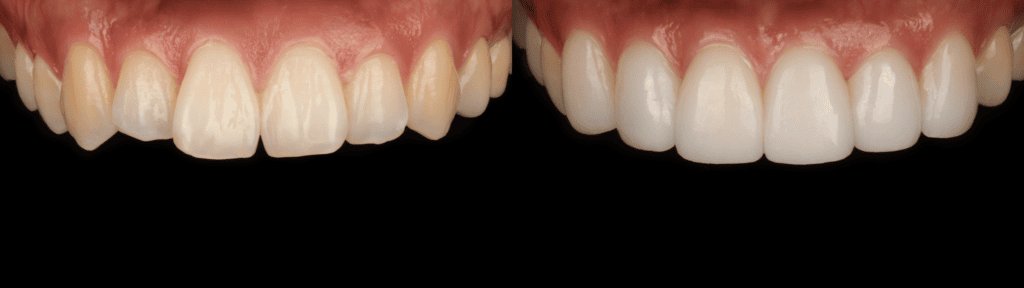
| Conventional prep | More surface is removed, sometimes into deeper layers | Not reversible; the tooth needs a covering from then on |
The further down this table a plan sits, the more committed you are. That is not automatically wrong. It should simply be a decision you made knowingly.
If your case may sit in the top row, our guide to no-prep veneers in Korea covers who actually qualifies.
Where Real Damage Actually Comes From
Over-reduction
Removing more than the case needs is the most common cause of regret. It is also invisible to the patient, because it happens under anaesthetic and is covered right away.
Margins that do not fit
If the edge of the veneer does not meet the tooth cleanly, plaque collects there. Gums react first, and decay can follow.
Bonding to a tooth that was not ready
Untreated decay, active gum inflammation, or an unstable bite will not be fixed by a veneer. They simply continue underneath it.
Ignoring the bite
Front teeth guide the jaw. If a new shape changes that guidance and nobody checks it, chipping becomes a matter of time.
Choosing a material without knowing the trade-off
Different materials wear, stain, and repair differently. Our comparison of porcelain and composite veneers sets out what each one asks of you.
Do Veneers Ruin Your Teeth If You Change Your Mind Later?
This is where the haircut comparison stops being useful. Hair grows back. Enamel does not.
If your teeth were barely touched, removing the veneers may leave you close to where you started. If a lot of structure was shaped away, the teeth will need to stay covered.
That is not a disaster. Many people live with covered teeth for decades without trouble.
But it is a commitment worth understanding before the appointment rather than after it.
Before the Drill: What You Control in Whether Veneers Ruin Your Teeth

Ask how much will be removed, and why. A clear answer with a reason is a good sign. A vague reassurance is not.
Ask to see the shape before it is final. Temporary teeth or a digital preview let you correct the design while correcting is still easy.
Ask what happens if one chips. A clinic that has already thought about year five will describe the process without hesitating.
Ask who makes the ceramic. At Blanche Dental it is produced in our own in-house laboratory, so shade and shape changes are discussed in the same building rather than posted away and back.
If you are planning the trip itself, our step-by-step guide for foreign patients explains how the visits are usually arranged.
Frequently Asked Questions
Do veneers ruin your teeth over ten or twenty years?
The veneer itself does not attack the tooth. Long-term outcomes depend on how much enamel was preserved, how well the margins fit, and how the bite is managed.
Are no-prep veneers always the safer choice?
No-prep preserves the most tooth structure, but it suits only certain cases. Forcing it onto an unsuitable case can create bulky results, so suitability matters more than the label.
Can veneers be removed and replaced?
Yes. Replacement is routine over a lifetime, and how simple it is depends mostly on how conservative the original preparation was.
Not sure where your case fits? Send two photos — front and smiling — on WhatsApp. We will tell you what is possible before you book any flight.
Safety and Individual Variation

Veneers can involve sensitivity, gum irritation, chipping, or debonding. Suitability and results vary with tooth condition, gum health, bite, and daily habits.
This article is general information and is not a diagnosis. Any decision should follow an in-person examination by a licensed dentist.
A Note From the Director
I have spent the last ten years giving more time to the hour before the drill than the hour after it. How much to shape, how many teeth to treat, and what shape to build cannot be undone later.
Our laboratory sits inside the clinic. Our pricing is the same for Korean and international patients, and we are a short walk from Nonhyeon Station in Gangnam.
If you send photos of your teeth, we can tell you which of the three preparation levels your case is likely to sit in before you book a flight.
Dr. Kim Tae-hyung (Director, Blanche Dental Clinic, Seoul National University trained dentist)
What happens at your first consultation
1. We listen first — what bothers you and what you hope for. 2. We walk you through your scan results and every option.
3. You get itemized costs and timing, and you can decide later, even after you fly home. At Blanche, we explain everything at least four times, by principle.
Consultation — Blanche Dental is located between Nonhyeon and Sinnonhyeon stations in Gangnam, Seoul. For a consultation in English, message us on WhatsApp with your photos, and see our pricing page for current fees.

About the author
Dr. Kim Tae-hyung
Chief Director of Blanche Dental Clinic in Gangnam. He holds an M.S. from Seoul National University and trained at the Columbia and UCLA dental hospitals.
He advises SBS “Dr. Oh’s Clinic” and YouTube “Doctor Friends,” and is a Clinical Instructor at Ginza Shirayuri Dental Clinic in Tokyo. His rule of practice: minimal intervention, maximum beauty.