
Getting Veneers in Korea: Step-by-Step Guide for Foreign Patients (2026)
Thinking about getting veneers in Korea, but not quite sure what actually happens after you land in Seoul? You are not alone. Every week we meet patients from the US, Australia, Japan and Southeast Asia who chose Korea for one reason: they saw the results — and the prices — and wanted to know if it could really be done in a single trip. This guide walks you through the entire process, step by step, so you can plan your visit with zero guesswork.
A note from Dr. Kim — Many people who land on this page share one quiet worry: what if I damage healthy teeth for nothing? It is the first question I ask myself with every patient.
Blanche began with that question: why harm a natural tooth worth more than any restoration? That is why our signature Blanche no-prep veneers follow one rule — minimal intervention, maximum beauty.
Why Korea Has Become a Go-To Destination for Veneers
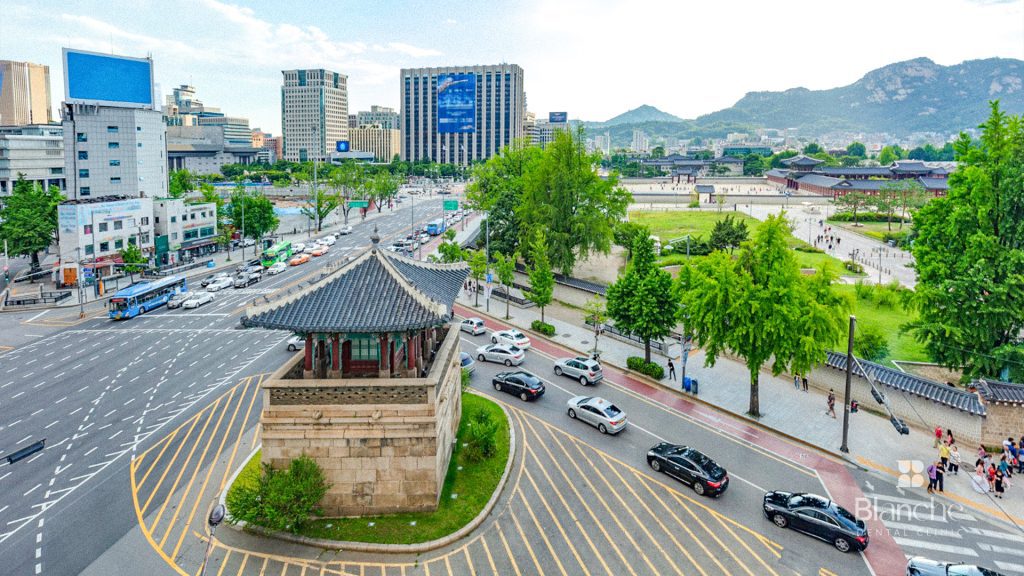
Korea’s dental scene is unusually concentrated: hundreds of clinics within a few subway stops in Gangnam, most equipped with digital scanners, CAD/CAM milling and — at some clinics — an in-house dental lab. That density does two things. It pushes technology adoption fast, and it makes same-day treatment logistically possible in a way that is rare in the US or Europe, where lab work is usually outsourced and takes one to two weeks.
That said, quality varies from clinic to clinic, just like anywhere else. The steps below include exactly what to check at each stage so you can tell a well-run clinic from a volume factory.
Getting Veneers in Korea: The Step-by-Step Process

Step 1 — Remote consultation before you fly
Most clinics that regularly treat foreign patients will review your photos (front smile, side smile, close-up of the teeth) and give you a preliminary opinion and quote by email or messenger. Use this stage to confirm the clinic can communicate in your language and to ask whether your case looks suitable for minimal-prep or no-prep veneers.
Step 2 — In-clinic exam and digital smile design (Day 1, morning)
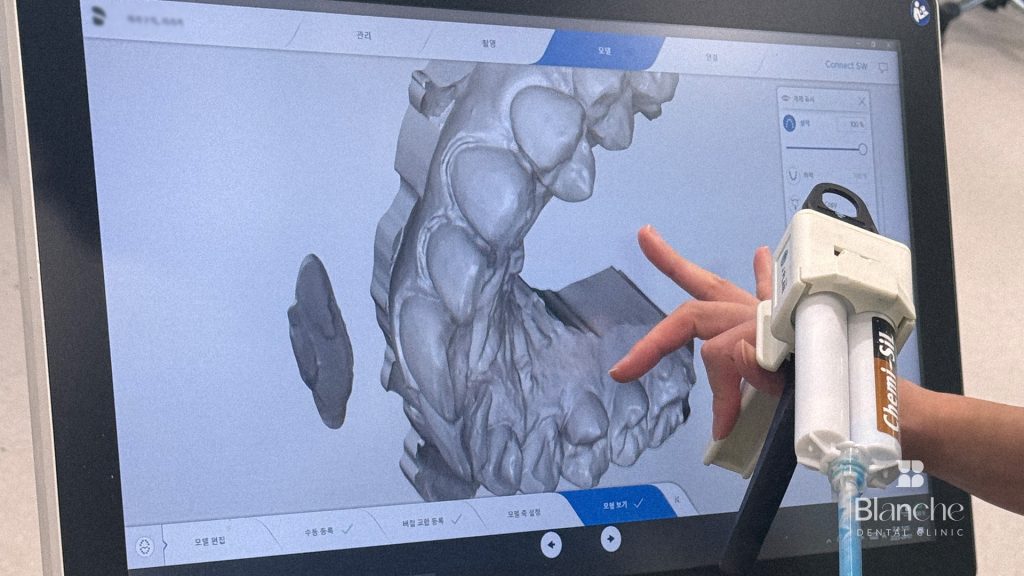
On arrival you get a panoramic X-ray, an oral exam, and a digital scan. The dentist checks for cavities, gum condition and bite issues — things photos cannot show. A digital smile design lets you preview the target shape and shade before anything touches your teeth.
Step 3 — Tooth preparation: minimal, or none at all
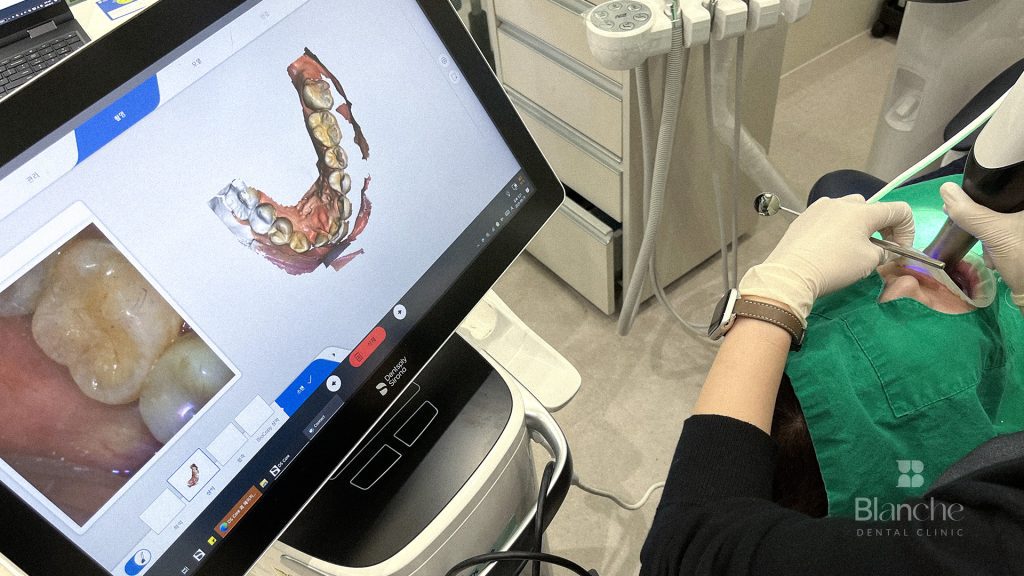
Conventional veneers remove roughly 0.5–0.7 mm of enamel. If your teeth are small, gapped or slightly inward-positioned, a no-prep or minimal-prep approach may be possible, keeping your natural enamel intact. Enamel does not grow back, so this single decision matters more than any other. Ask the dentist to show you, on your scan, exactly how much reduction is planned and why.
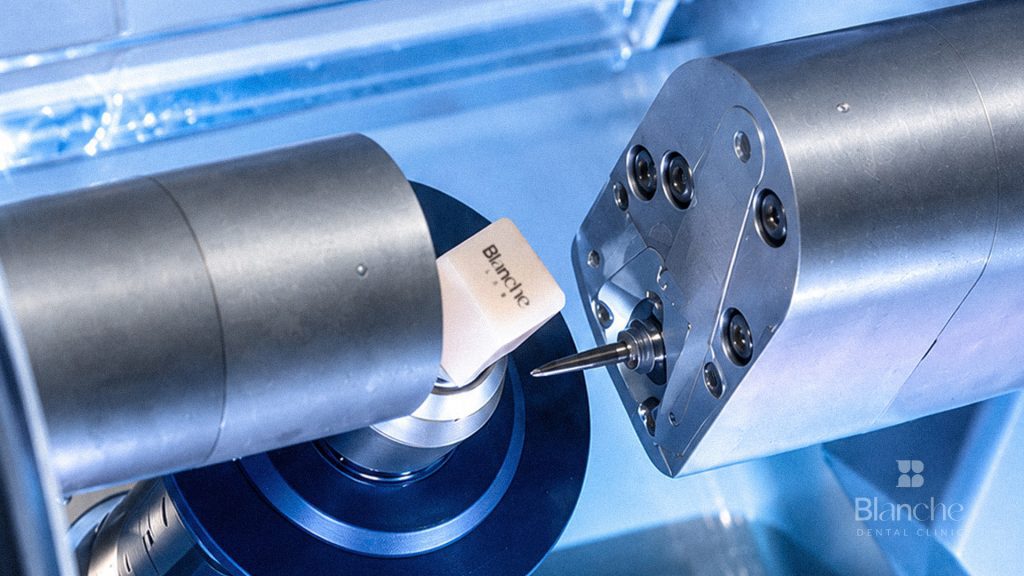
Step 4 — Fabrication: why hours instead of weeks
This is where an in-house lab changes everything. When the ceramist works in the same building, your veneers can be fabricated, checked against your scan and adjusted the same day. Clinics without an in-house lab send cases out, which typically means a second trip or a one-to-two-week stay.
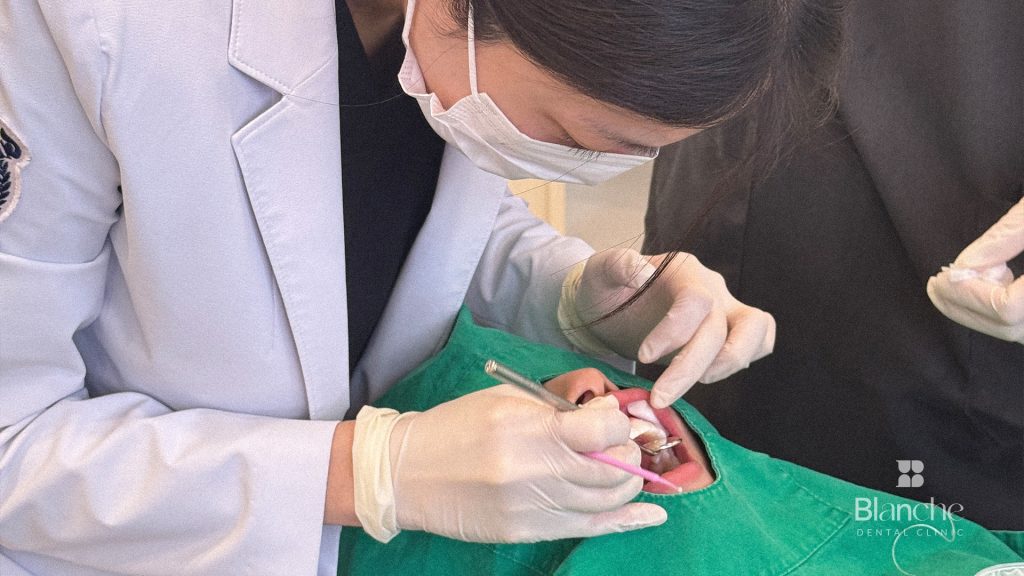
Step 5 — Try-in, bonding and bite check (Day 1, afternoon)
Each veneer is tried in, checked for fit, shade and margin, then bonded one by one. Expect a careful bite adjustment afterward — high spots that feel fine today can cause chipping months later.

Step 6 — Aftercare and remote follow-up
A good clinic explains what to avoid in the first 48 hours, gives you a night guard if you grind, and — importantly for overseas patients — stays reachable after you fly home. Ask how remote follow-up works before you book.
Korean Veneers Before and After: What Realistic Results Look Like
Veneers can predictably change tooth color, close small gaps, lengthen worn edges and even out asymmetric front teeth. What they cannot do is fix a significantly misaligned bite — that is orthodontic territory — and results always vary with your gum line, lip movement and enamel condition. Be cautious of any clinic that promises a specific outcome from photos alone; a trustworthy before-and-after conversation happens after your scan, not before.
How Much Does Getting Veneers in Korea Cost?
| Item | Typical range (Seoul) | Notes |
|---|---|---|
| Consultation + X-ray + scan | Often free–₩50,000 | Frequently waived for treated patients |
| Laminate veneer, per tooth | ₩300,000–₩900,000 | Varies by material, case difficulty, lab |
| Temporary veneer | Usually included | Confirm in the quote |
| Follow-up visits | Usually included | Ask about remote follow-up |
Per-tooth pricing, what drives the differences and how to read a Korean quote line by line are covered in our dedicated guide: Veneers Korea Cost: What You Really Pay Per Tooth in Seoul.
Pre-Booking Checklist for Foreign Patients
- Is the clinic a government-registered institution for foreign patients?
- Who exactly will treat you — and how many veneer cases has that dentist handled?
- Is there an in-house lab, or is fabrication outsourced?
- Can they show minimal-prep and no-prep options for your case, with reduction amounts on your scan?
- Is the quote itemized per tooth, with temporaries and follow-ups included?
- What is the warranty policy, and how are repairs handled if you live overseas?
- Can you communicate in English (or your language) at every step, not just at the front desk?
Not sure where your case fits? Send two photos — front and smiling — on WhatsApp. We will tell you what is possible before you book any flight.
Planning a Veneer Trip to Seoul?
Blanche Dental Clinic is a government-registered institution for international patients, located a one-minute walk from Nonhyeon Station Exit 4 in Gangnam (7F, B722 Building, 531 Gangnam-daero, Seocho-gu, Seoul). With our in-house lab, Blanche Lab, suitable cases can be completed in a single day — see how in One Day Veneers in Korea: How Same-Day Treatment Works. We are open on Sundays, and you can reach us at +82-1877-2882 or through the consultation form on blanche.kr/en.
Frequently Asked Questions
How many days do I need in Korea for veneers?
For suitable laminate cases at a clinic with an in-house lab, the treatment itself can be completed in one day. We still recommend planning two to three days in Seoul so a relaxed follow-up check is possible before you fly.
Does getting veneers hurt?
No-prep cases generally require no anesthesia. Minimal-prep cases are done under local anesthesia and are typically described as pressure rather than pain. Mild sensitivity for a few days afterward is common and usually settles on its own.
Will my natural teeth be shaved down?
It depends on your tooth position and shape. Conventional veneers remove about 0.5–0.7 mm of enamel; no-prep veneers remove none. Whether you qualify for no-prep can only be confirmed after an exam and scan, and enamel removal is irreversible — ask to see the plan before agreeing.
What happens if a veneer chips after I return home?
Ask this before booking. Clinics experienced with international patients will assess photos remotely, advise whether a local repair is fine, and state their warranty terms in writing.
Can I combine veneers with whitening in one trip?
Often yes — whitening is usually done first so the veneer shade can be matched to the brighter result. Your dentist will confirm the order and timing for your case.
This column was medically reviewed by the dental specialists of Blanche Dental Clinic (Dr. Taehyung Kim, DDS, Seoul National University). Treatment outcomes vary by individual. Veneers involving enamel reduction are irreversible, and side effects such as temporary sensitivity or, rarely, debonding may occur.
What happens at your first consultation
1. We listen first — what bothers you and what you hope for. 2. We walk you through your scan results and every option.
3. You get itemized costs and timing, and you can decide later, even after you fly home. At Blanche, we explain everything at least four times, by principle.
Consultation — Blanche Dental is located between Nonhyeon and Sinnonhyeon stations in Gangnam, Seoul. For a consultation in English, message us on WhatsApp with your photos, and see our pricing page for current fees.

About the author
Dr. Kim Tae-hyung
Chief Director of Blanche Dental Clinic in Gangnam. He holds an M.S. from Seoul National University and trained at the Columbia and UCLA dental hospitals.
He advises SBS “Dr. Oh’s Clinic” and YouTube “Doctor Friends,” and is a Clinical Instructor at Ginza Shirayuri Dental Clinic in Tokyo. His rule of practice: minimal intervention, maximum beauty.