
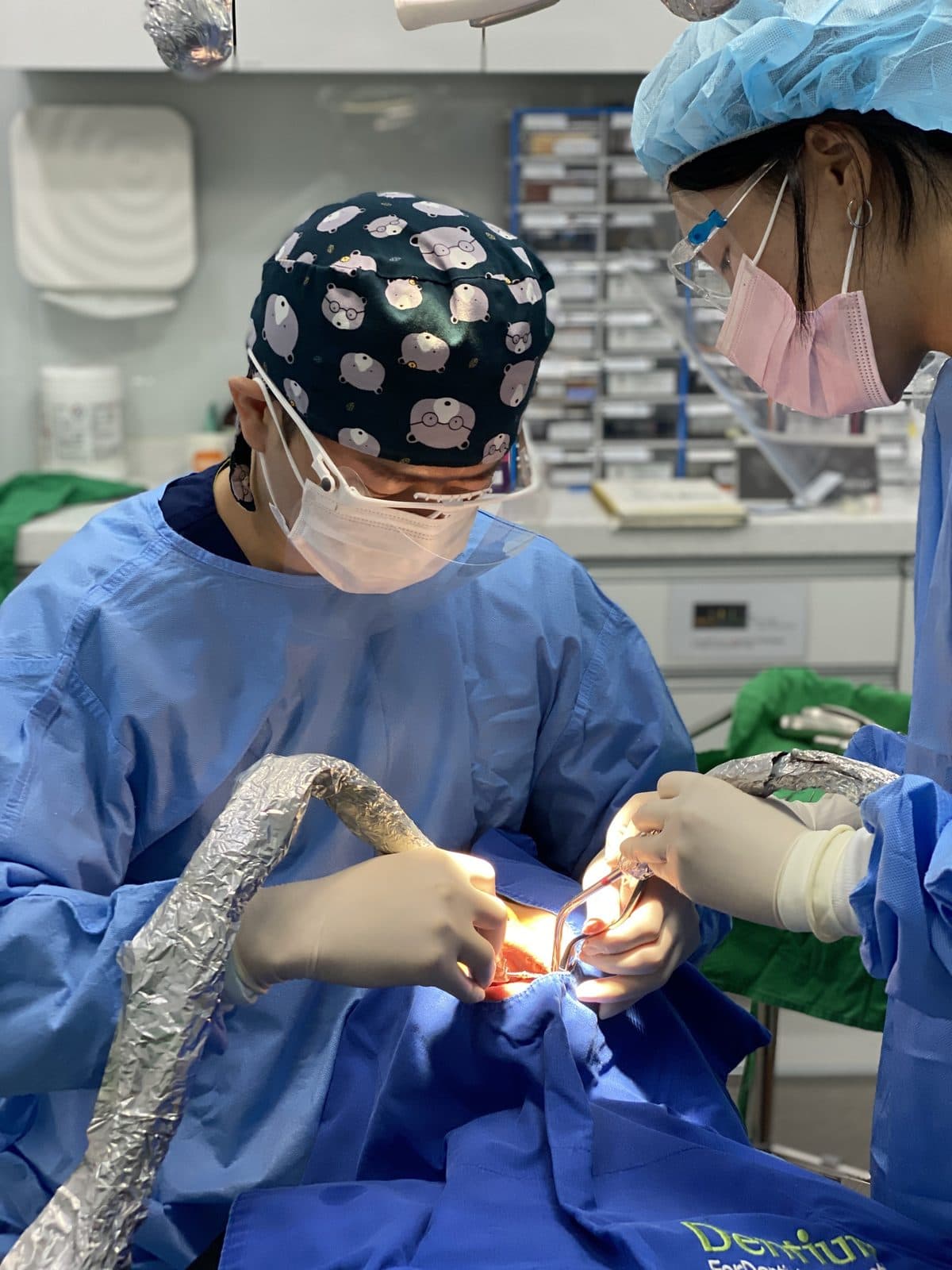
Sedation implants:
a way to have surgery with less tension
Sedation implants are, strictly speaking, done under conscious sedation. Unlike general anesthesia, you have surgery in a light sleep-like state while breathing on your own. We check your health before sedation and keep watching your condition throughout.
- Conscious sedation
- Sedation & monitoring by a dentist
- Pre-sedation assessment & ECG
- Oxygen, heart rate & blood pressure monitoring
You need an implant,
but fear of surgery keeps you waiting?
Many people find it hard to breathe just sitting in the dental chair. Sedation implants are one way to ease that tension. If any of the following apply to you, talk to us at the consultation about whether sedation is needed.
Sedation implants are also called conscious sedation implants or sedation dentistry.
- You have memories of a very hard time during past dental treatment
- Just thinking about the anesthetic injection or the sound and vibration of the drill makes you tense up
- You gag when instruments touch the inside of your mouth
- Keeping your mouth open for a long time is hard in itself
- You need several implants and worry that surgery will take a long time
- While putting off treatment out of fear, you've lost more teeth
Sedation implants are, strictly speaking,
'conscious sedation'
The word "sleep" easily brings to mind general anesthesia, where you are completely unconscious. But the conscious sedation used for sedation implants aims for a light sleep-like state in which you breathe on your own and can respond to speech or light touch.
Deeper sedation is not better. The goal is to lower tension enough while you keep breathing on your own. So you may remember parts of the surgery, or your memory may be hazy. It differs from person to person.
Sedation eases anxiety;
local anesthesia handles pain
Sedation implants use two things together: sedation, which lowers mental tension, and local anesthesia, which blocks sensation at the surgical site. Sedation alone doesn't remove pain at the surgical site, so after confirming the sedation level, we give local anesthesia where needed.
Sedation
Lowers tension and anxiety, bringing you into a light sleep-like state. You breathe on your own.
Local anesthesia
Blocks sensation around the implant site. This is what controls pain.
Continuous monitoring
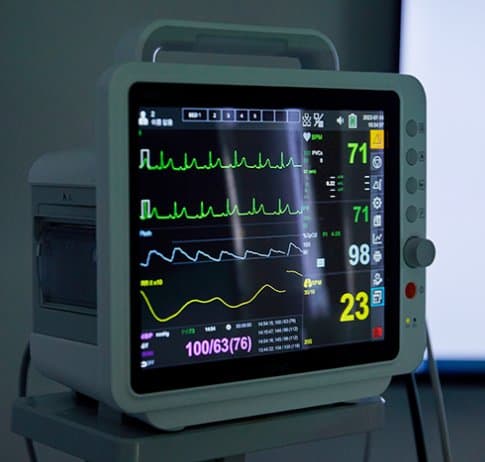
During sedation, a dentist checks oxygen saturation, heart rate and blood pressure in real time.
- 01
If you're worried about pain
If you've felt pain in the past even with anesthesia, tell us which treatment it was and what it felt like. We'll reflect it in the local anesthesia plan.
- 02
How to tell us you're uncomfortable
You can still respond during sedation, so we agree before surgery on a signal you can give when you feel uncomfortable.
- 03
Recovery after surgery still applies
Sedation doesn't skip the healing of the surgical site. We give you separate instructions for managing swelling and pain.
When sedation implants
are worth considering
Sedation can ease the anxiety and tension that made you put off treatment, helping you get the implant treatment you need. However, being afraid alone doesn't make it right for everyone, so we decide by looking at your health and the scope of surgery together.
When the surgery is extensive
Placing several implants, or rebuilding a whole jaw as with full-arch implants (All-on-X), can take longer. If you want to avoid enduring a long time with your mouth open and your body tense, we consider adding sedation.
What you must tell us
before sedation implants
Sedation can affect breathing and blood pressure, so before sedation we check your health with a pre-sedation assessment and an ECG. If you leave out information hoping to hear that you're fine, it becomes hard to make a safe decision. Please tell us everything below.
- 01
Current medications
Tell us about every medication you take, including blood pressure or diabetes medication, blood thinners, sleeping pills and sedatives. Don't stop any medication on your own.
- 02
Snoring · Sleep apnea
If you've been told you stop breathing in your sleep or snore heavily, be sure to tell us. It's important information for planning sedation.
- 03
Heart or lung conditions
If you have heart disease, high blood pressure or a respiratory condition such as asthma, it helps to bring medical records or the names of your medications.
- 04
Past reactions to sedation or anesthesia
Tell us if you took a long time to wake up or felt nauseous after a sedated endoscopy or other sedation or anesthesia. The same goes for drug allergies.
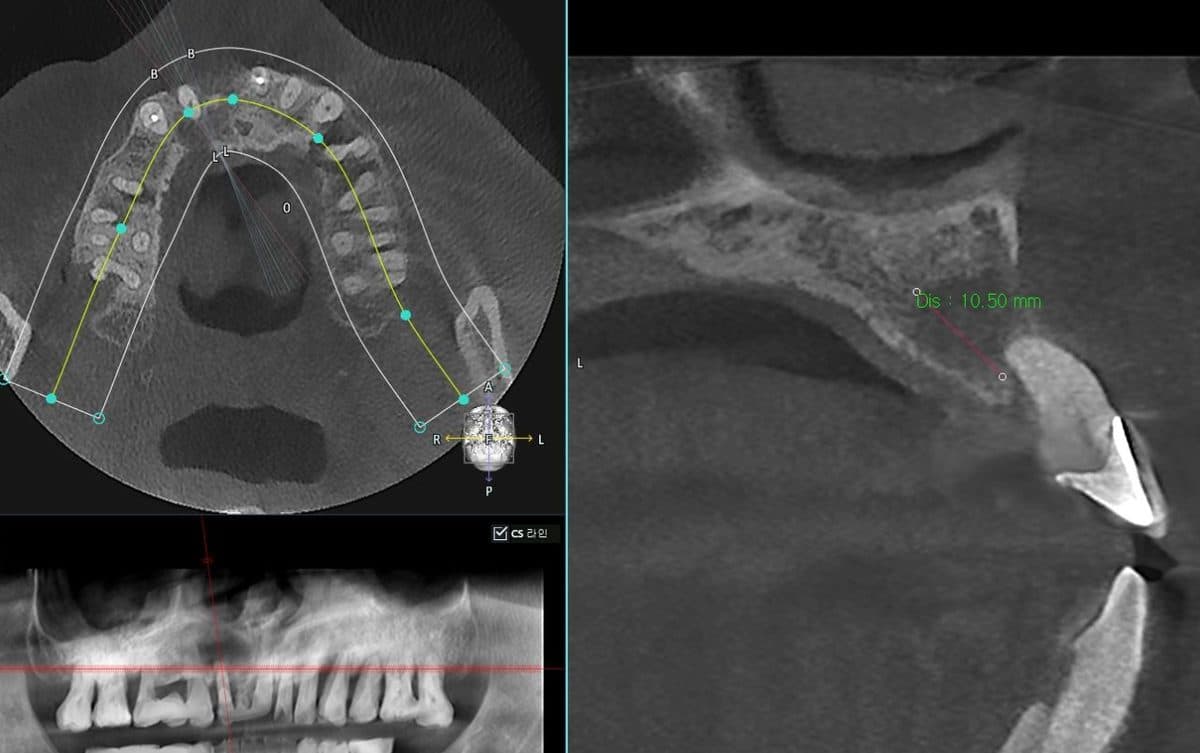
3D CT scan before surgery, checking bone height and width and nerve position. 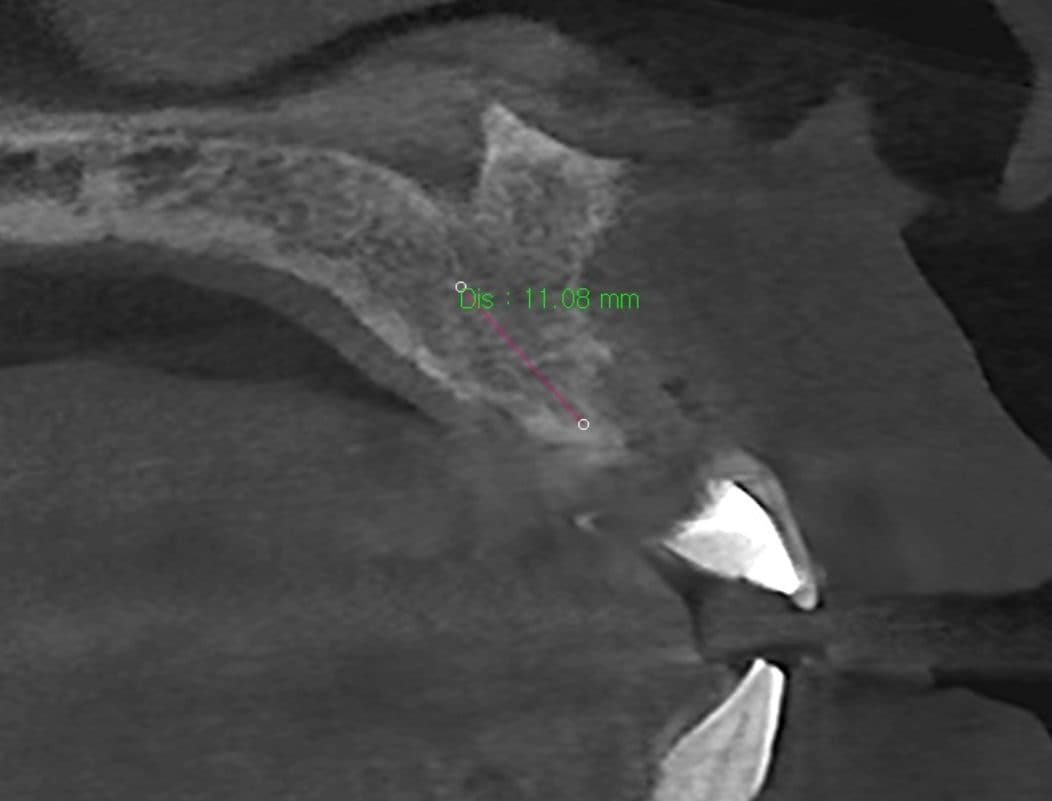
3D CT analysis screen, planning implant position and depth in advance.
If you have a cold or fever, have trouble breathing, or your medications have changed, please contact us before surgery. Our medical team will reassess whether sedation is appropriate that day.
On the day of your sedation implant,
please prepare like this
The general guidelines are below; anything that differs based on your health will be explained separately when you book. If anything is unclear, please ask again.
- Please fast for 6 hours before surgery. We'll go over the details again when you book
- Check in advance whether to take your usual medications on the day of surgery
- We recommend coming with a companion who can go home with you
- Do not drive yourself on the day of sedation
- Avoid alcohol, operating machinery and important contracts or decisions that day
- Wear comfortable clothes and keep your schedule clear after surgery
How sedation implants
are done
From the pre-sedation assessment to going home, sedation is care that goes hand in hand with implant surgery. Surgery is performed by Dr. Taehyung Kim, Chief Dentist, and Dr. Hayoung Kim themselves.
- 01
Consultation · Pre-sedation assessment
We review your medical history, medications and what you fear most, check your baseline condition with an ECG, and decide whether sedation is right for you.
- 02
3D CT diagnosis
We look at bone and nerve positions and plan where to place the implant.
- 03
Starting sedation · Monitoring
We connect the monitor and start sedation. A dentist checks oxygen saturation, heart rate and blood pressure in real time.
- 04
Local anesthesia
After confirming the sedation level, local anesthesia is given only at the surgical site.
- 05
Implant surgery
The implant is placed at the planned position. We keep monitoring your condition during surgery.
- 06
Recovery · Going home
You rest in the surgery room while we check how awake you are, then go home after receiving aftercare instructions.
Sedation and monitoring are handled by a dentist directly. To prepare for emergencies, all Blanche Dental staff are certified in CPR.
Recovery time differs from person to person, so it's best not to plan things like going straight to work after surgery.
Sedation monitoring equipment · real-time oxygen saturation, heart rate and blood pressure 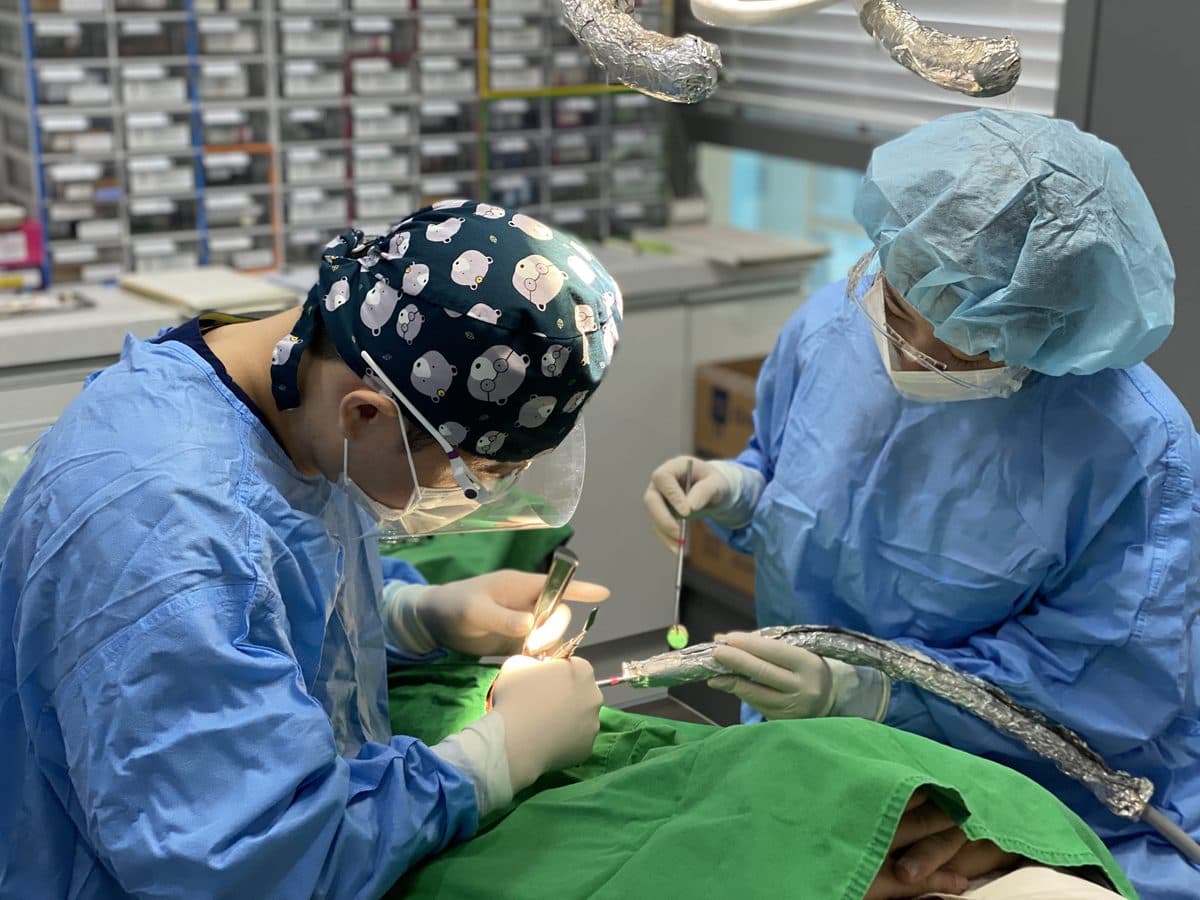
Implant surgery Implant surgery
These photos are to help you understand the surgical process. Swelling, bruising, pain or temporary changes in sensation may occur after surgery, and drowsiness or dizziness may remain after sedation. Recovery time and results vary from person to person.
What you can expect,
what you need to accept
We hope you won't decide after hearing only the benefits. Please look at both before choosing.
What you can expect
- Less tension and anxiety may make surgery easier to go through
- Gag reflex and discomfort from sound or vibration may be reduced
- You may not have to brace yourself through a long surgery
- It can be the push to start treatment you've been putting off out of fear
What you need to accept
- Drowsiness, dizziness or nausea may last a few hours after sedation
- Rarely, breathing may become shallow or blood pressure may change, so continuous monitoring is needed
- We cannot promise you'll remember nothing or feel nothing
- A companion is recommended, and driving and important tasks should be avoided that day
Sedation only eases anxiety; it doesn't shorten the time it takes for the implant to bond with the bone or remove the risks of surgery. The surgical plan and recovery need the same care whether or not you have sedation.
Sedation implant cost and schedule
Sedation costs KRW 400,000 (≈ USD 295) per session, separate from implant and full-arch costs.
- 01
Implant cost
Per implant: Megagen AnyOne KRW 800,000 (≈ USD 590), Megagen BlueDiamond KRW 1,000,000 (≈ USD 735), Straumann KRW 2,300,000 (≈ USD 1,690). Prices include the abutment, zirconia crown and 3D CT. See the Dental Implants page and the full price list for details.
- 02
Sedation cost
Sedation is KRW 400,000 per session. It is charged separately from implant and full-arch costs, and we decide together at the consultation whether it's needed.
- 03
Visit schedule
It usually takes four visits: surgery, stitch removal about a week later, a scan 4–6 months later, and crown placement a week after that. If you're traveling from abroad or outside Seoul and can stay about a week each time, two trips are also possible.
We repeat every explanation at least four times. You're welcome to make the decision at home.


Dr. Taehyung Kim and Dr. Hayoung Kim
perform the surgery themselves
Blanche implant surgery is performed by Dr. Taehyung Kim, Chief Dentist, and Dr. Hayoung Kim. The dentist who performs the surgery takes responsibility for the plan you heard at the consultation. Both dentists can treat patients in English.
- Dr. Taehyung Kim, Chief Dentist · Seoul National University College of Dentistry and School of Dentistry graduate, Master of Dental Science, Seoul National University
- Training at Columbia and UCLA dental hospitals, USA
- Advisor to SBS 'Dr. Oh's Clinic' and the YouTube channel 'Doctor Friends'
- The clinic that placed the most Straumann BLX implants in Gangnam in 2024
- Invited to the 70th anniversary event of the Embassy of Switzerland in Korea
Common questions about sedation implants
Are sedation implants different from general anesthesia?
Will I remember nothing under sedation?
Will a sedation implant be painless?
Could I wake up during surgery?
I'm worried I won't be able to breathe during sedation.
Who handles sedation and monitoring?
Can anyone have sedation implants?
Do I need to fast before sedation implants?
What should I do about my usual medications?
Can I come and go home alone?
Can I drive on the day of surgery?
Are there side effects after sedation?
With sedation, can several implants be placed in one day?
Can full-arch implants be done under sedation?
I did fine with a sedated endoscopy before. Will I be fine this time too?
How much do sedation implants cost?
Can I get implants without sedation?
Reviewed by Dr. Taehyung Kim, Chief Dentist (Seoul National University School of Dentistry graduate, Master of Dental Science; training at Columbia and UCLA dental hospitals, USA) · Last updated
Blanche Dental Clinic, Nonhyeon Station, Gangnam
A 30-second walk from Exit 4 of Nonhyeon Station, on Gangnam-daero.
Subway
Address
Phone
Hours
Are sedation implants right for you?
Ask us first
Start by telling us which moment you fear most. A dentist will explain whether you need sedation and how to prepare.
Send us a front photo and a smiling photo — a dentist will review them and reply.
Chat on WhatsAppCall +82-1877-2882