
Korean Veneers Before and After: What the Photos Can and Cannot Tell You
If you have been searching Korean veneers before and after, you have scrolled dozens of dramatic side-by-side photos. But how much can those images really tell you about your own result?
Are the transformations typical, or carefully selected? Roughly eight in ten patients arrive holding a saved photo on their phone.
As the director of Blanche Dental Clinic in Gangnam, I want to walk you through how to read these cases honestly. The goal is realistic expectations, not chasing one perfect photo.
A note from Dr. Kim — Many people who land on this page share one quiet worry: what if I damage healthy teeth for nothing? It is the first question I ask myself with every patient.
Blanche began with that question: why harm a natural tooth worth more than any restoration? That is why our signature Blanche no-prep veneers follow one rule — minimal intervention, maximum beauty.
Why Korean veneers before and after photos look so dramatic
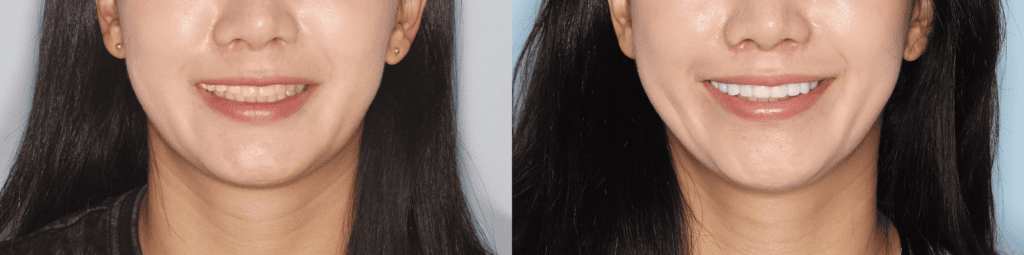
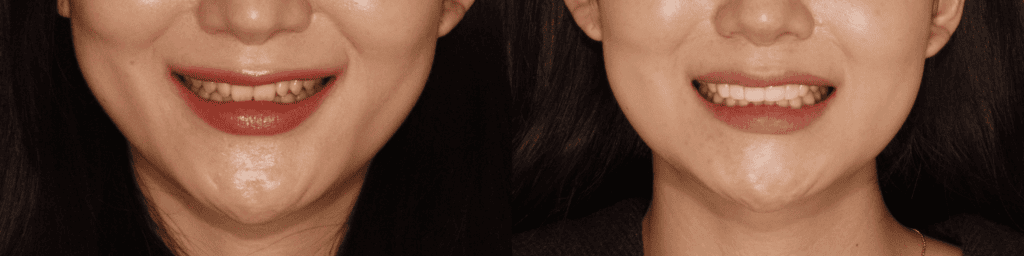
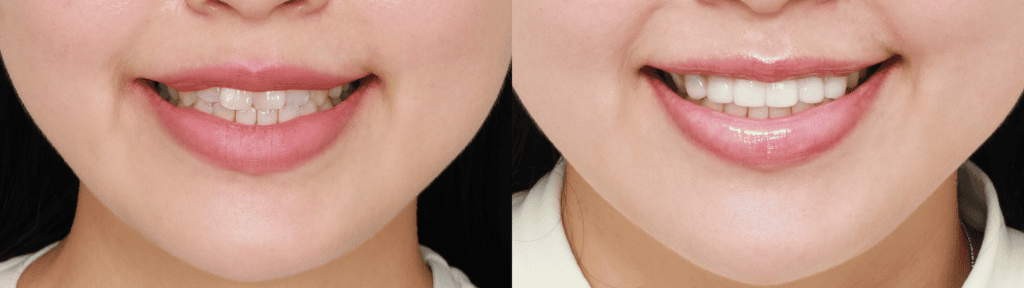
Think of a real-estate listing. The room is real, but the wide-angle lens makes it feel larger.
Before-and-after photos work the same way. Lighting, camera angle, lip retraction, and a slightly different smile all shift how teeth appear.
This does not mean the photos are dishonest. A photo is a snapshot taken under ideal conditions.
Your everyday result depends on other things. How the veneers look in natural light, from conversational distance, and in motion.
When you review cases, look for consistent lighting and angle in both images. That consistency signals an honest comparison.
Korean veneers before and after: what to look for in a case
A more useful question than “how white did they get” is whether the result belongs to that person’s face. Here is what I encourage patients to examine.
| What to check | Good sign | Warning sign |
|---|---|---|
| Tooth proportion | Proportional to lips and face | Oversized, uniform, “piano key” look |
| Gum line and margins | Even, healthy gum line | Dark shadow where veneer meets tooth |
| Translucency | Edges show some translucency | Flat and opaque throughout |
| Starting point | A before case resembling yours | Only near-perfect teeth shown |
A clinic that shows a starting point close to yours is far more informative. Galleries of only photogenic outcomes tell you very little.
Setting realistic expectations for your own result

Every set of veneers begins from a different starting point. Your before-and-after will not match someone else’s.
The shape of your teeth, the position of your gums, your bite, and how much enamel can be preserved all shape what is achievable.
Because veneers involve reshaping the tooth surface, the change is difficult to fully reverse. An honest consultation matters more than an impressive gallery.
In our practice we review reference photos with each patient before treatment. We explain what is realistically possible for that specific mouth.
We also flag cases where a different approach would serve the patient better. Sometimes orthodontics first is the answer.
Not sure where your case fits? Send two photos — front and smiling — on WhatsApp. We will tell you what is possible before you book any flight.
Notes for international patients
We apply the same pricing to local and overseas patients. There is no separate foreigner rate.
We operate an in-house dental lab, so shade and shape adjustments happen the same day. Photo-based consultation is available before you travel to Seoul.
If you want the treatment sequence itself, see our getting veneers in Korea walkthrough. For same-day timing, read one day veneers in Korea, and for pricing structure see the no-prep laminate cost guide.
Frequently asked questions

Are Korean veneers before and after photos edited?
Reputable clinics do not retouch teeth, but lighting and angle still flatter results. Ask whether both images were taken with the same setup, and ask to see unretouched clinical photos.
Can I bring a photo of the smile I want?
Yes, and it helps. It shows us your taste in shape and shade. It cannot be copied exactly, because your tooth size, gum line, and lip position differ from the person in the photo.
How long until I see my final result?
That depends on the technique and number of teeth. Same-day cases finish in one visit, while staged cases allow you to wear a mock-up and give feedback before final bonding.
Side effects and individual variation
Veneers may involve reducing part of the tooth surface. Temporary sensitivity, gum adaptation, and long-term risks such as chipping or debonding are possible.
Results and the preparation required vary with each person’s tooth condition, bite, and oral habits. No single outcome can be guaranteed, and treatment decisions should follow an in-person examination.
Once a tooth is reduced, it does not grow back. That is why I have spent my career working on how to reach the result with the least possible intervention.
If you are comparing cases, bring the ones you like to a consultation. We will talk through what is realistic for your teeth, rather than promising a copy of someone else’s photo.
Dr. Kim Tae-hyung (Director, Blanche Dental Clinic · Seoul National University-trained dentist)
What happens at your first consultation
1. We listen first — what bothers you and what you hope for. 2. We walk you through your scan results and every option.
3. You get itemized costs and timing, and you can decide later, even after you fly home. At Blanche, we explain everything at least four times, by principle.
Consultation — Blanche Dental is located between Nonhyeon and Sinnonhyeon stations in Gangnam, Seoul. For a consultation in English, message us on WhatsApp with your photos, and see our pricing page for current fees.
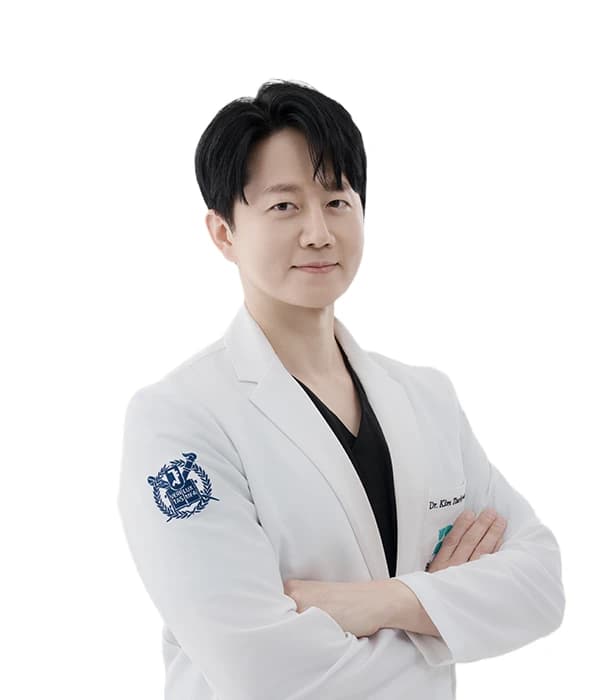
About the author
Dr. Kim Tae-hyung
Chief Director of Blanche Dental Clinic in Gangnam. He holds an M.S. from Seoul National University and trained at the Columbia and UCLA dental hospitals.
He advises SBS “Dr. Oh’s Clinic” and YouTube “Doctor Friends,” and is a Clinical Instructor at Ginza Shirayuri Dental Clinic in Tokyo. His rule of practice: minimal intervention, maximum beauty.