
Do Veneers Hurt? Procedure, First Week, and When Pain Means Something
Do veneers hurt? It is the question patients ask before anything about price, and often the one they are too embarrassed to ask twice.
The honest answer is that “hurt” describes several different sensations. Numbness wearing off, a cold-water twinge, and a sore spot when you bite are three separate things with three separate causes.
This guide separates them. You will see what is expected during the first week, what usually settles on its own, and which signals mean you should call your clinic instead of waiting.
A note from Dr. Kim — Many people who land on this page share one quiet worry: what if I damage healthy teeth for nothing? It is the first question I ask myself with every patient.
Blanche began with that question: why harm a natural tooth worth more than any restoration? That is why our signature Blanche no-prep veneers follow one rule — minimal intervention, maximum beauty.
Do veneers hurt during the procedure?
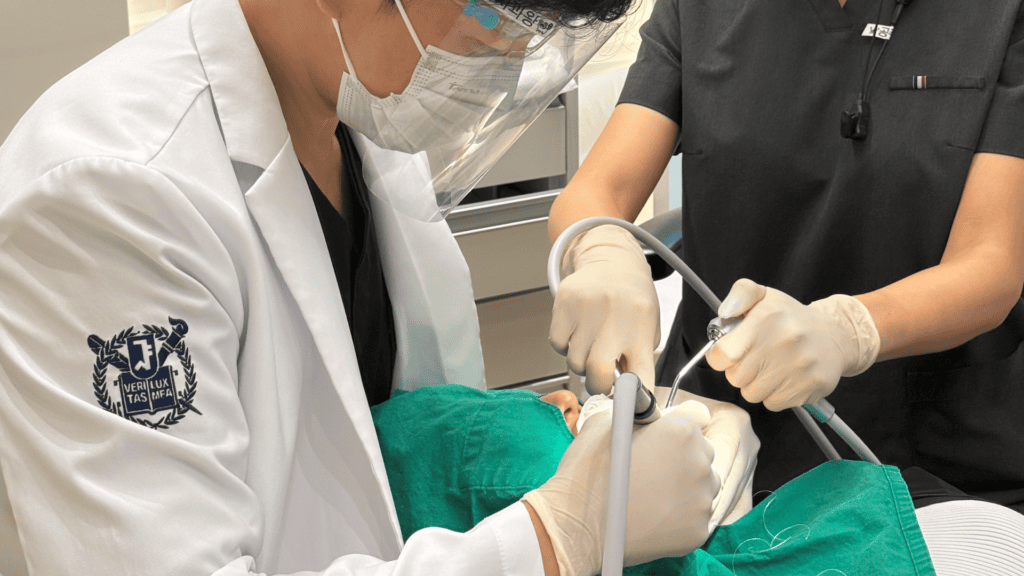
During treatment itself, discomfort is managed with local anesthetic. Most patients describe pressure and vibration rather than pain.
When the amount of enamel reduction is very small, some cases proceed without anesthetic at all. The less tooth structure involved, the less there is to numb.
What you actually feel in the chair
The parts people notice most are the impression or scan step and keeping the mouth open. Neither is painful, but both can feel tiring on a long appointment.
Tell your dentist if anything feels sharp rather than dull. Sharp sensation during preparation is worth pausing for, not pushing through.
The first week: what is normal
Sensitivity in the days after placement is the most commonly reported experience. It usually shows up as a short reaction to cold air or cold drinks that fades quickly.
Think of it like a new pair of glasses. The prescription can be correct and the frame still needs a few days before your face stops noticing it.
| Timing | Commonly reported | Usual direction | Call the clinic if |
|---|---|---|---|
| Day 0–1 | Numbness fading, tender gums | Settles within a day | Swelling keeps increasing |
| Day 2–7 | Cold sensitivity, edge awareness | Fades a little each day | One tooth hurts only when biting |
| Week 2–3 | Occasional brief twinge | Mostly unnoticed | Sensitivity is getting worse |
| After 1 month | No particular sensation | Settled | Pain or pressure remains |
The right-hand column matters more than the symptom itself. Discomfort that shrinks day by day is a different story from discomfort that grows.
Do veneers hurt weeks later? That is a different signal

Pain that appears or persists well after placement is not part of normal settling. It usually points to one of three causes.
Bite pressure on a single tooth
If one tooth sits even fractionally high, that tooth absorbs force meant to be shared. The result is a bruised, achy feeling when you chew.
This does not resolve with time. A short bite adjustment is the fix, and delaying it keeps loading the tooth unnecessarily.
Gum irritation at the margin
The edge where the veneer meets the gum needs to sit flush. An edge that presses or overhangs can leave the gum red and tender.
Bleeding when brushing that continues past the first week is worth showing your dentist. Margins can be refined without removing the veneer.
An underlying issue in the tooth
Occasionally discomfort comes from the tooth rather than the veneer, such as an existing crack or decay under an old restoration. This is why pre-treatment imaging matters.
Do veneers hurt when they come off?
A debonded veneer is usually more alarming than painful. The exposed surface may feel rough or briefly sensitive to cold.
Keep the piece and bring it in rather than discarding it. Depending on whether it is intact, rebonding is sometimes possible.
Do not use household adhesive. Consumer glues are not intended for oral use and contaminate the bonding surface, which makes proper reattachment harder.
For what happens when older veneers reach the end of their service life, see our guide to veneer replacement in Korea.
Not sure where your case fits? Send two photos — front and smiling — on WhatsApp. We will tell you what is possible before you book any flight.
How treatment planning reduces discomfort
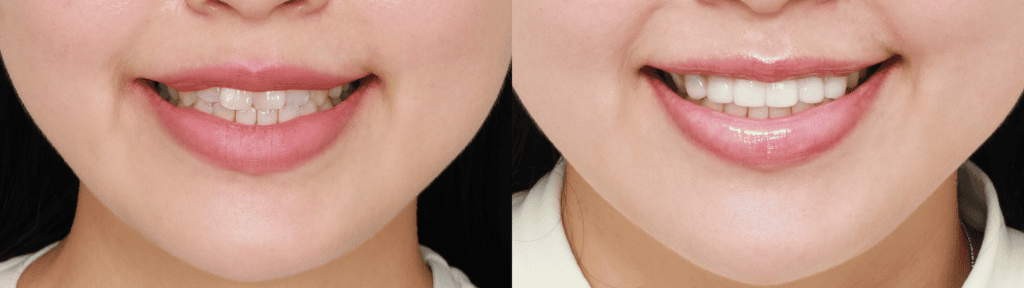
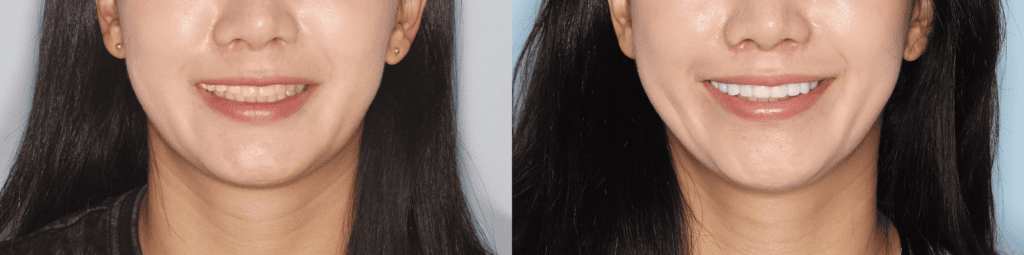
Most post-treatment complaints trace back to two decisions made before anything is bonded: how much enamel is removed, and how much time goes into bite adjustment.
Preparation depth
Less reduction generally means less sensitivity and a better bonding surface. That is why minimal-prep and no-prep approaches are assessed first when the case allows.
You can read how those options are evaluated in our overview of no-prep veneers in Korea, and how enamel is affected in do veneers ruin your teeth.
Adjustment time
Bite refinement is where comfort is won or lost. Front teeth need checking in speech and smiling, not just in a static bite.
Same-day treatment does not shorten this step. More involved cases are given more design and adjustment time within the same day, which is part of why one-day treatment is priced above the conventional route.
For the full one-day program — technology, pricing, and booking — see our One-Day Veneers page.
Planning your visit from abroad
Blanche Dental runs an in-house lab (Blanche Lab) near Nonhyeon Station in Gangnam. Having technicians on site means thickness changes are handled the same day rather than across several appointments.
Pricing is the same for Korean and international patients. You can send photos in advance so the plan and expected chair time are discussed before you fly.
Frequently asked questions
Do veneers hurt more than crowns?
Veneers generally involve less tooth reduction than crowns, so reported sensitivity tends to be lower. The comparison depends on how much structure each option requires in your case.
How long does sensitivity last after veneers?
It varies by person, but most describe it fading over several days to two or three weeks. Sensitivity that intensifies over time should be checked rather than waited out.
Can painkillers help in the first days?
Standard over-the-counter pain relief is commonly sufficient for early tenderness. Follow your clinic’s guidance, and report pain that does not respond.
Side effects and individual variation
Veneers are a dental restoration bonded to the tooth surface. Possible effects include sensitivity, gum irritation, edge awareness, and debonding.
Recovery and comfort differ between individuals depending on tooth condition, gum health, bite habits, and grinding. This article is general information and does not replace an individual examination.
A closing note
After nearly a decade of front-tooth aesthetic work, the pattern is consistent: comfort is decided by thickness and bite, not by the brand of ceramic.
That is why adjustment time is the part we refuse to compress, and why the lab sits inside the clinic.
If you are unsure whether what you are feeling is settling or something to check, send us your photos and we will tell you honestly.
What happens at your first consultation
1. We listen first — what bothers you and what you hope for. 2. We walk you through your scan results and every option.
3. You get itemized costs and timing, and you can decide later, even after you fly home. At Blanche, we explain everything at least four times, by principle.
Consultation — Blanche Dental is located between Nonhyeon and Sinnonhyeon stations in Gangnam, Seoul. For a consultation in English, message us on WhatsApp with your photos, and see our pricing page for current fees.

About the author
Dr. Kim Tae-hyung
Chief Director of Blanche Dental Clinic in Gangnam. He holds an M.S. from Seoul National University and trained at the Columbia and UCLA dental hospitals.
He advises SBS “Dr. Oh’s Clinic” and YouTube “Doctor Friends,” and is a Clinical Instructor at Ginza Shirayuri Dental Clinic in Tokyo. His rule of practice: minimal intervention, maximum beauty.