
Dental Implants Korea Pros and Cons: What You’d Regret Not Knowing
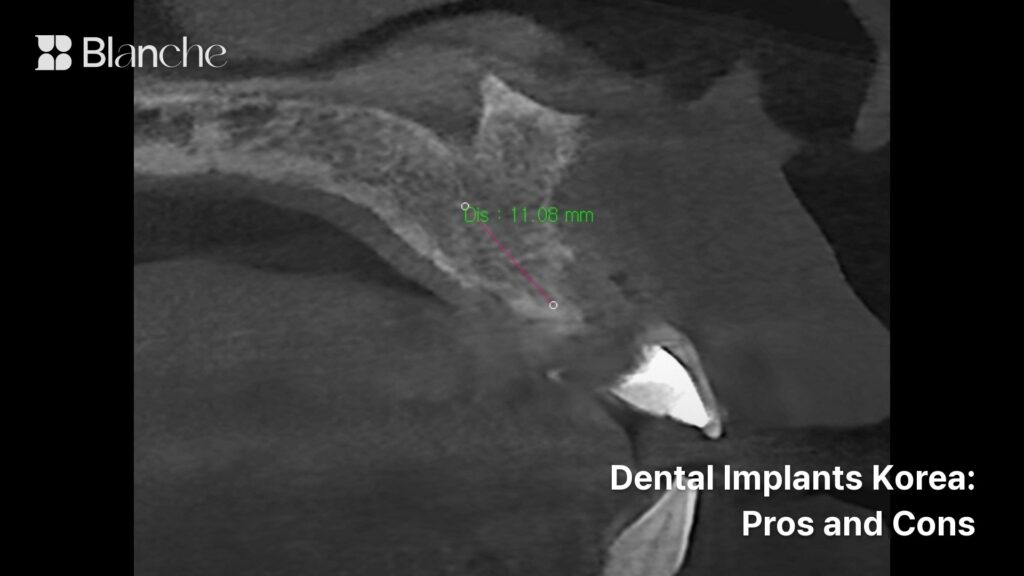
Dental implants Korea pros and cons deserve a calm look before you book, because an implant trip is not one visit. It runs over months, across two countries.
The question that keeps people awake is a different one: “What will I regret not knowing?”
Here is an honest list, with what you can do about each downside.
A note from Dr. Kim
I understand that worry; for many people, the hard part is not the surgery but the months after flying home.
“No decision depends on one person’s judgment alone.” That includes yours, so you should see the downsides clearly.
Dental implants Korea pros and cons: the short answer
The advantages are mostly about clarity: what the price covers and how surgery is planned. The downsides are mostly about distance and time.
Think of a fence post set in fresh concrete. Setting the post takes an afternoon. The concrete, however, needs time to cure, and nobody stands beside it the whole while.
With an implant, your bone is the concrete. It bonds to the implant over months, at home, far from your surgeon.
The advantages, and the small print on each
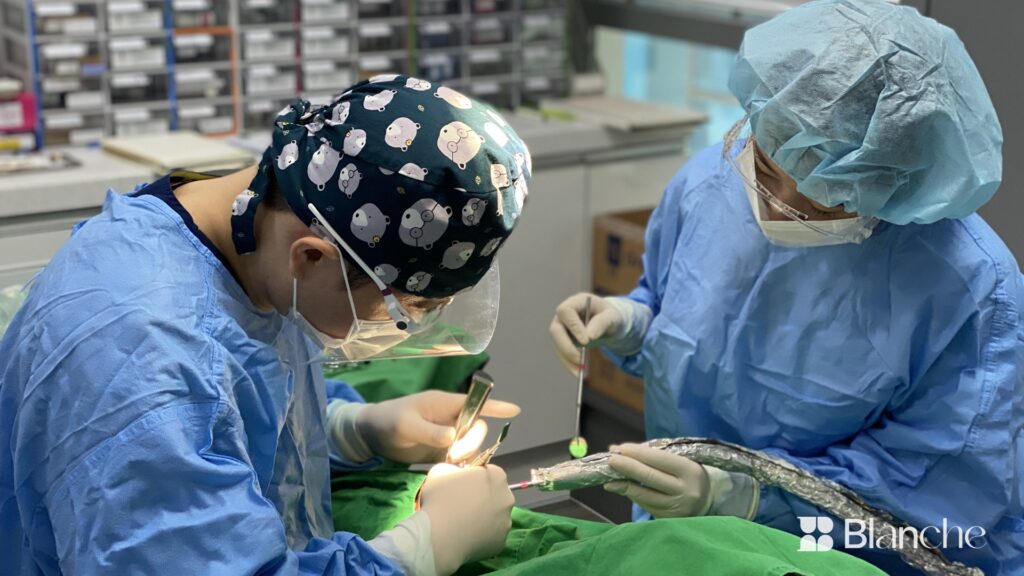
A price that includes the crown
Fees are per implant, including the abutment and a zirconia crown. Megagen AnyOne is KRW 800,000, Megagen BlueDiamond KRW 1,000,000, and Straumann BLX KRW 2,300,000.
The small print: bone grafts, sinus lifts and sedation are added separately, only when needed.
3D CT and guided surgery
A 3D CT, included in the price, maps your bone, nerves and sinus. Digital guided surgery then follows that plan. The small print: the final plan needs our own 3D CT in Seoul.
Surgeons who speak English
Dr. Kim Tae-hyung and Dr. Kim Ha-young perform implant surgery at Blanche, and both speak English.
Same price, same warranty
Korean and international patients pay the same. The 2-year warranty is identical for all three brands and covers the crown.
No gap in your front teeth
For front teeth, a same-day temporary tooth is possible and included in the implant price, so you do not fly home with a gap.
The downsides, and how to reduce each one

Two trips, 4–6 months apart
There are usually four visits: surgery, stitches out a week later, a scan 4–6 months later, then the crown. Staying about a week each time means two trips.
That is two flights and two blocks of leave, so plan both trips before the first. Our guide to why four visits usually mean two trips shows the timing.
Healing happens far from your surgeon
Between trips, nobody on our team sees your implant in person. That is the honest trade-off of treatment abroad.
To reduce the risk, follow the aftercare closely. Smoking, diabetes and gum disease can affect healing, so mention them early.
Grafts or sinus lifts can add cost and time
If bone is thin, a graft may be needed: KRW 300,000 (simple) or 500,000 (complex) per site. A sinus lift costs KRW 500,000 per tooth (crestal) or 2,000,000 per site (lateral).
These can also lengthen healing. So send an X-ray first and ask why a graft is needed. Our article on whether you really need a bone graft explains how we decide.
Sedation is extra
Sedation costs KRW 400,000 per session, administered and monitored by a dentist. It needs 6 hours of fasting, an ECG check, and ideally a companion. There is no separate recovery room; you rest in the surgery room before leaving.
Follow-up abroad needs planning
Routine check-ups will happen at home. If a problem comes up after you return, we help you get follow-up care in your own country. Our page on implant warranty after you fly home covers the details.
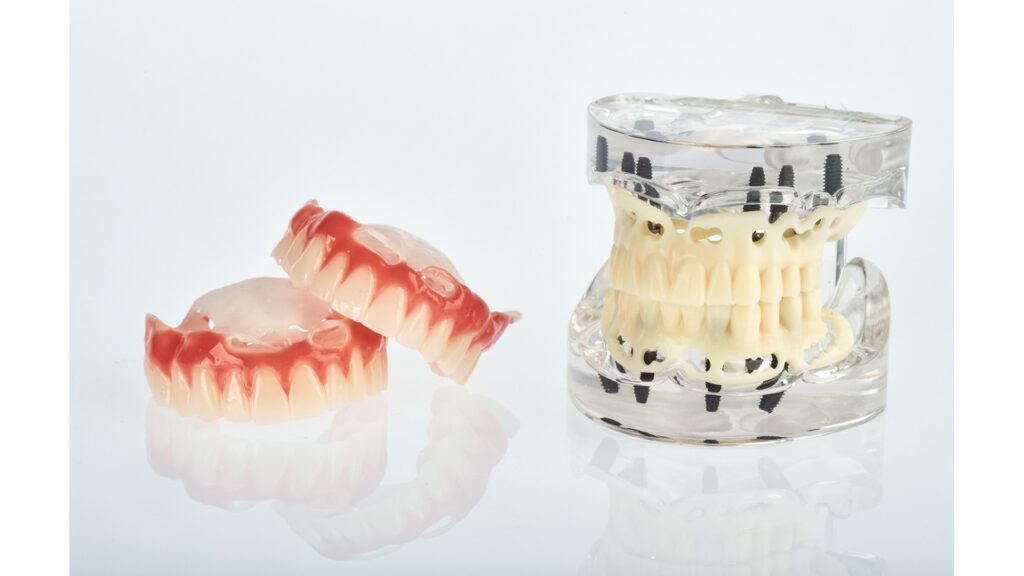
Dental implants Korea pros and cons at a glance
| Pro or con | What it means for you | How to reduce the risk |
|---|---|---|
| Pro: abutment and zirconia crown included | Fewer lines to compare | Ask what is excluded |
| Pro: 3D CT and guided surgery | Surgery planned on your real bone | Send an X-ray first |
| Pro: English-speaking surgeons | Risks explained by the surgeon | Write questions down beforehand |
| Pro: same price for foreigners | No foreigner surcharge | Ask for itemized costs in writing |
| Pro: 2-year warranty, all brands | The crown is covered too | Keep the brand and line in writing |
| Pro: same-day temporary for front teeth | No gap between trips | Mention front teeth in your first message |
| Con: two trips 4–6 months apart | Two flights, two blocks of leave | Plan both trips at the start |
| Con: healing far from the surgeon | No in-person checks between trips | Follow aftercare; mention smoking or diabetes |
| Con: grafts or sinus lifts | More cost, longer healing | Ask why each extra step is needed |
| Con: sedation is extra | KRW 400,000 and a fasting day | Decide early; bring a companion |
| Con: follow-up abroad | Routine care happens at home | We help you get follow-up care in your country |
“Which of these downsides would apply to me?”
Send us a recent X-ray if you have one, or just two photos: one of your face straight on, and one smiling. We will tell you which downsides are likely to apply, including any graft.
Planning both trips from abroad
Plan trip one for about a week, and trip two 4–6 months later. We are a 30-second walk from Nonhyeon Station Exit 4 in Gangnam, about an hour from Incheon Airport.
Finally, weigh the dental implants Korea pros and cons against your calendar, not just the price.
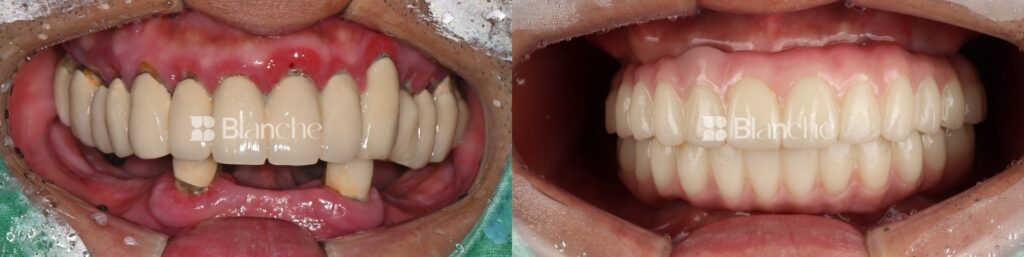
An actual case treated at Blanche Dental Clinic. Results vary with each patient’s dental condition.
Frequently asked questions
What are the main dental implants Korea pros and cons?
Pros: a price that includes the abutment and zirconia crown, 3D CT with guided surgery, and English-speaking surgeons. Also one price for everyone and a 2-year warranty. Cons: two trips, healing at home, possible grafts, extra-cost sedation and follow-up that needs planning.
Will I have a gap in my front teeth between trips?
Not necessarily. For front teeth, a same-day temporary tooth is possible and included in the implant price.
What happens if something goes wrong after I fly home?
Your implant has a 2-year warranty that covers the crown. If a problem comes up after you return home, we help you get follow-up care in your own country.
Side effects and individual differences
Swelling, bruising, mild pain, or temporary numbness can occur after implant surgery, and healing time varies. Results and longevity depend on each person’s bone, gums, health, and habits.
When I teach other dentists, I remind them that a good plan names its downsides out loud. We keep your own teeth whenever we can, aiming for a smile that still works twenty years from now.
How your first consultation works
1. We listen to your concerns and what you want to be able to eat and smile with again.
2. Based on your 3D CT and exam, we explain every available option, including whether a bone graft is really needed.
3. We give itemized costs and a visit schedule. You are welcome to decide later, at home.
We repeat every explanation at least four times, and no decision depends on one person’s judgment alone.
Consultation — Message us on WhatsApp with a recent X-ray or two photos, or check our fee schedule. Same pricing for Korean and international patients.