
Flapless Implant Surgery: Can My Implant Be Done Without Cutting the Gum?
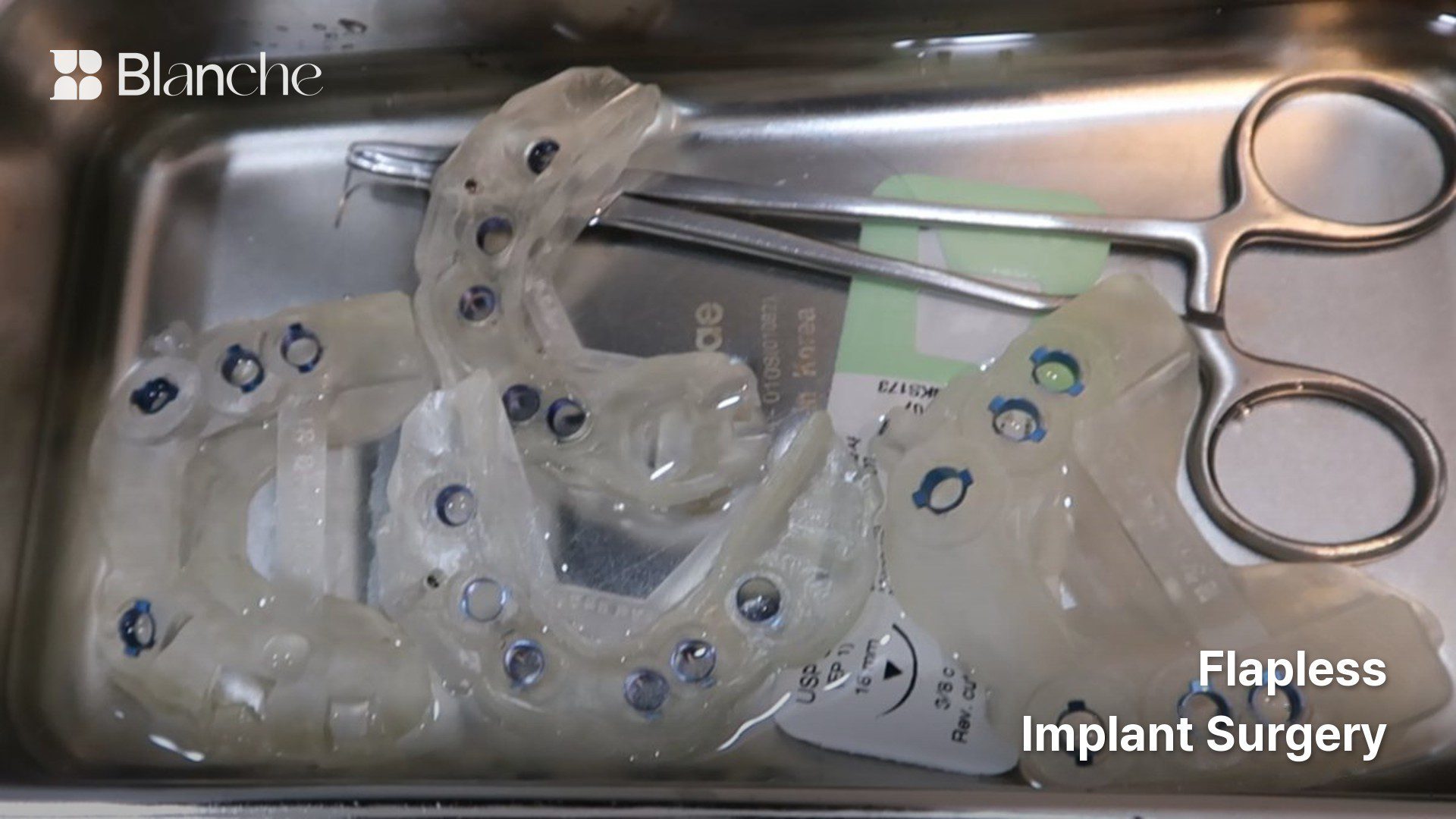
Flapless implant surgery means placing an implant through a small opening in the gum, without lifting the gum away from the bone. Many people search for it after hearing the word “cutting” and picturing a long recovery.
Underneath, there is often a quieter worry. You might fly to Seoul expecting no incision, hear on the day that you need one, and wonder whether something went wrong.
So let me explain when flapless surgery is considered, when an incision is the safer choice, and why the plan can change in the chair.
A note from Dr. Kim
I understand why “no cutting” sounds reassuring, and I would rather tell you honestly before your trip whether it fits your mouth.
“Minimal intervention, maximum beauty.”
What flapless implant surgery actually is
In the conventional approach, the dentist makes an incision and gently lifts the gum. This lets the surgeon see the bone directly while placing the implant.
In flapless implant surgery, the gum stays in place. Instead, a small opening is made exactly where the implant will go.
Here is the catch. Because the bone is not exposed, the surgeon relies on the plan made beforehand. That is why flapless surgery and careful 3D planning go together.
An everyday comparison
Think of planting a bulb in a garden. If the soil is deep and firm, you make a small hole and drop the bulb in. However, if the bed needs more soil, you dig it open first.
Bone works in a similar way. Where there is enough of it, a small opening may do. Where it must be built up, the area needs to be opened.
When flapless implant surgery can be considered
We only consider it when the 3D CT and the exam show three things together:
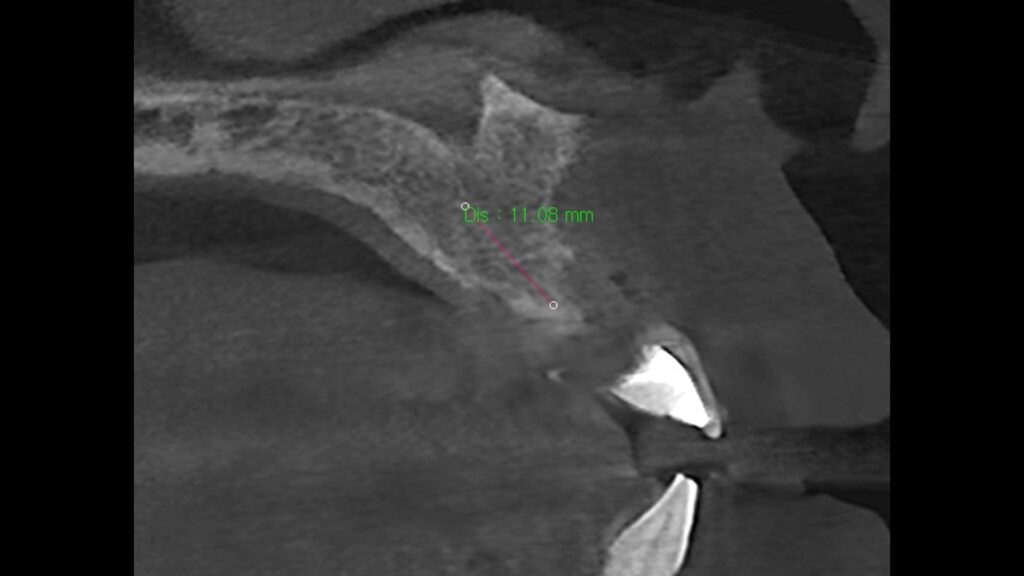
- enough bone height and width for the implant;
- enough keratinized gum, the firm pink gum that sits snugly around a tooth or implant;
- little or no bone graft needed.
All three matter. For example, good bone with too little firm gum may still call for an incision.
This is also why we can’t promise a flapless approach from a photo alone. The final plan needs our own 3D CT in Seoul.
When an incision is the safer choice
| Situation | Why an incision may be needed |
|---|---|
| Thin bone, or a bone graft is needed | The surgeon needs to see and build up the bone directly |
| A front tooth where the gum shape matters | The gum around the future crown may need shaping |
| Firm gum needs to be moved | Keratinized gum may need repositioning around the implant |
| The bone looks different from the CT | The surgeon checks directly and adjusts the plan |
An incision is not a failure. It is simply the method that suits that bone and gum.
If your CT shows thin bone, our article on when a bone graft can be avoided explains how we decide whether one is really needed.
The role of a surgical guide
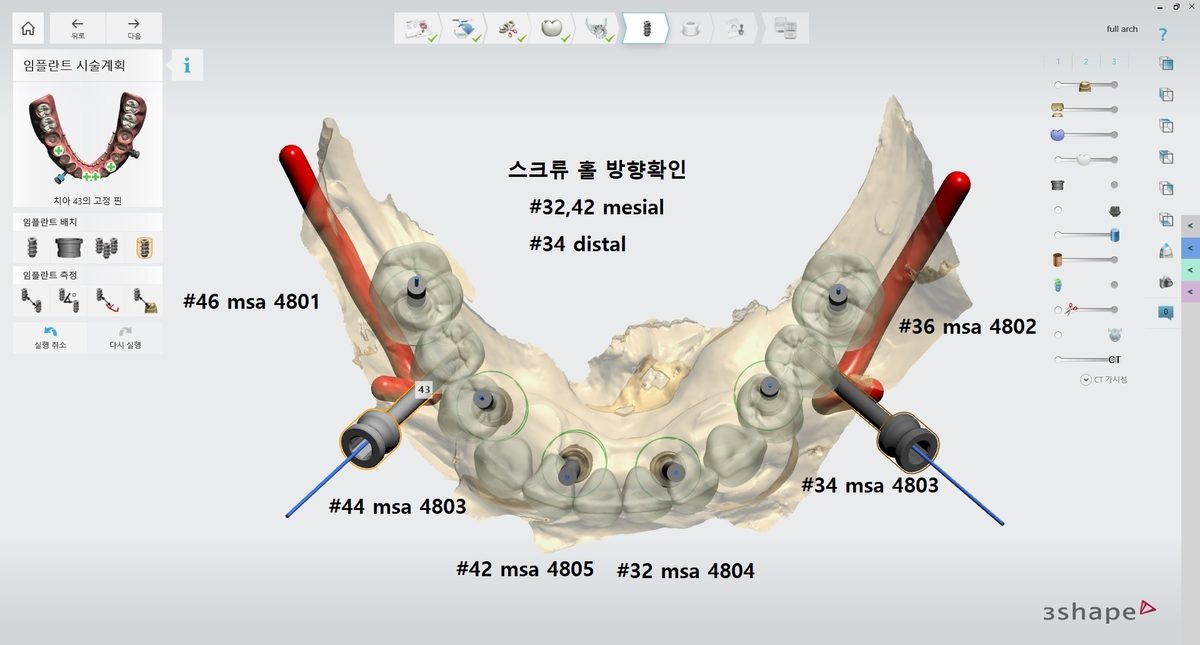
When flapless surgery is being considered, we often use a surgical guide. First, we overlay your 3D CT with an intraoral scan of your teeth and gums. Then we plan the position, angle and depth on screen, with the final crown in mind.
The guide itself is a custom clear template with metal sleeves. The drill passes through those sleeves, which helps carry the plan into surgery.
Still, a guide does not remove all error. The surgeon keeps checking position and bone throughout. Also, limited mouth opening or a molar far at the back can make a guide hard to use.
Making the guide is an additional cost, quoted after your CT. For the wider planning story, see our article on guided implant surgery in Korea.
Why a flapless implant surgery plan can change
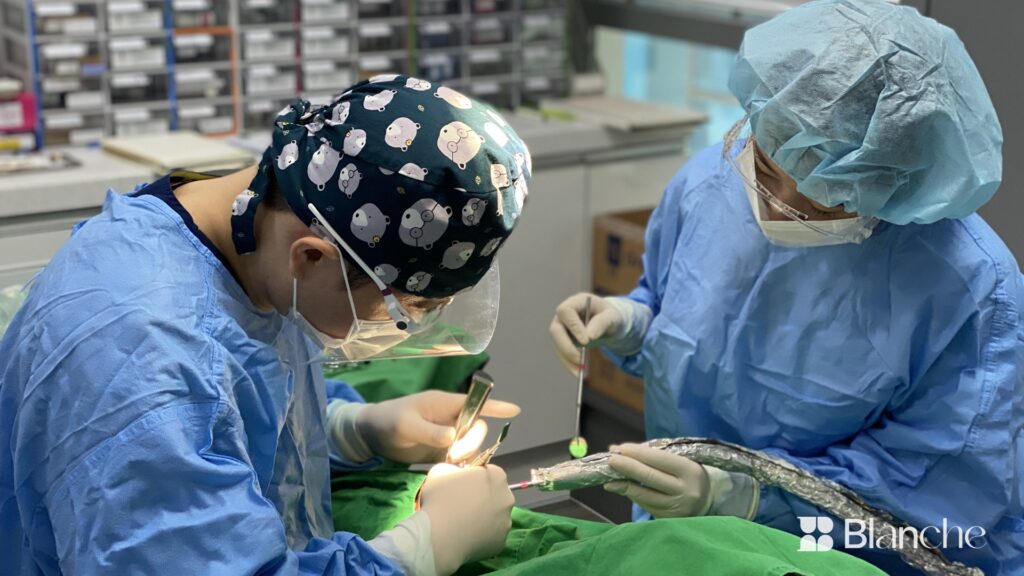
A flapless plan can change to an incision during surgery. For instance, the guide may not seat well, or the bone may differ from what the CT showed.
In that case, the surgeon switches to the conventional method. We explain this possibility before surgery, so it does not come as a surprise.
Personally, I would rather open the gum and see the bone clearly than hold on to a plan that no longer fits your mouth.
“Could my implant be done without cutting the gum?”
Send us a recent X-ray if you have one, or just two photos: one of your face straight on, and one smiling. We will tell you what the 3D CT in Seoul needs to confirm before flapless surgery can be considered.
Planning your trip
Whether or not the gum is opened, the schedule is the same. International patients usually need four visits: surgery, a check about a week later when any stitches come out, a digital scan 4–6 months later, and the crown about a week after the scan.
If you can stay about a week each time, that means only two trips to Korea. Our guide to how four visits fit into two trips shows the timing.
Fees are per implant and include the abutment, zirconia crown and 3D CT: Megagen AnyOne KRW 1,000,000, Megagen BlueDiamond KRW 1,500,000, and Straumann BLX KRW 2,300,000. Bone grafts, sedation and a surgical guide are added only when needed.
We are a 30-second walk from Nonhyeon Station Exit 4 in Gangnam, about an hour from Incheon Airport.
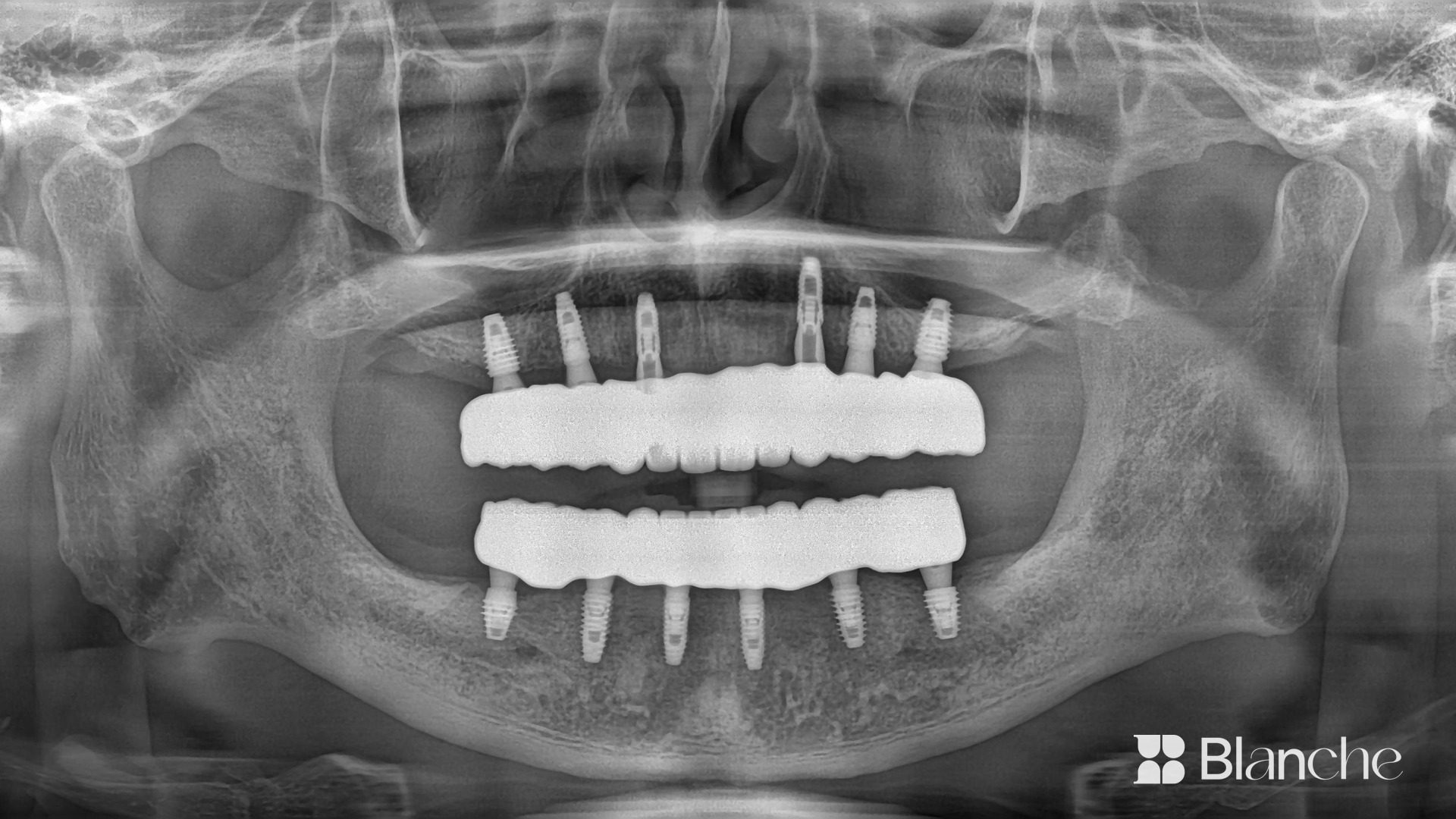
An actual case treated at Blanche Dental Clinic. Results vary with each patient’s dental condition.
Frequently asked questions
Is flapless implant surgery possible for everyone?
No. It is considered only when the 3D CT shows enough bone height and width, enough firm gum, and little or no need for a bone graft.
Can a flapless plan change during surgery?
Yes. If the guide does not seat well or the bone differs from the CT, the surgeon may make an incision and continue with the conventional method. We explain this possibility before surgery.
Does flapless surgery mean fewer visits to Korea?
No. The schedule is the same as for other implants: usually four visits, which means two trips if you can stay about a week each time.
Side effects and individual differences
Swelling, bruising, mild pain, or temporary numbness can occur after implant surgery, and healing time varies. Results and longevity depend on each person’s bone, gums, health, and habits.
When I teach other dentists, I remind them that the smallest opening is not always the kindest one. The right choice protects your own bone and gum, for a smile that still works twenty years from now.
How your first consultation works
1. We listen to your concerns and what you want to be able to eat and smile with again.
2. Based on your 3D CT and exam, we explain every available option, including whether a bone graft is really needed.
3. We give itemized costs and a visit schedule. You are welcome to decide later, at home.
We repeat every explanation at least four times, and no decision depends on one person’s judgment alone.
Consultation — Message us on WhatsApp with a recent X-ray or two photos, or check our fee schedule. Same pricing for Korean and international patients.