
Gum Recession Treatment: What Are the Options When Gums Recede?

Gum recession treatment is what people search for when a tooth suddenly looks longer, or a cold drink stings near the gum line. You may also see a small notch where tooth meets gum.
Behind the search there is usually a bigger fear. Will this keep getting worse until the tooth is loose? And is surgery the only answer?
The honest answer starts with a question of our own: why did the gum move?
A note from Dr. Kim
I understand how unsettling it is to watch your gum line change and not know why.
“Minimal intervention, maximum beauty.”
What causes gum recession, and why it shapes the treatment
Recession rarely has a single cause. Each cause points to a different first step, so we look at all of them together.
| Cause | Why it matters | What comes first |
|---|---|---|
| Gum disease | Inflammation can break down the support around teeth | Scaling and treating the inflammation |
| Hard side-to-side brushing | Scrubbing can wear the gum edge back over time | A gentler brushing method |
| Naturally thin gum | Thin tissue tends to recede more easily | Checking whether thickening is worth it |
| Orthodontic movement or grinding | Moving or heavily loading a tooth can stress thin gum | Looking at tooth position and bite |
| Crown margins | A crown edge near the gum can irritate it | Checking the fit of the crown edge |
This step matters more than it looks. If the cause stays, gums can recede again, even after surgery.
Gum recession treatment starts with inflammation, not surgery
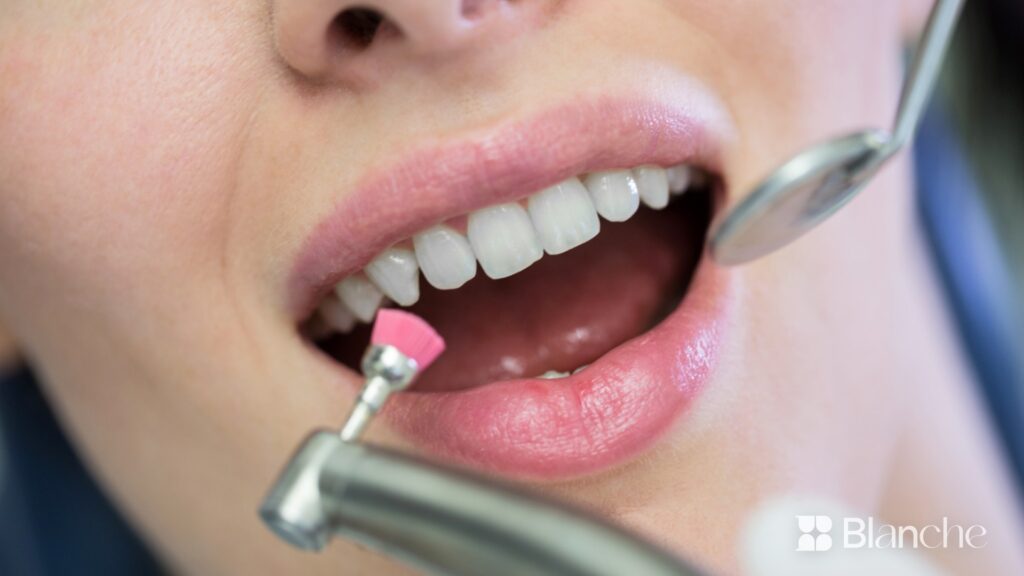
If your gums are inflamed, gum treatment comes before any surgery. That means scaling and treating the inflammation first.
Think of repainting a damp wall. The new paint may look fine for a while, but it will not hold until the damp is fixed. Grafting onto inflamed gum works the same way.
So the first step is often less dramatic than people expect. It means looking, measuring, cleaning, and talking about how you brush.
If you are also planning other dental work, the same rule applies. For example, our article on veneers with gum disease explains why the gums come first there, too.
Comparing the surgical options for gum recession
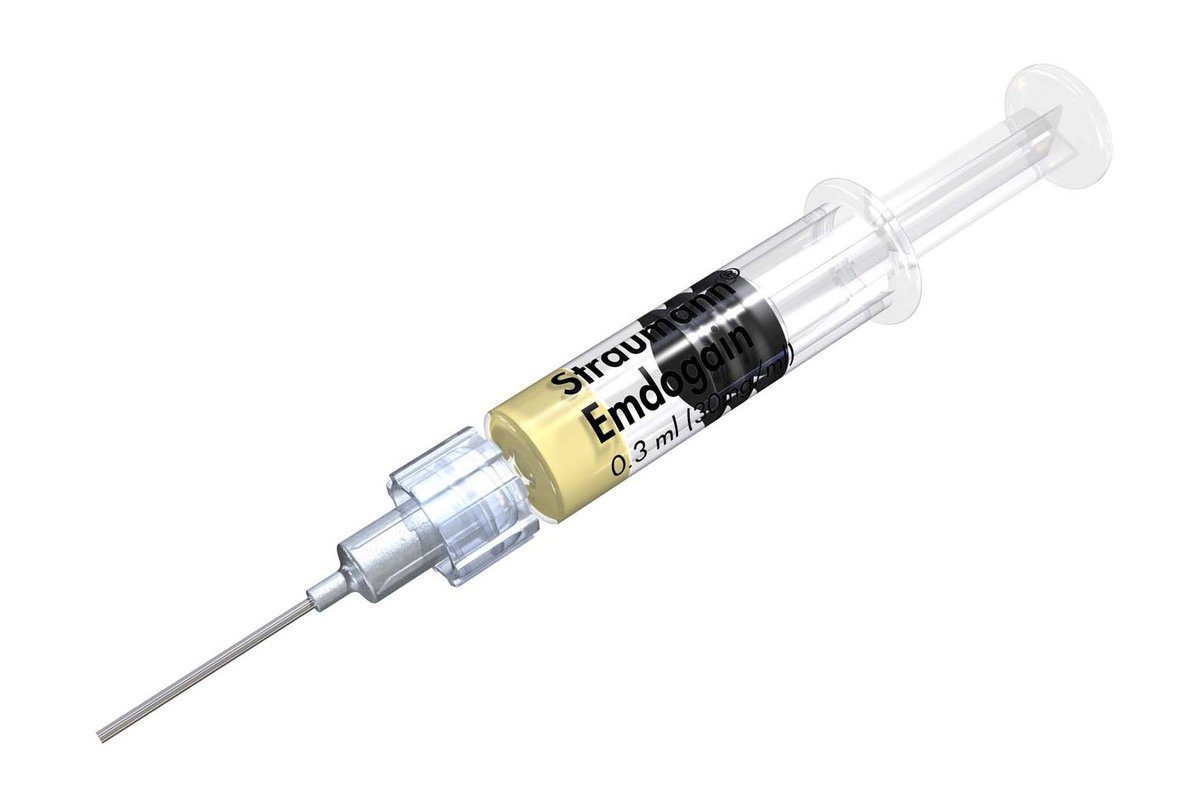
When the gums are healthy and the recession still needs attention, gum recession treatment has four main tools. They are often combined rather than used alone.
| Option | What it is | Typical use | Limits |
|---|---|---|---|
| Root coverage | Covering an exposed root with gum | A visible, exposed root | Depends on bone height between teeth, gum thickness and tooth position |
| Connective tissue graft (CTG) | Tissue from inside the palate placed under thin or receded gum | Thickening gum and supporting root coverage | Needs enough tissue in the palate |
| Free gingival graft (FGG) | Thin surface tissue from the palate | Widening firm gum, for example around lower front teeth or implants | Color and texture can look different |
| Emdogain | An enamel matrix derivative gel from Straumann | Applied to a cleaned root surface during surgery or root coverage | Not a standalone treatment |
CTG blends in fairly naturally, which is why it often suits teeth that show when you smile. FGG trades some of that color match for a wider band of firm gum.
Emdogain deserves one extra line. Its results depend on bone shape, smoking and care, and it is less predictable when bone loss is wide and flat.
Upper teeth, lower teeth, several teeth
On upper front teeth and canines, color and the gum line matter most. On lower front teeth, the gum is often thin and the attached gum narrow, so an FGG sometimes comes first.
When several teeth are involved, we may treat them in one wider procedure or in stages. Gum thickness and the tissue available in the palate decide which.
“Is my recession something to watch, or something to treat?”
Send us a close-up photo where the receded gum is visible, plus a recent X-ray if you have one. We’ll tell you what may be causing it and whether the exam is likely to point to treatment or to watching.
When gum recession treatment does not need surgery yet
Not every receded gum needs a graft. In general, a dentist may suggest watching first when the recession is small, the gum is firm and not inflamed, and the area is not sensitive.
In that case, gum recession treatment often means removing the cause and keeping a record. Gentler brushing, treated inflammation and a checked bite can all help the gum line stay where it is.
Photos taken at regular check-ups make it easier to see whether anything is changing. If it is, the conversation about surgery can start then, with better information.
We cannot promise that a gum line will stay put. What we can do is explain what we see and why we suggest waiting or acting.
What one case from our clinic shows, and what it does not

With the patient’s consent, we have published one case. An upper canine with an exposed root was covered using CTG together with Emdogain.
It is one case, not a forecast. Coverage depends on bone and gum, a root may be only partly covered, and recession can return if the cause remains.
At Blanche, gum surgery is performed by Dr. Kim Tae-hyung and Dr. Kim Ha-young. Both consult in English.
If you are traveling for treatment, we explain the schedule after the exam rather than guessing it in advance. Plan a check-up visit before you fly home, and expect an itemized cost after the exam.
If your worry is the opposite, too much gum showing when you smile, see our gummy smile treatment guide.
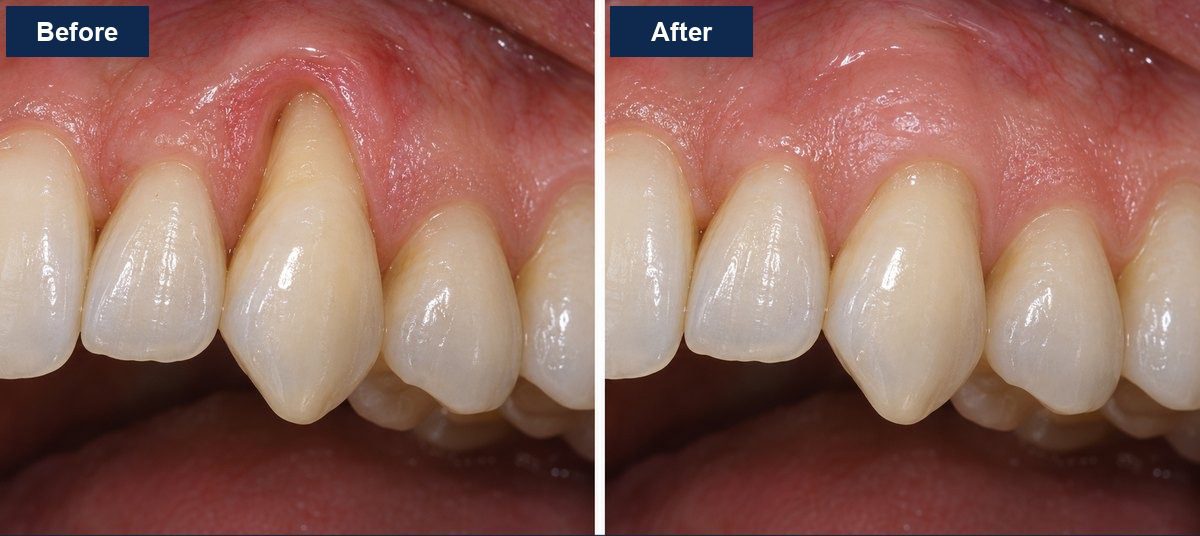
An actual case treated at Blanche Dental Clinic. Results vary with each patient’s dental condition. Root coverage using a connective tissue graft (CTG) and Emdogain, published with the patient’s consent.
Frequently asked questions
What is the first step in gum recession treatment?
Finding the cause. If the gums are inflamed, scaling and treating the inflammation come before any surgery, because recession can return if the cause stays.
Is Emdogain a treatment on its own?
No. Emdogain is a gel applied to a cleaned root surface during periodontal surgery or root coverage, and its results depend on bone shape, smoking and care.
Can a graft cover the whole exposed root?
Sometimes, but not always. How much can be covered depends on bone height between the teeth, gum thickness and tooth position, and a root may be only partly covered.
Side effects and individual differences
Swelling, pain, bleeding, sensitivity, and soreness where tissue was taken from the palate can occur after gum surgery. How much gum is restored and how long recovery takes vary from person to person.
My aim is always to help you keep your own teeth, and healthy gum is part of that. A smile that still works twenty years from now usually depends less on one surgery than on the cause being found and fixed.
How your first consultation works
1. We listen to your concerns and what you want to be able to eat and smile with again.
2. Based on your exam, we explain why the gum receded first, then every available option.
3. We give itemized costs and a visit schedule. You are welcome to decide later, at home.
We repeat every explanation at least four times, and no decision depends on one person’s judgment alone.
Consultation — Message us on WhatsApp with a close-up photo of the receded gum and a recent X-ray if you have one, or check our fee schedule. Same pricing for Korean and international patients.